When do lightweight carbon fiber composites justify their higher cost?
Key Takeaways
- When does modular construction reduce a project's total cost?Chief Civil Engineer
- What cloud infrastructure analysis reveals about Singapore latency risksIT & Security Director
- How to verify recycled green building materials meet project standardsChief Civil Engineer
- What to evaluate when comparing cybersecurity analysis providersIT & Security Director
- When does agricultural automation equipment pay off for mid-size farms?Agri-Tech Strategist
- How Tank Design Helps Reduce Oxidation Risks in Edible Oil StorageAgri-Tech Strategist
- How to match heavy duty earthmoving equipment to site conditionsChief Civil Engineer
- When chemical supply solutions reduce the risk of production downtimeLead Materials Scientist
Industry Overview
We do not just publish news; we construct a high-fidelity digital footprint for our partners. By aligning with TNE, enterprises build the essential algorithmic "Trust Signals" required by modern search engines, ensuring they stand out to high-net-worth buyers in an increasingly crowded global digital landscape.
A design team may see an immediate weight-saving opportunity in a vehicle structure, handling fixture, robotic arm, pressure-resistant enclosure, or corrosion-prone component. The carbon fiber option looks technically superior, yet the quotation can be several times higher than steel, aluminum, or glass-fiber reinforcement. The purchasing question is therefore not whether carbon fiber is “better.” It is whether the lighter component changes enough downstream cost, performance, capacity, or risk to recover its premium.
Lightweight carbon fiber composites justify their higher cost when mass reduction has a measurable economic consequence and the part can be engineered, produced, inspected, and repaired within a controlled lifecycle plan. They are most defensible where lower weight improves energy use, payload, acceleration, handling, installation access, fatigue performance, corrosion resistance, or system-level component count. They are much harder to justify for static, low-value, easily replaceable parts where inexpensive metals already meet structural and environmental requirements.
Start with the cost of the system, not the price of the part
A common sourcing error is to compare a composite part quotation directly with the unit price of a metal part. Carbon fiber composites often lose that comparison. The useful comparison is between complete systems over their expected service life.
For example, replacing a steel bracket with a composite bracket may save little if the bracket is not weight-critical and requires new tooling, special fasteners, protective coatings, and separate inspection procedures. By contrast, a composite structural panel may eliminate reinforcing members, reduce lifting equipment requirements, simplify installation, and improve resistance to moisture or chemicals. Its individual price remains higher, but the installed and operating cost may be lower.
Before approving a material change, define the economic mechanism that will create value. It should be specific enough to appear in a project model, such as:
- more saleable payload within a regulated vehicle or equipment weight limit;
- lower energy consumption over a high-utilization operating life;
- smaller motors, batteries, actuators, foundations, or support structures;
- faster movement, better positioning accuracy, or reduced vibration in automated equipment;
- fewer corrosion-related replacements and less protective maintenance;
- lower installation labor because modules can be handled with lighter equipment;
- consolidation of multiple metal pieces into one molded or bonded structure;
- avoidance of downtime where replacement in service is difficult or costly.
If the team cannot identify a credible value mechanism beyond “the part is lighter,” the premium is unlikely to be justified. Weight is a material property; economic value depends on what that weight allows the larger system to do.
Where the premium usually has a strong business case
Moving equipment where every kilogram affects operating output
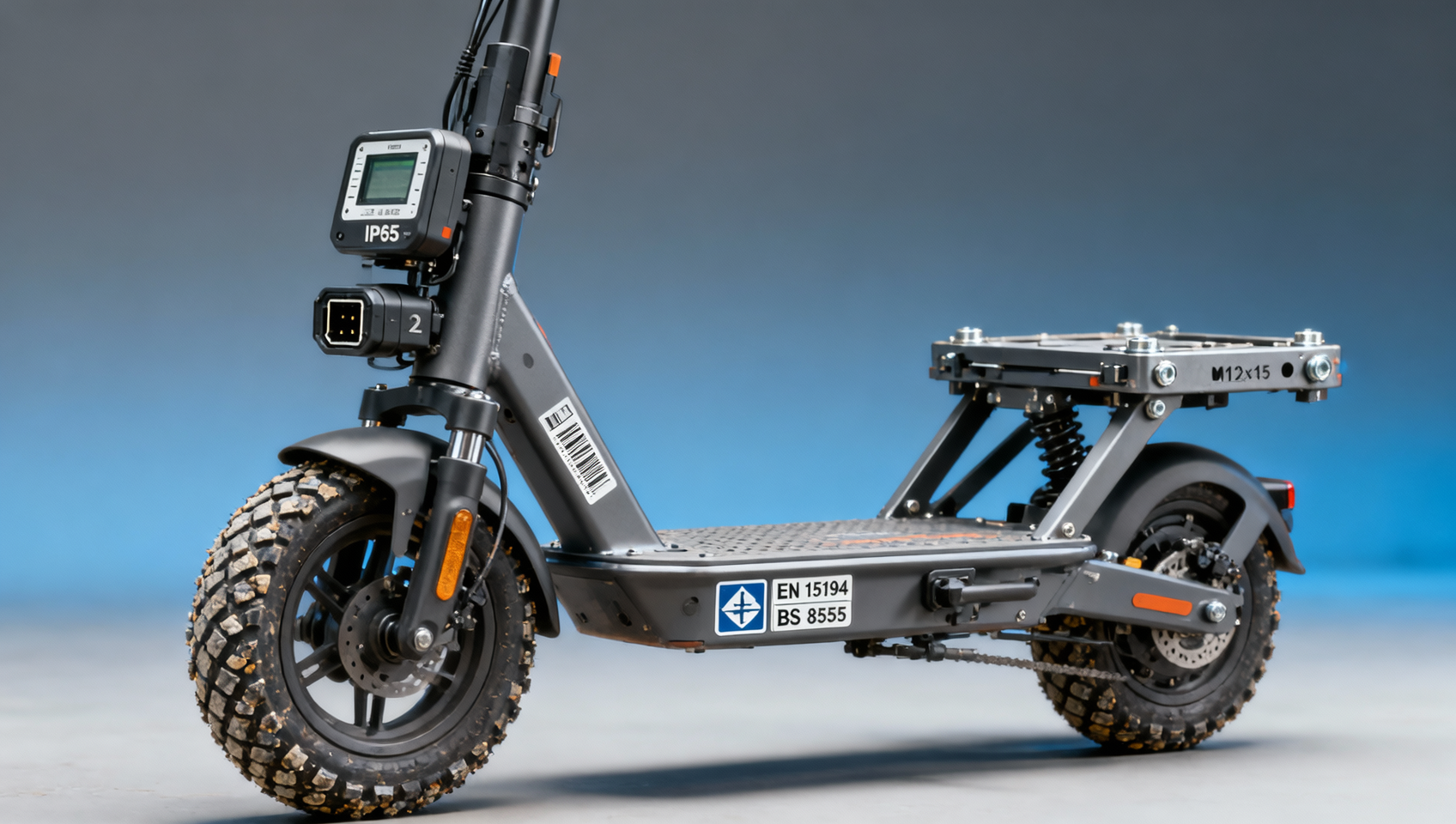
The clearest applications are systems that repeatedly accelerate, decelerate, climb, fly, or carry a load. In electric mobility, lower structural mass can improve range, allow a smaller battery for the same duty cycle, or preserve payload after battery weight is added. The correct calculation is not limited to energy per kilometer. It should also consider whether the lighter design changes battery capacity, suspension loads, braking components, charging frequency, or usable cargo capacity.
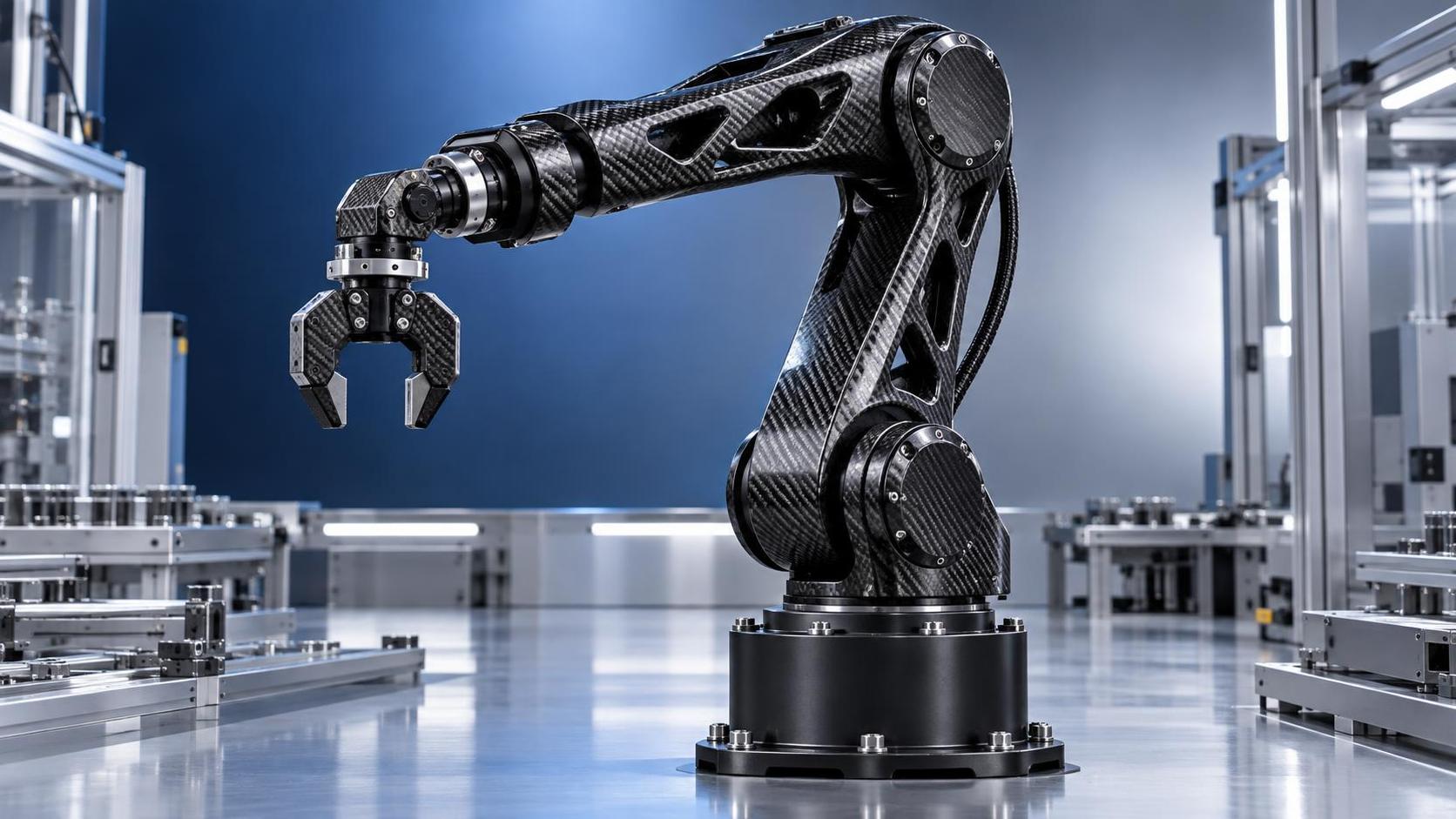
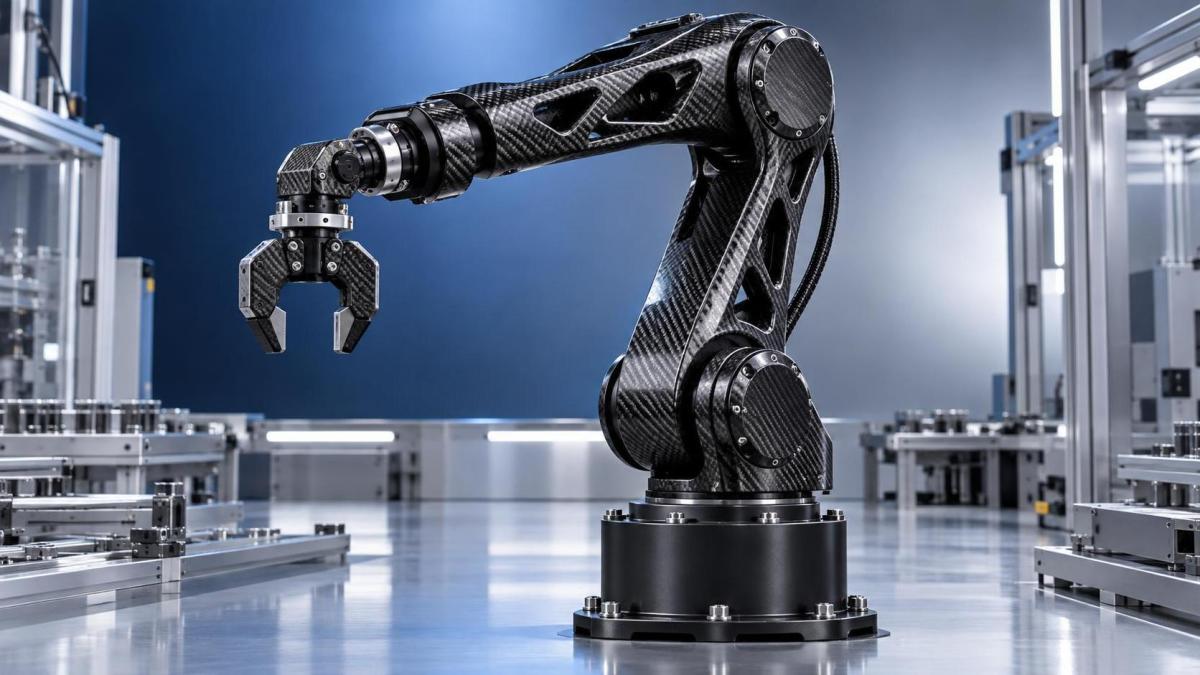
In industrial automation, lightweight end effectors, arms, covers, and moving frames can reduce inertia. That may permit faster cycles, smaller actuators, or less energy-intensive motion. However, the benefit must be confirmed at the actual duty cycle. A robotic component that moves only occasionally does not create the same value as one making continuous high-speed motions across several shifts.
Structures limited by stiffness, fatigue, or corrosion rather than simple strength
Carbon fiber is often selected for its high stiffness-to-weight ratio, not only its tensile strength. Long, slender structures may deflect too much in aluminum or steel before they fail. A well-designed laminate can place fiber in directions that resist the loads that matter most, helping control deflection and vibration without adding substantial mass.
This matters in precision machinery, inspection equipment, long-reach tools, handling systems, and selected construction elements where reduced dead load affects the entire support design. It can also matter in corrosive process environments, marine exposure, or chemical service where a metal alternative needs extensive coatings, frequent inspection, or eventual replacement. Carbon fiber itself is not automatically suitable for every chemical or outdoor environment; the resin system, coating, joints, moisture behavior, and ultraviolet protection still need review.
Assemblies that can be redesigned, not merely substituted
The economics improve when a composite is introduced early enough to change the architecture of an assembly. Carbon fiber composites can be molded into complex shapes, incorporate ribs, combine functions, and reduce the number of fasteners or welded interfaces. A direct one-for-one replacement of a stamped metal plate usually captures only weight reduction. A redesigned assembly may capture fewer parts, fewer assembly steps, lower tolerance stack-up, and reduced risk of corrosion at mechanical joints.
This is why the material is more compelling for new platforms, significant redesigns, and purpose-built production equipment than for late-stage substitutions. Late changes may add qualification work without allowing engineers to realize the design freedoms that support the cost case.
When conventional materials remain the more disciplined choice
A higher-performing material is not automatically the lower-risk procurement choice. Steel, aluminum, and glass-fiber composites often remain preferable when the load is static, weight has little system effect, production volume is high, and the component must be inexpensive to inspect and replace.
Volume deserves particular scrutiny. Some composite manufacturing routes require specialized tooling, controlled curing, labor-intensive layup, or long cycle times. At low and medium volumes, this may still be reasonable for high-value parts. At very high volumes, a metal process with mature automation can be difficult to beat unless the composite design delivers substantial part consolidation or operating savings. Procurement should request a process-specific quote rather than treating “carbon fiber” as a single manufacturing category.
Build the lifecycle calculation around real operating conditions
The financial model should distinguish between one-time conversion costs, recurring manufacturing costs, and service-life effects. Do not use a generic percentage weight saving as the business case. Use the mass reduction of the actual component, the actual duty cycle, and the actual cost driver.
- Establish the metal baseline. Include the finished part, coatings, machining, welding, fastening, handling, inspection, transport, installation, and expected maintenance. A raw-material comparison is incomplete.
- Define the composite design state. Confirm whether the quote represents a direct replacement or a redesigned assembly. Identify the fiber type, resin system, fiber architecture, molding or curing route, inserts, surface finish, and secondary operations.
- Translate mass into system value. Quantify only benefits that have a credible connection to revenue, operating expense, capital equipment size, throughput, or downtime. Where the relationship is uncertain, use a sensitivity range rather than a single optimistic assumption.
- Include qualification and industrialization. Tooling, prototype iterations, test coupons, process validation, supplier onboarding, quality documentation, and operator training can be material costs. They should be allocated across the expected production volume or program life.
- Model service events. Consider inspection intervals, damage probability, repair method, spare-part stocking, field access, corrosion exposure, and disposal requirements. A part that is cheap to purchase but difficult to replace can carry a high ownership cost.
The output should show the break-even condition, not merely a positive or negative total. For instance, the model may reveal that the material becomes viable only when annual operating hours exceed a certain level, when payload utilization is consistently high, or when an assembly redesign removes several secondary parts. That result is useful because it defines where the procurement decision is valid and where it is not.
Technical questions that can overturn an apparently attractive quote
Composite performance depends heavily on design and process control. Unlike isotropic metals, a laminate can behave very differently along and across the fiber direction. A supplier cannot responsibly quote a “carbon fiber equivalent” without understanding load paths, stiffness targets, impact exposure, temperature range, electrical requirements, fastening method, and environmental conditions.
Ask how the proposed laminate handles compression, shear, through-thickness loads, and repeated impacts. A part may show excellent tensile properties yet be vulnerable to delamination after a localized strike or damage around drilled holes and inserts. Damage can also be less visible than a bent metal component, so inspection criteria need to match the service risk.
Joints are another frequent source of underestimated cost. Bonded joints can distribute load efficiently, but their reliability depends on surface preparation, adhesive selection, cure control, and environmental exposure. Bolted joints may require local reinforcement, carefully managed torque, and isolation from adjacent metals. Carbon fiber can conduct electricity, and contact with certain metals in wet conditions may create galvanic corrosion risk. The design must use appropriate barriers, coatings, or isolating materials where needed.
Temperature is equally important. The fibers may tolerate conditions that the resin matrix, adhesive, coating, or insert system cannot. Short-term heat exposure and long-term thermal cycling should be assessed separately. A procurement specification that lists only a maximum temperature can overlook distortion, creep, moisture effects, or degradation of bonded interfaces over time.
Compare suppliers by manufacturability, not only laminate claims
Two suppliers can propose parts with similar nominal fiber content but very different cost, repeatability, and lead-time profiles. The manufacturing route affects void content, fiber alignment, surface quality, dimensional control, cycle time, and ability to inspect production output. Prepreg layup, resin transfer molding, compression molding, filament winding, pultrusion, and automated fiber placement each suit different geometries and volumes.
During evaluation, request information that connects the supplier’s process to the part’s risk points. Useful questions include:
- Which process variables are controlled, recorded, and released for production?
- How are fiber orientation, resin cure, voids, thickness, and bonded inserts verified?
- What tolerances can be held without extensive post-machining?
- Which defects are repairable, which require rejection, and how are repairs documented?
- What materials have single-source exposure, long lead times, or storage limitations?
- Can the supplier provide representative samples made with the intended production process rather than laboratory methods?
Specifications should avoid copying metal requirements where they do not apply. Instead of asking for a generic minimum strength number, define load cases, allowable deflection, impact conditions, environmental exposure, acceptance criteria, and inspection access. This gives engineering and sourcing teams a basis for comparing proposals without forcing suppliers to make assumptions that later become change orders.
Use a staged commitment when the economics depend on uncertain assumptions
Carbon fiber procurement does not need to begin with a full-volume commitment. Where the business case depends on durability, process capability, or actual operating savings, a staged approach reduces exposure. First validate the design with representative material architecture. Then confirm that the intended manufacturing route can repeatedly achieve the required geometry and quality. Only after those steps should the organization commit to production tooling and long-term volume terms.
The pilot phase should answer practical questions: Can operators install the part without damaging edges or surfaces? Can routine inspections identify meaningful damage? Are repairs feasible within the expected downtime window? Does the part maintain dimensional stability after the temperature, moisture, vibration, or chemical exposure expected in service? These questions often matter more than an isolated tensile coupon result.
Questions that often arise during sourcing
Is carbon fiber always lighter than aluminum in a finished part?
Not necessarily. Carbon fiber has strong specific properties, but finished-part weight depends on laminate thickness, fiber orientation, safety factors, inserts, coatings, joint design, and impact requirements. A poorly optimized composite replacement can lose much of its expected mass advantage.
Can recycled carbon fiber make the cost case easier?
It can be useful for some non-critical or semi-structural applications, especially where discontinuous fiber formats are acceptable. Its suitability depends on required mechanical consistency, geometry, processing method, traceability expectations, and the load path. It should not be assumed to behave like continuous aerospace-grade reinforcement.
What is the earliest warning that a project is using carbon fiber for the wrong reason?
The warning sign is a proposal centered on material prestige or a headline weight reduction without a defined system benefit. A sound proposal can explain what the lower mass, higher stiffness, or improved environmental resistance changes in operation and how that change offsets conversion and ownership costs.
The most defensible purchase decision is usually narrow rather than universal: use lightweight carbon fiber composites in the components where they unlock a measurable system advantage, and retain conventional materials where low purchase price, easy repair, mature production, and straightforward recycling carry more value. That boundary is where material performance becomes a credible commercial decision rather than an expensive substitution.
Deep Dive
Related Intelligence
 EV ComponentsHow Technological Breakthroughs in EV Components Are Inspiring Battery-Swapping Designs for Agri-DronesAnalyst:Automotive Tech Analyst
 EV ComponentsHow much do EV charging stations cost to install for commercial fleets in 2026?Analyst:Automotive Tech Analyst
 EV ComponentsDo electric scooters qualify as compliant last-mile delivery tools under 2026 urban logistics regulations?Analyst:Automotive Tech Analyst