Can Batching Plants Reuse Process Water Without Affecting Admixtures?
Key Takeaways
- Swiss Steel Explores Canadian Supply of 1 Million Tonnes of Low-Carbon Steel a YearLead Materials Scientist
- How organic farm management solutions streamline audit preparationAgri-Tech Strategist
- How to analyze cybersecurity controls for regulatory complianceIT & Security Director
- How Do We Verify Diagnostic Tool Support for a Mixed-Brand Fleet?Automotive Tech Analyst
- Is Excavator Rental Cheaper Than Buying for a Six-Month Plant Expansion?Chief Civil Engineer
- Which Supplier Tests Check Hydroponic Channels for Harmful Leaching?Agri-Tech Strategist
- Can Batching Plants Reuse Process Water Without Affecting Admixtures?Chief Civil Engineer
- How Do You Fix Missing Material Specs in a BIM Handover Model?Chief Civil Engineer
Industry Overview
We do not just publish news; we construct a high-fidelity digital footprint for our partners. By aligning with TNE, enterprises build the essential algorithmic "Trust Signals" required by modern search engines, ensuring they stand out to high-net-worth buyers in an increasingly crowded global digital landscape.
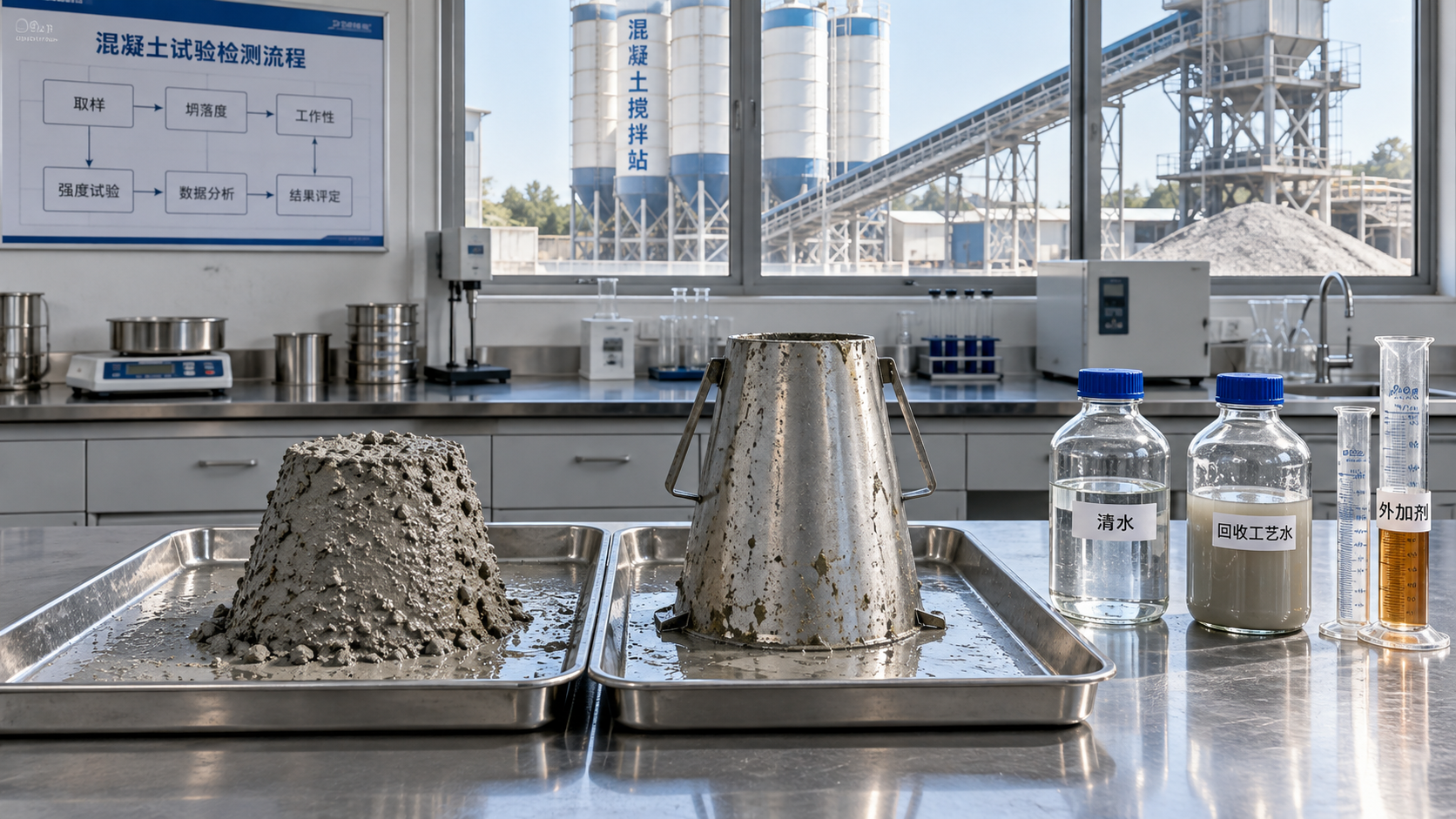
Can a batching plant use recycled process water without affecting admixture performance? Yes—provided the water stays within a tested operating range and the concrete meets its required fresh and hardened properties. Reuse alone does not determine compatibility. Suspended fines, dissolved salts, residual admixtures, and water storage conditions can all change how a mix responds.
The practical goal is consistent performance: predictable slump retention, setting time, air content, and strength at a controlled admixture dosage. Recycled water may require a different dosage from fresh water. That can be acceptable if the adjustment is repeatable and the finished concrete meets its specification. An unstable water supply that needs constant correction is a different problem.
Identify what is entering the recycled-water tank
Concrete process water can include truck washout, mixer wash water, drainage from aggregate recovery, and water separated from returned concrete. These streams do not necessarily have the same composition. A tank receiving routine mixer wash water may behave differently after a large volume of returned concrete enters the recovery system.
Establish which sources feed the tank, how they are treated, and where the batching pump draws water. Also identify potential contamination from cleaning products, oils, or unrelated site drainage. Concrete compatibility testing cannot compensate for uncontrolled inputs.
Three characteristics deserve separate attention:
- Suspended solids: Cement particles, hydration products, and aggregate fines affect the amount of actual water delivered and may alter water demand.
- Dissolved constituents: Salts and alkaline compounds remain in solution even when water looks clear. They can influence hydration and contribute to chloride, sulfate, or alkali limits for the concrete.
- Residual chemicals: Admixtures carried over from returned concrete can interact with the next batch, especially when the plant produces several mix families.
High pH is common in concrete wash water, but pH alone does not establish suitability. Two samples with similar pH can contain very different amounts of solids and dissolved material. Appearance, smell, and a single meter reading are useful screening observations; they are not a complete acceptance method.
Why recycled process water can change admixture response
Water-reducing admixtures work through interactions with cementitious particles. Polycarboxylate-based superplasticizers, for example, adsorb onto particle surfaces and help disperse them. Adding more fine material can introduce additional surfaces that interact with the admixture. Changes in dissolved chemistry can also alter adsorption and cement hydration.
The result is not always reduced effectiveness. Depending on the cement, supplementary cementitious materials, water chemistry, and admixture formulation, a mix may show a different initial slump, faster slump loss, or a changed dosage requirement. The direction and size of the change must be established with the materials used at the plant.
Air-entraining admixtures need particular attention because air content can shift independently of slump. A batch that appears workable may still have an unacceptable air content. Where freeze-thaw durability is specified, fresh-air measurements may need to be supported by hardened air-void assessment during qualification.
Retarders, accelerators, and hydration-control admixtures introduce another variable. Water recovered from concrete containing these products may carry residual chemical activity, but that activity cannot be inferred reliably from the original batch dosage. Dilution, elapsed time, and interaction with solids all matter.
This is why adding more superplasticizer is a poor first response to every slump problem. The cause may be an incorrect free-water calculation, a higher fines load, changing temperature, or an interaction involving another admixture.
Correct the water calculation before adjusting chemicals
A mass of slurry is not the same as an equal mass of water. If a batching system treats the entire slurry mass as mixing water, suspended solids can cause it to deliver less actual water than intended. Operators may then increase admixture dosage to recover workability while the underlying proportioning error remains.
For a slurry measured by mass, the basic accounting is:
Actual water in the slurry = total slurry mass − measured dry-solids mass.
This calculation requires a representative solids measurement. Density can provide a convenient routine indicator, but its relationship to solids content should be established for the plant’s own water. A generic conversion may be unreliable when the composition of recovered fines changes.
Include slurry water alongside aggregate moisture, added fresh water, and other relevant water sources in the batch calculation. Treat recovered solids separately. They should not automatically receive credit as fresh cementitious binder: their composition and remaining reactivity are uncertain.
Consistent sampling and agitation are essential. A sample from the top of a settled tank may bear little resemblance to the slurry entering the mixer after the pump starts. The sampling point should represent the water actually dosed into production.
Qualify a reuse range through controlled trial batches
Start with a representative production mix and its normal fresh-water control. Use the same cementitious materials, aggregates, admixture products, mixing sequence, and test conditions across comparisons. Correct aggregate moisture and account for slurry solids so the intended water content remains comparable.
Begin with a manageable partial replacement and increase reuse only as results support it. Define the replacement basis clearly—preferably by actual water contribution—so a change in slurry concentration does not silently change the trial.
The qualification should answer two separate questions: does recycled water change performance at the existing admixture dosage, and can an appropriate dosage adjustment restore reliable performance?
- Compare at a fixed admixture dosage. This reveals differences in initial workability, air content, and slump retention that a dosage adjustment could otherwise conceal.
- Adjust within the admixture supplier’s recommended range. Establish whether the target properties can be achieved without unacceptable effects on setting, air, or stability.
- Check performance over the delivery window. Measure workability at relevant elapsed times, including the expected discharge or placement period.
- Test hardened properties. Assess strength at relevant ages and include durability-related testing where the application requires it.
- Repeat with representative water variation. Include expected changes in solids concentration, storage condition, and temperature before defining an operating range.
A single successful batch establishes a useful starting point, not a production envelope. Equally, an unsuccessful batch does not prove that all reuse is unsuitable. A lower replacement level, more consistent solids control, or a compatible admixture formulation may resolve the problem.
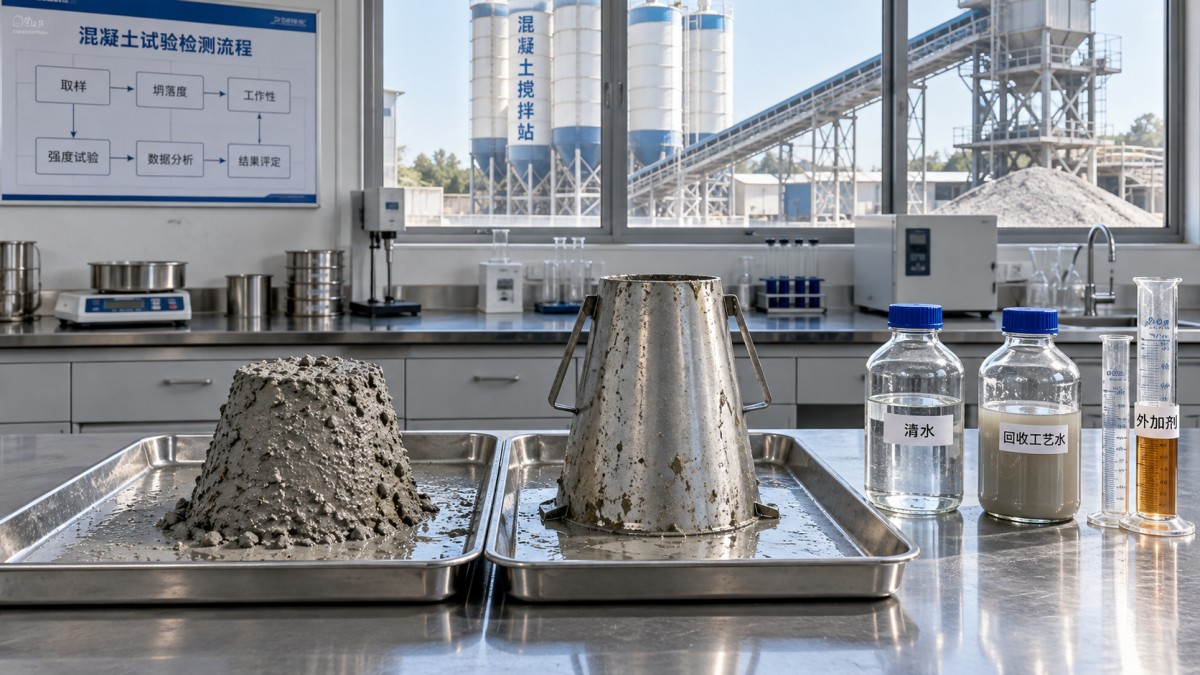
Test combinations that matter commercially. Qualification of a conventional mix does not automatically cover self-consolidating concrete, a high-air mix, or concrete with a different binder system. Grouping similar mixes can make the program manageable, but the grouping should reflect shared materials and performance demands.
Apply the project’s mixing-water and concrete acceptance requirements throughout. Those requirements may address water chemistry, comparative performance, or total constituent limits in the concrete. Meeting a water-quality criterion does not by itself demonstrate admixture compatibility.
Use treatment that addresses the actual problem
The right recovery equipment depends on what must be controlled. Settling and clarification reduce suspended material, but they do not necessarily remove dissolved salts. Fine filtration can produce visibly clearer water while leaving much of its dissolved chemistry unchanged.
Fresh-water blending is often a practical way to reduce variability during introduction. It provides a controllable reuse level while operating data accumulate. However, a fixed blend setting offers limited protection if the recycled-water concentration varies widely.
When evaluating recovery equipment, ask how it maintains consistent feed to the batch plant, measures solids, and handles off-specification water. Nominal throughput matters, but consistent output is what makes admixture dosing manageable.
Turn trial results into daily operating controls
Production needs limits that operators can measure and act on. Set these limits from the successful trials, including the allowed reuse proportion, solids range, and relevant chemistry indicators. Add defined responses for unusual contamination or water outside the qualified range.
A workable monitoring plan combines frequent process checks with periodic laboratory testing:
- At the tank: Check the source streams, agitation, visible contamination, and conditions that could change concentration.
- At the water supply: Monitor density or solids content and use pH and conductivity as supporting trend indicators.
- At the mixer: Record actual recycled-water contribution, corrected batch water, admixture dosage, temperature, and fresh-concrete results.
- Through quality control: Track setting behavior, strength, and application-specific properties against the qualified performance range.
Conductivity can help identify a changing dissolved-ion load, but it does not reveal which ions are present. An unexpected shift should trigger investigation or targeted chemical testing, rather than an automatic admixture adjustment.
Keep enough batch traceability to connect concrete behavior with the water used. Without that connection, gradual increases in admixture consumption can be mistaken for cement variability or seasonal effects. Review trends as well as individual failures.
Operators also need a clear fallback: reduce the reuse proportion, switch to the qualified fresh-water supply, or hold the affected water while its condition is assessed. This prevents production pressure from turning an out-of-range water condition into repeated batch corrections.
Recognize when a successful trial no longer applies
Requalification is warranted when a relevant input changes: cement or supplementary cementitious material source, admixture formulation, recovery treatment, tank operation, or the types of returned concrete entering the system. Seasonal temperature changes may also expose slump-retention or setting behavior that was not apparent during initial trials.
Persistent early stiffening, erratic air, increasing dosage demand, delayed setting, or unexplained strength variation are reasons to revisit the qualified conditions. Check the water balance and solids load before changing the admixture package. Where chemistry appears responsible, involve the admixture supplier using representative water samples and the actual binder combination.
Some applications justify a more restricted reuse policy. Concrete with demanding appearance, early-strength, air-void, or placement requirements may have less tolerance for variability. A plant can approve recycled water for selected mixes while retaining fresh water for others, based on demonstrated performance.
The most useful next step is a paired trial using representative recycled water and a normal fresh-water control. Establish accurate water accounting, compare admixture response through the expected placement window, and confirm hardened performance. Expand reuse only within the range that the plant can consistently measure, maintain, and reproduce.
Deep Dive
Related Intelligence
 Green Building MatWhat Makes a Digital Landscape Strategy Effective for Green Building Mat Exporters in ASEAN?Analyst:Chief Civil Engineer
 Green Building MatAre Eco-Friendly Industrial Coatings Actually Lower in VOCs — Or Just Reformulated with New Solvent Blends?Analyst:Chief Civil Engineer
 Green Building MatGraphene Materials Bulk Order Logistics: Lead Times, Minimum Order Quantities, and Storage Requirements for Construction-Scale DeploymentAnalyst:Chief Civil Engineer