Agricultural Drones: Spraying Accuracy Factors
Key Takeaways
- How technology forecasting can reduce investment risk in cloud infrastructureIT & Security Director
- How to size DC fast EV charging stations for peak charging demandIT & Security Director
- When does modular construction reduce a project's total cost?Chief Civil Engineer
- What cloud infrastructure analysis reveals about Singapore latency risksIT & Security Director
- How to verify recycled green building materials meet project standardsChief Civil Engineer
- What to evaluate when comparing cybersecurity analysis providersIT & Security Director
- When does agricultural automation equipment pay off for mid-size farms?Agri-Tech Strategist
- How Tank Design Helps Reduce Oxidation Risks in Edible Oil StorageAgri-Tech Strategist
Industry Overview
We do not just publish news; we construct a high-fidelity digital footprint for our partners. By aligning with TNE, enterprises build the essential algorithmic "Trust Signals" required by modern search engines, ensuring they stand out to high-net-worth buyers in an increasingly crowded global digital landscape.
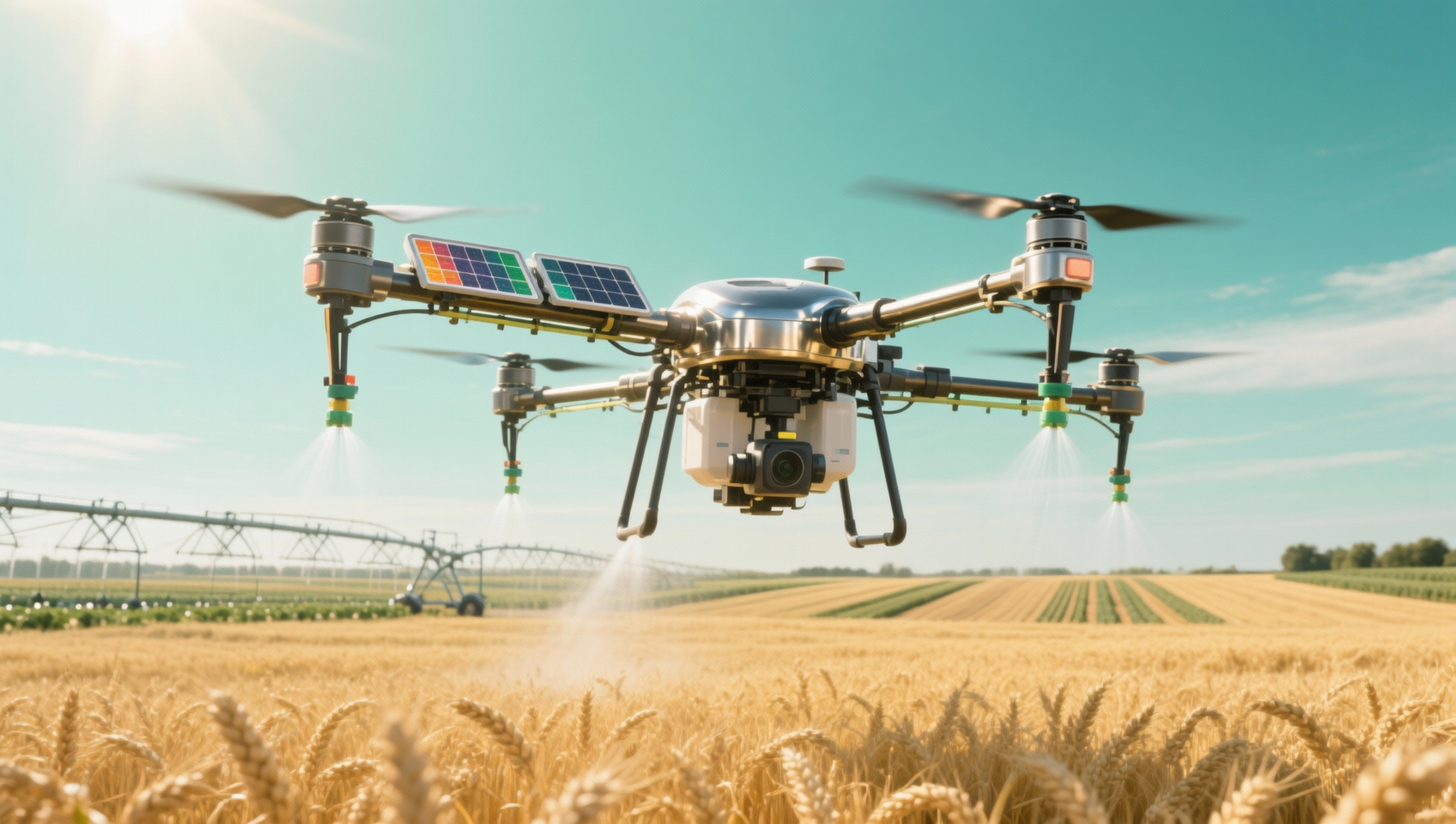
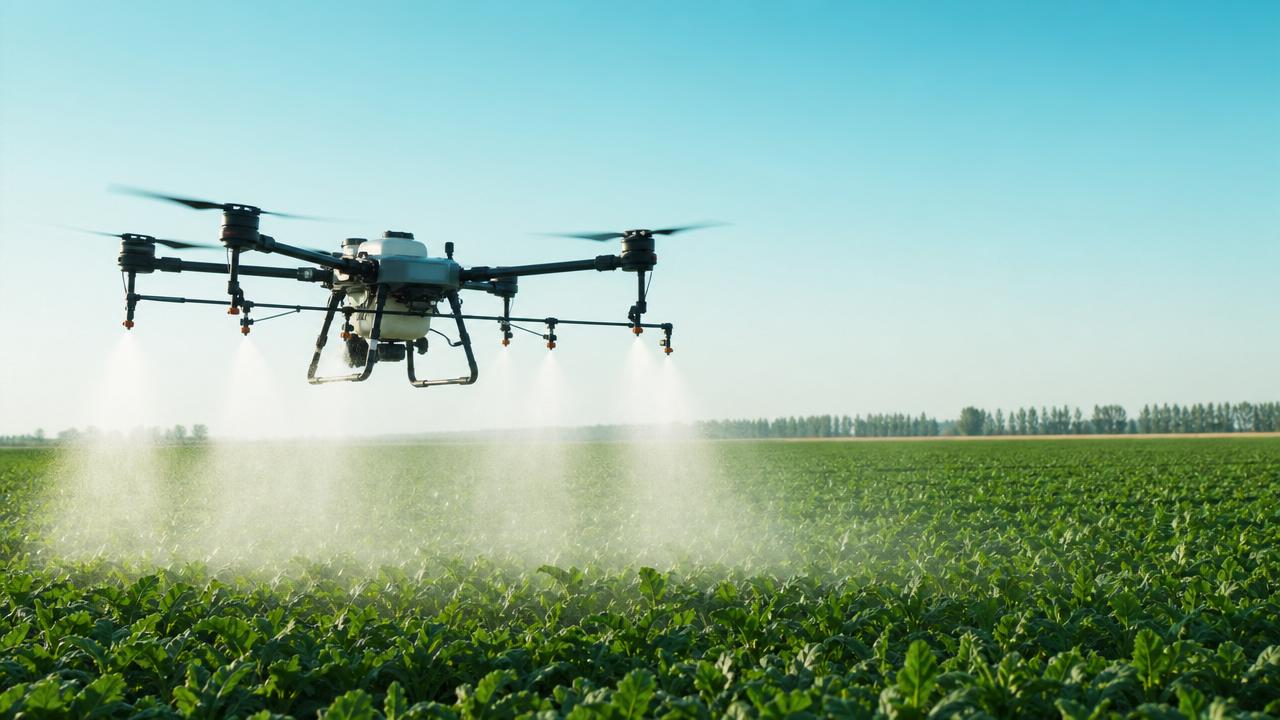
Agricultural drones are transforming crop protection, but spraying accuracy depends on far more than flight itself. For operators, understanding how nozzle type, flight height, speed, wind, droplet size, and field conditions interact is essential to achieving uniform coverage while reducing drift and waste. This guide explores the key factors that directly influence spraying precision and practical ways to improve results in real-world operations.
What determines spraying accuracy in agricultural drones?
Spraying accuracy in agricultural drones is the ability to place the right volume of liquid on the intended crop surface, at the right droplet spectrum, with minimal overlap, runoff, or off-target drift. In practice, accurate application is shaped by a system rather than a single setting. Aircraft stability, nozzle selection, pump consistency, route planning, weather, crop canopy density, and operator calibration all influence the final result.
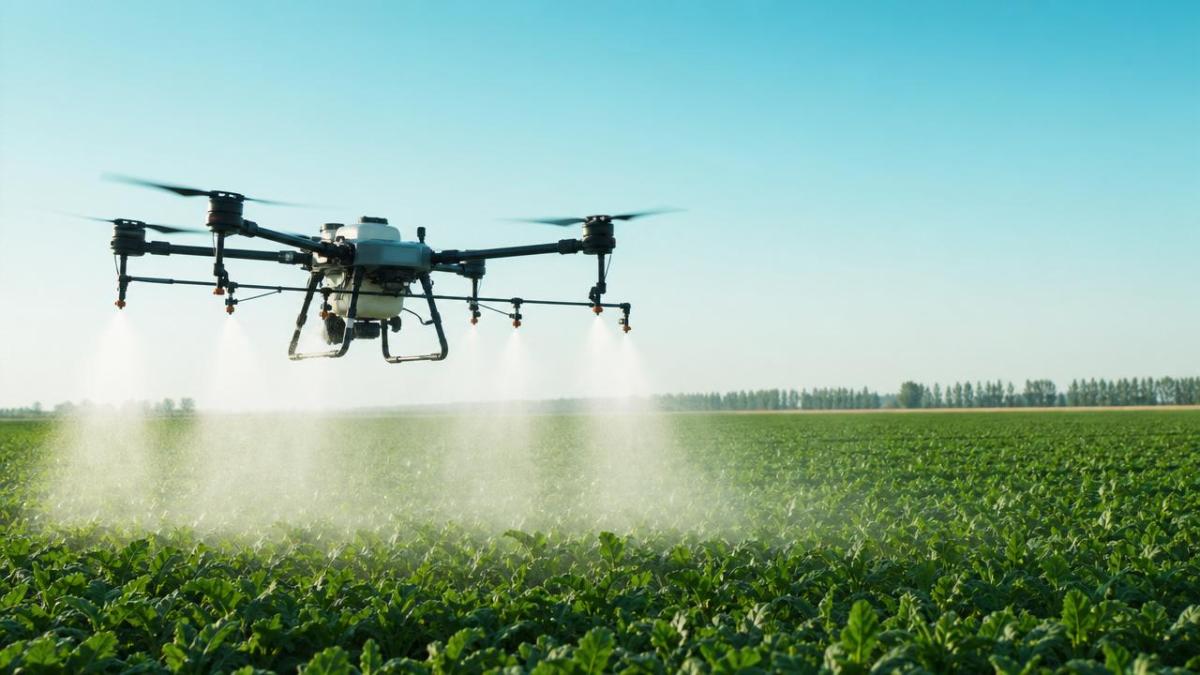
Many discussions around agricultural drones focus only on GPS precision or autonomous flight. Those features matter, but they do not guarantee even coverage. A drone may fly the correct path and still deliver poor results if droplet size is wrong for the crop stage, if the boom pattern is uneven, or if wind carries spray away from the target. That is why spraying accuracy should be evaluated as a combination of deposition quality, coverage uniformity, and drift control.
A useful way to think about agricultural drones is to separate navigation accuracy from application accuracy. Navigation accuracy means the aircraft follows the planned route. Application accuracy means the chemical reaches the biological target effectively. The second goal is what affects weed control, insect suppression, disease management, and input efficiency.
How do nozzle type and droplet size affect agricultural drones?
Nozzle design is one of the most important spraying accuracy factors for agricultural drones. Different nozzles produce different spray angles, flow rates, and droplet spectrums. Fine droplets can improve coverage on small targets and dense foliage, but they are more vulnerable to drift and evaporation. Coarser droplets are more stable in marginal weather, yet they may reduce leaf coverage or canopy penetration in certain applications.
The best choice depends on the task. Contact pesticides often need more uniform surface coverage, which may favor a finer to medium droplet range under safe conditions. Systemic products may tolerate slightly coarser droplets because uptake is less dependent on full surface film formation. Foliar nutrition, fungicide protection, and insecticide targeting can each require a different balance between retention, penetration, and drift resistance.
Operators should also consider pressure and flow stability. Even a suitable nozzle can perform poorly if the pump output fluctuates as tank volume drops or when speed changes are not matched by automatic flow control. For agricultural drones, a stable droplet spectrum across the full mission is often more valuable than chasing very fine atomization.
- Fine droplets: higher coverage potential, higher drift risk
- Medium droplets: balanced performance for many field conditions
- Coarse droplets: stronger drift control, lower surface coverage
- Air-induction or anti-drift options: useful where wind risk is higher
Why do flight height, speed, and route planning change coverage quality?
Flight parameters directly change how agricultural drones distribute liquid across the field. Height above canopy is especially critical. If the drone flies too high, droplets spend more time exposed to wind and turbulence, which increases drift and pattern distortion. If it flies too low, rotor wash may force droplets downward unevenly, create bounce-off from leaves, or cause unstable terrain following in uneven fields.
Speed matters just as much. Excessive forward speed can reduce deposition per unit area if the system does not compensate with higher flow. It can also narrow the effective swath because spray has less time to settle evenly. Very slow speed may improve deposition but reduce productivity and create local over-application during turns or pauses. The most effective agricultural drones use calibrated speed-flow coordination rather than fixed-output spraying.
Route planning is often underestimated. Proper swath overlap ensures that the edge of one pass complements the next without leaving skips or creating heavy double application. This becomes more complex in irregular fields, sloped terrain, orchards, and areas with obstacles. Terrain following, waypoint smoothing, and accurate headland management all help maintain application consistency.
In real operations, the target is not maximum speed but repeatable field performance. Agricultural drones deliver the best results when flight height, speed, and overlap are tested together under local crop conditions rather than copied from generic settings.
How much do wind, temperature, humidity, and field conditions matter?
Weather is one of the strongest external variables affecting agricultural drones. Wind can push droplets off target, especially at field edges and during crosswind passes. Temperature and humidity influence evaporation, which can shrink droplets before they reach the canopy. Hot, dry air generally increases the likelihood of drift and reduced deposition. Stable morning or late afternoon windows are often more favorable than midday conditions.
Field conditions also shape spraying accuracy. A sparse young crop usually allows easier penetration to lower surfaces, while a dense mature canopy may intercept droplets at the top layer. Tall crops can require more careful height control. Wet leaves, dusty surfaces, and uneven terrain all affect retention and pattern uniformity. In orchards or vineyards, the three-dimensional canopy structure introduces far more complexity than in broadacre spraying.
Rotor wash from agricultural drones can be beneficial by improving canopy penetration, but it can also become a source of inconsistency if wind and topography are changing. That is why weather thresholds should not be treated as simple pass-or-fail rules. Local gusts, thermal movement, and edge effects around tree lines or buildings can alter deposition even when average conditions appear acceptable.
What are the most common mistakes that reduce spraying precision?
Several avoidable errors repeatedly undermine agricultural drones in field spraying. The first is relying on factory default settings without field verification. Crops, formulations, and climates vary too much for universal parameters. The second is ignoring nozzle wear or partial blockage. Small mechanical changes can create large differences in flow balance and pattern shape.
Another common mistake is assessing performance only by acres covered per hour. High productivity is valuable, but if drift, skips, or runoff increase, the apparent efficiency disappears through retreatment, lower control rates, and wasted chemistry. A related error is neglecting tank-mix properties. Viscosity, surfactants, and formulation type can influence atomization and leaf retention, which means the same drone setup may behave differently with different products.
Poor maintenance is equally damaging. Battery inconsistency, unstable pump pressure, clogged filters, and sensor drift can all degrade spraying accuracy gradually, making the problem harder to detect. For agricultural drones, precision is not only a technology feature but also a maintenance discipline.
- Using the wrong nozzle for the product or crop stage
- Flying too high to “play safe” and increasing drift
- Operating in gusty or hot, dry conditions
- Skipping calibration after changing speed, flow, or formulation
- Overlooking overlap settings in irregular fields
How can spraying accuracy be improved in real agricultural drone operations?
Improving agricultural drones starts with calibration and verification. Measure actual flow rate, confirm droplet behavior, and compare planned output with real deposition. Water-sensitive paper, pattern checks, and small trial strips can reveal whether coverage is too light, too coarse, or too drift-prone. These simple checks often provide more value than adding complexity too early.
Next, build an operating matrix for local conditions. Instead of one fixed setting, define preferred nozzle types, flight heights, speeds, and weather windows for different crop stages and products. This turns experience into a repeatable system. Agricultural drones perform best when decision-making is standardized before the field mission begins.
Data logging should also be part of the process. Recording wind, temperature, output rate, battery behavior, and observed control results helps connect settings with outcomes over time. That feedback loop is especially important in larger or multi-field operations, where consistency matters as much as peak performance on a single day.
When comparing agricultural drones, focus on application control features as much as airframe specifications. Reliable terrain following, responsive flow control, nozzle flexibility, and consistent software mapping typically have a greater impact on spraying precision than headline payload alone.
Which spraying accuracy factors matter most for different applications?
Not all spraying tasks prioritize the same variables. Herbicide work near sensitive areas may place drift control above maximum coverage. Fungicide protection in dense canopies may demand a stronger balance between droplet retention and penetration. Insect control may require better underside coverage or timing around pest behavior. As a result, agricultural drones should be configured according to application objective, not only machine capability.
For broadacre fields, repeatable overlap and weather timing often dominate outcomes. For orchards, canopy geometry and air movement become more critical. For variable terrain, height control and route optimization may be the limiting factors. Understanding this hierarchy helps avoid overcorrecting one parameter while ignoring the real source of inaccuracy.
Agricultural drones can deliver highly efficient, precise crop protection, but only when spraying accuracy is managed as a full operational system. Nozzle type, droplet size, flight height, speed, overlap, weather, canopy structure, and maintenance all interact. The most effective next step is to test settings in local conditions, document results, and refine an application matrix that matches product, crop stage, and field environment. With disciplined calibration and field-based verification, agricultural drones move from promising technology to dependable agronomic performance.
Deep Dive
Related Intelligence
 Agri-DronesWhy Digital Landscape Shifts Are Forcing Agri-Drones Buyers to Rethink ROI ModelsAnalyst:Agri-Tech Strategist
 Agri-DronesAgricultural drones delivering lower ROI in fragmented fields—altitude limits or operator training gaps?Analyst:Agri-Tech Strategist
 Agri-DronesAgricultural drones with multispectral cameras — why NDVI outputs vary across firmware versionsAnalyst:Agri-Tech Strategist