Dongguan Upgrades 2026 Integrated Domestic & Foreign Trade Support
Key Takeaways
- How much RAM does edge computing hardware for IoT applications need?IT & Security Director
- How to evaluate precision livestock farming companies for grazing herdsAgri-Tech Strategist
- How to assess an agricultural machinery manufacturer's parts supportAgri-Tech Strategist
- What drives industrial automation cost in a new production line?Chief Civil Engineer
- What makes Ethiopia poultry farming profitable for small-scale producers?Agri-Tech Strategist
- What Are the Biggest Risks of Single-Source Chemical Procurement?Lead Materials Scientist
- Are Cloud Procurement Platforms Worth It for Chemical Sourcing?IT & Security Director
- How to Verify a New Materials Supplier’s Technical DocumentationLead Materials Scientist
Industry Overview
We do not just publish news; we construct a high-fidelity digital footprint for our partners. By aligning with TNE, enterprises build the essential algorithmic "Trust Signals" required by modern search engines, ensuring they stand out to high-net-worth buyers in an increasingly crowded global digital landscape.
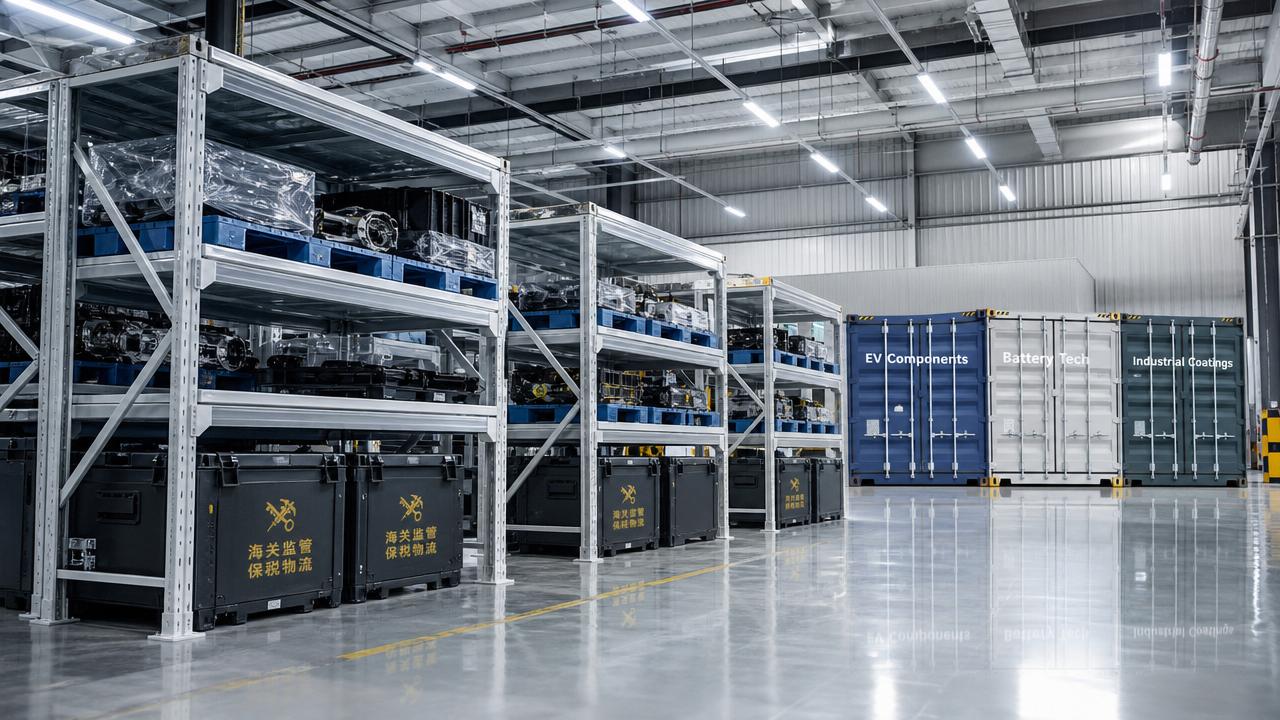
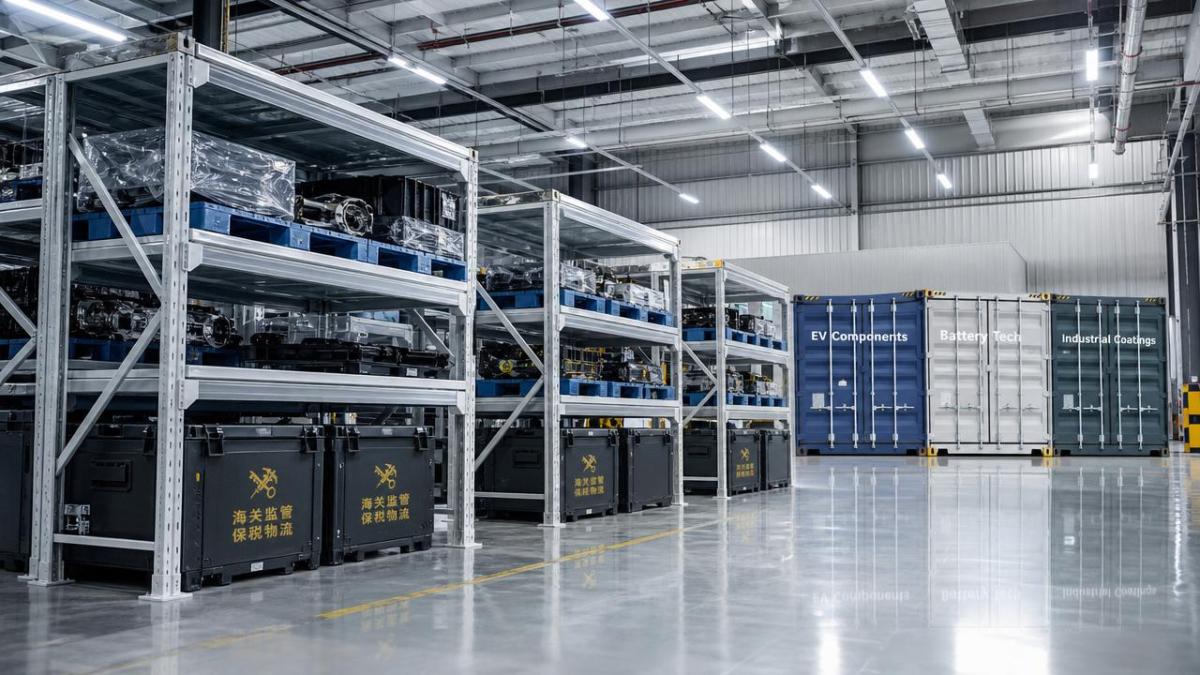
Dongguan Municipal Bureau of Commerce issued the Dongguan Municipal Guidelines for Supporting High-Quality Integrated Development of Domestic and Foreign Trade (2026) on April 14, 2026. The policy introduces enhanced support for bonded repair operations, export credit insurance, and overseas exhibition subsidies — with direct implications for exporters of EV components, industrial coatings, battery technologies, and other high-value aftermarket-intensive products.
Event Overview
On April 14, 2026, the Dongguan Municipal Bureau of Commerce officially released the Dongguan Municipal Guidelines for Supporting High-Quality Integrated Development of Domestic and Foreign Trade (2026). The document confirms a one-time subsidy of RMB 1 million for enterprises conducting ‘two-ends-outside’ bonded repair services, and raises the cap for government-subsidized overseas exhibition participation to RMB 200,000 per event. The policy explicitly covers export categories including EV components, industrial coatings, and battery technologies.
Industries Affected by Sector
Direct Exporters
Enterprises engaged in cross-border sales of EV components, industrial coatings, or battery-related subsystems are directly eligible for the upgraded overseas exhibition subsidy and bonded repair incentives. The increased per-exhibition cap lowers cost barriers for market entry and brand presence in priority overseas markets, especially where after-sales service infrastructure remains underdeveloped.
Aftermarket Service Providers & Repair Operators
Firms offering warranty fulfillment, field repair, or component-level refurbishment — particularly those operating under bonded logistics frameworks — stand to benefit from the RMB 1 million one-time subsidy. This support targets operational setup costs associated with customs-bonded repair facilities, including equipment import, compliance certification, and bonded warehouse integration.
Supply Chain Enablers (Logistics, Customs Brokers, Certification Agencies)
The expansion of bonded repair activity implies higher demand for bonded warehousing capacity, customs clearance expertise specific to repair-return cycles, and conformity assessment services for re-exported repaired goods. These service providers may see increased engagement from manufacturers seeking end-to-end compliant repair solutions.
What Enterprises and Practitioners Should Monitor and Act On
Track official implementation details and application timelines
The Guidelines outline eligibility criteria and subsidy amounts but do not yet specify procedural requirements (e.g., documentation for bonded repair verification, deadlines for exhibition subsidy claims, or audit protocols). Applicants should monitor updates from the Dongguan Municipal Bureau of Commerce and local customs authorities for formal application windows and evidentiary standards.
Assess eligibility against covered product categories and business models
The policy names EV components, industrial coatings, and battery technologies as illustrative sectors — not an exhaustive list. Firms should evaluate whether their exported goods qualify as ‘repairable high-value industrial products’ under the ‘two-ends-outside’ definition (i.e., imported for repair and re-exported without entering domestic circulation). Product classification and tariff heading alignment will be critical for qualification.
Distinguish between policy intent and operational readiness
While the subsidy levels signal strong municipal support for global aftermarket capability, actual uptake depends on enterprise capacity to establish compliant bonded repair workflows. Companies should assess internal readiness — including technical capability to perform certified repairs, traceability systems for returned units, and coordination with bonded logistics partners — before initiating applications.
Prepare documentation and cross-departmental coordination early
Eligible firms should begin compiling baseline records: export invoices for target products, proof of overseas exhibition registration (including booth contracts), and preliminary feasibility assessments for bonded repair facility setup. Internal alignment across finance, logistics, compliance, and after-sales departments is recommended ahead of formal application submission.
Editorial Observation / Industry Perspective
Observably, this policy reflects a deliberate municipal effort to strengthen Dongguan’s role beyond manufacturing — toward value-added global service delivery. The emphasis on bonded repair signals recognition that competitive advantage increasingly lies in localized responsiveness, not just cost-efficient production. Analysis shows the subsidy structure prioritizes capital expenditure over recurring operational support, suggesting it functions more as an enabler for capability building than as ongoing revenue replacement. From an industry perspective, the 2026 Guidelines are best understood not as an immediate financial windfall, but as a calibrated signal encouraging structural upgrades in post-sale service infrastructure — particularly for exporters serving complex B2B equipment markets.
Conclusion
This policy marks a targeted step in aligning local industrial capacity with evolving global trade expectations — specifically, the growing demand for integrated product-and-service exports. It does not represent a broad-based stimulus, nor does it alter national-level export regulations or tariff regimes. Instead, it offers focused, actionable support for firms willing and able to invest in compliant, scalable aftermarket capabilities. Currently, it is more appropriately understood as an enabling framework — one whose real-world impact will depend on both enterprise adoption speed and administrative clarity in rollout.
Source Disclosure:
Main source: Dongguan Municipal Bureau of Commerce — Dongguan Municipal Guidelines for Supporting High-Quality Integrated Development of Domestic and Foreign Trade (2026), issued April 14, 2026.
Note: Implementation rules, application procedures, and sector-specific eligibility interpretations remain subject to official clarification and are under observation.
Deep Dive
Related Intelligence
 Food Processing MachHow High-Net-Worth Buyers Are Reshaping Food Processing Machinery Procurement in 2026Analyst:Agri-Tech Strategist
 Steel Market TrendsHow Buyers Can Avoid Common 904L Stainless Steel Coil Sourcing MistakesAnalyst:Lead Materials Scientist
 Specialty ChemicalsSodium Methoxide Selection: How Chemical Buyers Reduce Specification and Handling RiskAnalyst:Lead Materials Scientist