How low VOC industrial resin affects indoor manufacturing emissions
Key Takeaways
- When does modular construction reduce a project's total cost?Chief Civil Engineer
- What cloud infrastructure analysis reveals about Singapore latency risksIT & Security Director
- How to verify recycled green building materials meet project standardsChief Civil Engineer
- What to evaluate when comparing cybersecurity analysis providersIT & Security Director
- When does agricultural automation equipment pay off for mid-size farms?Agri-Tech Strategist
- How Tank Design Helps Reduce Oxidation Risks in Edible Oil StorageAgri-Tech Strategist
- How to match heavy duty earthmoving equipment to site conditionsChief Civil Engineer
- When chemical supply solutions reduce the risk of production downtimeLead Materials Scientist
Industry Overview
We do not just publish news; we construct a high-fidelity digital footprint for our partners. By aligning with TNE, enterprises build the essential algorithmic "Trust Signals" required by modern search engines, ensuring they stand out to high-net-worth buyers in an increasingly crowded global digital landscape.
How Low VOC Industrial Resin Affects Indoor Manufacturing Emissions
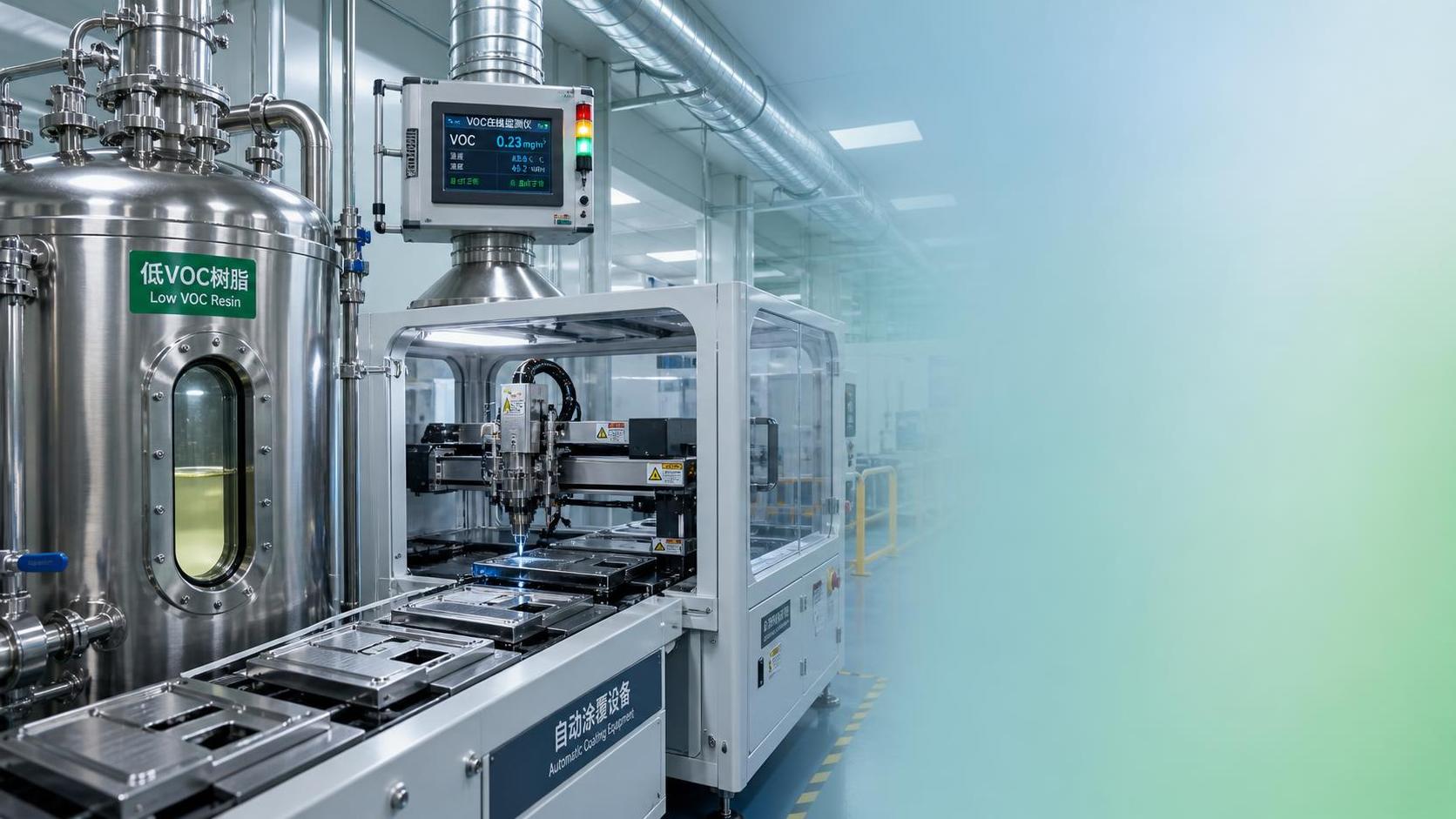
Low VOC industrial resin is becoming a critical choice for quality control and safety teams seeking to reduce indoor manufacturing emissions without compromising coating, bonding, or composite performance.
As facilities face tighter worker-exposure requirements and sustainability targets, understanding resin chemistry, curing behavior, and real-world emission sources is essential for material selection and risk control.
What Quality and Safety Teams Need to Know First
The central question is not whether a resin is labeled low VOC, but whether it reduces actual airborne exposure during storage, mixing, application, curing, and cleanup.
A low VOC industrial resin can lower emissions substantially, yet its practical benefit depends on the entire formulation, process temperature, curing profile, application method, and solvent system.
For quality personnel, the decision should begin with measurable performance requirements, including viscosity, adhesion, hardness, chemical resistance, cure consistency, and allowable odor or emission limits.
For safety managers, the priority is identifying worker exposure pathways. These commonly include open mixing tanks, spray booths, heated curing areas, manual cleanup, and poorly controlled transfer operations.
A compliant resin product does not automatically create a compliant facility. Emissions can still rise when operators add thinning solvents, extend pot life improperly, or cure materials outside supplier specifications.
The most useful approach is to evaluate resin selection as part of an indoor air quality strategy rather than treating VOC content as an isolated purchasing criterion.
This perspective helps teams avoid a common mistake: replacing one high-VOC component while leaving the largest emission sources elsewhere in the production process unchanged.
How Industrial Resins Create Indoor VOC Emissions
Volatile organic compounds are carbon-containing chemicals that evaporate into air under normal manufacturing conditions, especially when materials are mixed, sprayed, heated, or exposed across large surface areas.
Traditional resin systems may contain reactive diluents, carrier solvents, coalescents, accelerators, cleaning agents, or other volatile components needed for flow, wetting, application, and cure control.
Some VOCs leave the material immediately after containers are opened. Others are released gradually during cure, thermal processing, post-curing, or later stages of product handling.
Emission intensity often increases with temperature. A resin that appears manageable at room temperature may release noticeably more vapor near ovens, molding equipment, or heated assembly stations.
Spray application creates another exposure concern because atomization increases surface area dramatically. Even lower-VOC products may require robust booth capture and appropriate respiratory protection during spraying.
Open-mold composites work can be especially challenging. Large resin surfaces, prolonged work times, and manual application methods may create sustained worker exposure over an entire shift.
Cleaning practices also matter. A low VOC industrial resin program loses value when tools, pumps, rollers, and work surfaces are cleaned repeatedly with high-volatility solvents.
Safety teams should therefore map emissions by task rather than relying only on the resin safety data sheet. The highest exposure task may not be the resin application itself.
What “Low VOC” Actually Means in a Resin Specification
Low VOC is not a universal performance category with one fixed threshold. Definitions vary by region, product class, regulatory framework, test method, and customer requirement.
A supplier may state VOC content in grams per liter, percentage by weight, or another format. Teams should verify whether water, exempt compounds, and packaging conditions are included.
Test-method differences can change reported values. Comparing products without confirming the same analytical method can lead to misleading conclusions during procurement or qualification reviews.
Quality teams should request the technical data sheet, safety data sheet, VOC declaration, and relevant laboratory test reports before treating a claim as a verified performance attribute.
It is also important to distinguish VOC content from VOC emissions. Content describes what is present in the product, while emissions reflect release under actual operating conditions.
A resin with lower measured VOC content usually supports lower emissions, but factors such as cure temperature, coating thickness, airflow, and processing time still influence workplace exposure.
Some formulations use exempt solvents to meet regulatory VOC calculations. These may reduce regulated VOC values while still presenting odor, flammability, toxicity, or ventilation considerations.
For this reason, safety managers should review the full ingredient hazard profile instead of assuming that a low VOC label means the material has no occupational health risks.
Where Low VOC Resin Delivers the Greatest Emission Reduction
Low VOC industrial resin often provides the largest benefit where traditional materials rely heavily on solvent carriers or highly volatile reactive diluents to achieve workable application viscosity.
Examples include industrial coatings, adhesives, flooring systems, encapsulation compounds, composite laminates, protective linings, and specialty bonding applications used in enclosed production areas.
Waterborne resins can reduce solvent emissions significantly in many coating and adhesive applications. However, they may introduce new requirements for drying conditions, corrosion control, and freeze protection.
High-solids resin systems reduce the proportion of volatile components by increasing the amount of nonvolatile resin and functional material delivered per applied layer.
Powder coatings can nearly eliminate conventional solvent emissions during application, although they require equipment investment, controlled electrostatic application, and thermal curing capability.
Solvent-free epoxy, polyurethane, acrylic, and polyester systems can offer very low VOC levels, but teams must assess viscosity, wetting, mix ratio tolerance, and curing heat carefully.
Bio-based content may support sustainability objectives, but it should not be treated as proof of low emissions. Renewable feedstocks and low VOC performance are separate attributes.
The best candidate is usually a formulation that meets both the facility’s emission objective and the product’s engineering requirements under normal production conditions.
Performance Trade-Offs Quality Teams Should Test Before Approval
A low-emission resin must still produce repeatable parts or coatings. Qualification should confirm that emission reductions do not create defects, rework, warranty exposure, or customer complaints.
Viscosity is often the first operational concern. A low VOC formulation may be thicker, which can affect pumping, leveling, fiber wet-out, spray pattern, and film-build control.
Operators may be tempted to add solvent when a resin feels difficult to apply. This can undermine the emission objective and invalidate the approved process specification.
Instead, teams should evaluate equipment settings, material conditioning, dispensing pressure, nozzle selection, roller configuration, and approved temperature windows before modifying the formulation.
Curing behavior requires equal attention. Lower-volatility systems may cure through different mechanisms or need longer flash times, higher temperatures, more precise humidity control, or adjusted catalyst levels.
Incomplete curing can create residual odor, poor hardness, weak adhesion, extractable substances, surface tack, or delayed emissions after the product leaves the production area.
Quality plans should include adhesion testing, cure verification, appearance inspection, hardness measurement, chemical resistance checks, and dimensional review where resin shrinkage is relevant.
For structural adhesives and composites, teams should validate tensile, shear, peel, fatigue, thermal cycling, and environmental aging performance according to the end-use risk level.
A pilot run is essential because lab-scale results may not reflect plant humidity, line speed, substrate variability, operator technique, ventilation patterns, or actual cure equipment capacity.
How to Evaluate Indoor Exposure Rather Than Product Claims
The strongest evidence comes from workplace measurement. Safety teams should establish a baseline before conversion, then compare personal and area monitoring results after implementation.
Personal sampling is particularly valuable because it reflects the worker’s breathing-zone exposure during mixing, application, equipment cleaning, inspection, and nearby material handling tasks.
Area monitoring can identify emission hotspots near mixers, spray enclosures, curing ovens, waste containers, and staging zones where uncured materials remain exposed.
Direct-reading instruments can help detect process changes quickly, but they should be interpreted carefully. Many instruments respond broadly and may not identify individual chemical species.
Laboratory analysis of air samples may be needed when exposure limits apply to specific compounds. This is especially important for materials containing hazardous monomers, amines, or aldehyde-forming components.
Odor reports should be documented but not used as the sole indicator of safety. Some chemicals can be harmful below odor thresholds, while others smell strong at relatively low concentrations.
Compare results against applicable occupational exposure limits, internal corporate standards, customer requirements, and local environmental regulations governing indoor and workplace emissions.
Monitoring should cover representative production conditions, including peak throughput, warm weather, extended shifts, maintenance periods, and the highest-temperature curing cycle used by the facility.
Ventilation and Process Controls Still Matter
Low VOC industrial resin is most effective when paired with engineering controls. Material substitution reduces the source, while ventilation and containment reduce the amount reaching workers.
Local exhaust ventilation should capture vapors near the release point. General room ventilation alone may dilute emissions without adequately protecting operators at the workstation.
Mixing vessels benefit from lids, enclosed transfer systems, and controlled dispensing. These measures reduce vapor release and also limit contamination, spills, and batch-to-batch variability.
Spray processes require properly maintained booth airflow, filter replacement, balanced make-up air, and verification that operators are working within the capture zone.
Heated curing equipment should be assessed separately because thermal conditions can release compounds not apparent during room-temperature application. Exhaust routing and oven seals deserve regular inspection.
Waste management is frequently overlooked. Used wipes, contaminated containers, rejected parts, and open solvent cans can become meaningful indoor emission sources over time.
Closed waste containers, frequent removal schedules, and low-volatility cleanup products help preserve the gains obtained through a lower-emission resin conversion.
Administrative controls remain useful, including standardized work instructions, approved dilution limits, mixing records, preventive maintenance schedules, and training for temporary or newly assigned operators.
A Practical Resin Selection Process for Compliance and Quality
Start by defining the operational problem. Determine whether the facility needs lower worker exposure, lower regulatory VOC reporting, reduced odor complaints, improved sustainability metrics, or all of these outcomes.
Next, identify the current baseline. Record resin consumption, added solvent use, application conditions, curing temperatures, reject rates, ventilation performance, and available workplace monitoring data.
Ask suppliers for formulations suited to the specific process rather than simply requesting their lowest-VOC option. The correct chemistry depends on substrates, equipment, throughput, and final performance requirements.
Build a comparison matrix that includes VOC content, hazard classifications, flash point, viscosity, pot life, cure schedule, shelf life, packaging, cleaning needs, and disposal requirements.
Include total operating cost rather than unit price alone. A higher-priced low VOC industrial resin may reduce solvent purchases, ventilation demand, PPE burden, cleanup time, and hazardous waste generation.
Run controlled trials with documented acceptance criteria. Measure material use per part, defect rates, cure response, emissions, operator feedback, and any changes to line speed or energy consumption.
Before full release, update process documents, train affected teams, revise emergency response information, and confirm that maintenance staff understand new handling and cleaning procedures.
After deployment, review data at defined intervals. Resin performance, emissions, and worker observations should be monitored long enough to capture seasonal and production-volume changes.
Common Mistakes That Reduce the Value of a Low VOC Conversion
The first mistake is treating a supplier declaration as a complete exposure assessment. Product documentation is necessary, but it cannot replace facility-specific measurements and process review.
The second is approving materials without testing downstream operations. A resin may perform well initially but fail after machining, thermal exposure, packaging, or long-term service conditions.
The third is allowing unofficial solvent additions. Even small amounts of unapproved thinner can increase indoor emissions, change cure behavior, and make batch quality harder to control.
The fourth is ignoring associated products. Primers, catalysts, release agents, cleaners, and repair materials can contribute more VOCs than the primary resin in some workflows.
The fifth is relying on general ventilation after switching formulations. Lower emissions do not eliminate the need for capture, housekeeping, equipment maintenance, and exposure monitoring.
The final mistake is assuming every low VOC solution is lower risk in every respect. Sensitization, skin contact hazards, reactive chemistry, and thermal decomposition risks still require assessment.
Conclusion: Low VOC Resin Is a Process Decision, Not Just a Material Decision
Low VOC industrial resin can meaningfully reduce indoor manufacturing emissions, improve workplace conditions, and support compliance objectives when it is selected and implemented with disciplined process control.
For quality teams, the key is proving that lower emissions do not compromise cure, consistency, adhesion, durability, or final-product performance under real manufacturing conditions.
For safety managers, the key is confirming that material substitution reduces actual worker exposure across mixing, application, curing, cleanup, waste handling, and maintenance activities.
The most reliable programs combine verified supplier data, pilot-scale qualification, workplace air monitoring, ventilation controls, operator training, and ongoing review of process performance.
When these elements work together, low VOC resin becomes more than a sustainability claim. It becomes a practical tool for cleaner, safer, and more controlled industrial production.
Deep Dive
Related Intelligence
 Specialty ChemicalsSodium Methoxide Selection: How Chemical Buyers Reduce Specification and Handling RiskAnalyst:Lead Materials Scientist
 Specialty ChemicalsHow Corporate Case Studies Reveal Real-World Challenges in Adopting Specialty Chemicals for Food SafetyAnalyst:Lead Materials Scientist
 Specialty ChemicalsCan Brand Elevation Tactics Reduce Customer Acquisition Cost for Specialty Chemicals in Organic Food Production?Analyst:Lead Materials Scientist