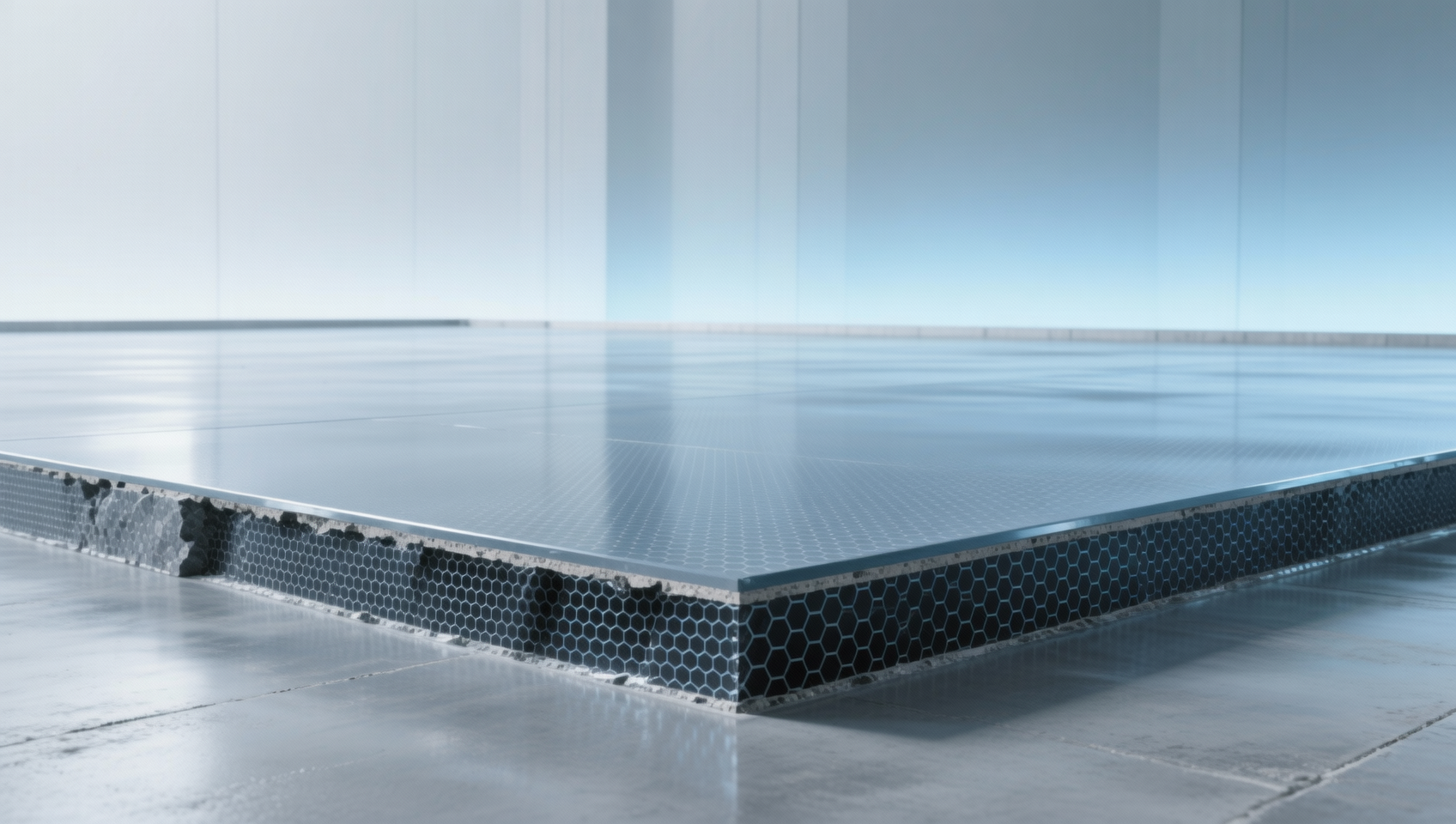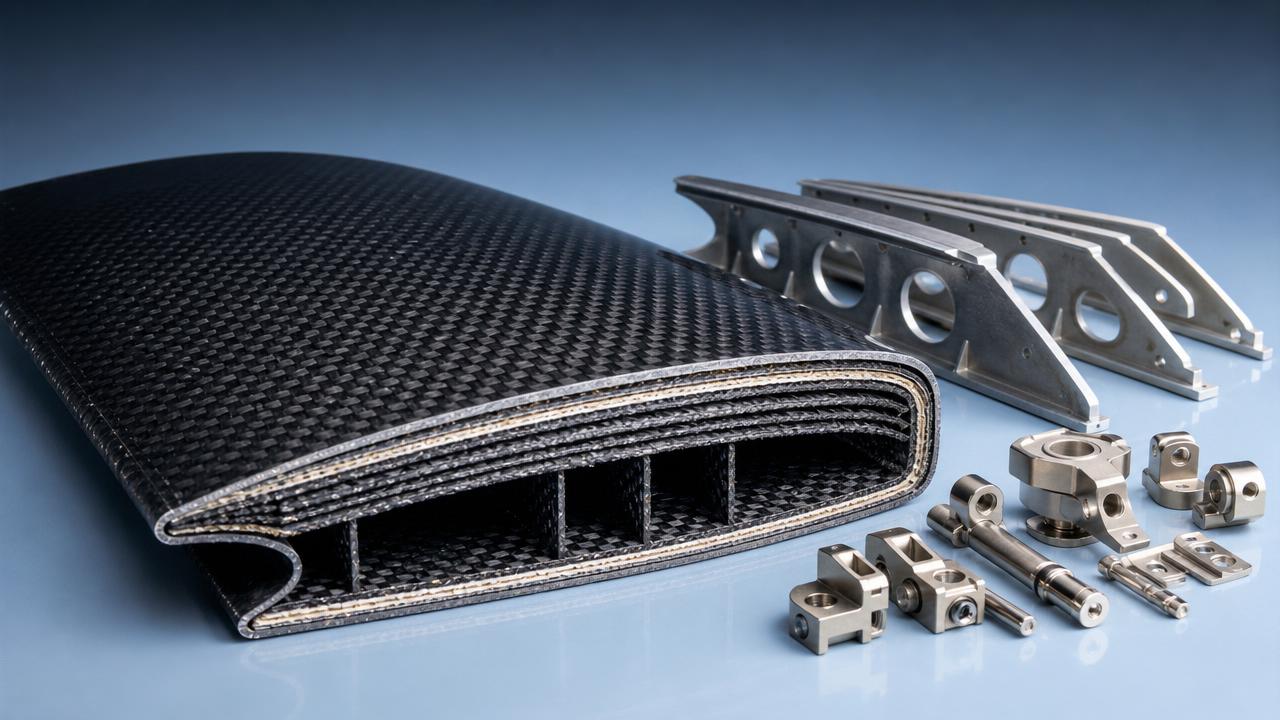
As aerospace programs push for lighter, more fuel-efficient platforms, carbon fiber composites for aerospace are evaluated beyond weight savings.
Technical teams must verify durability under thermal cycling, fatigue, impact, moisture exposure, and long-term operational stress.
The real decision is not whether composites are “better” than metals, but where their advantages justify certification, manufacturing, and lifecycle risk.
What Technical Evaluators Should Decide First
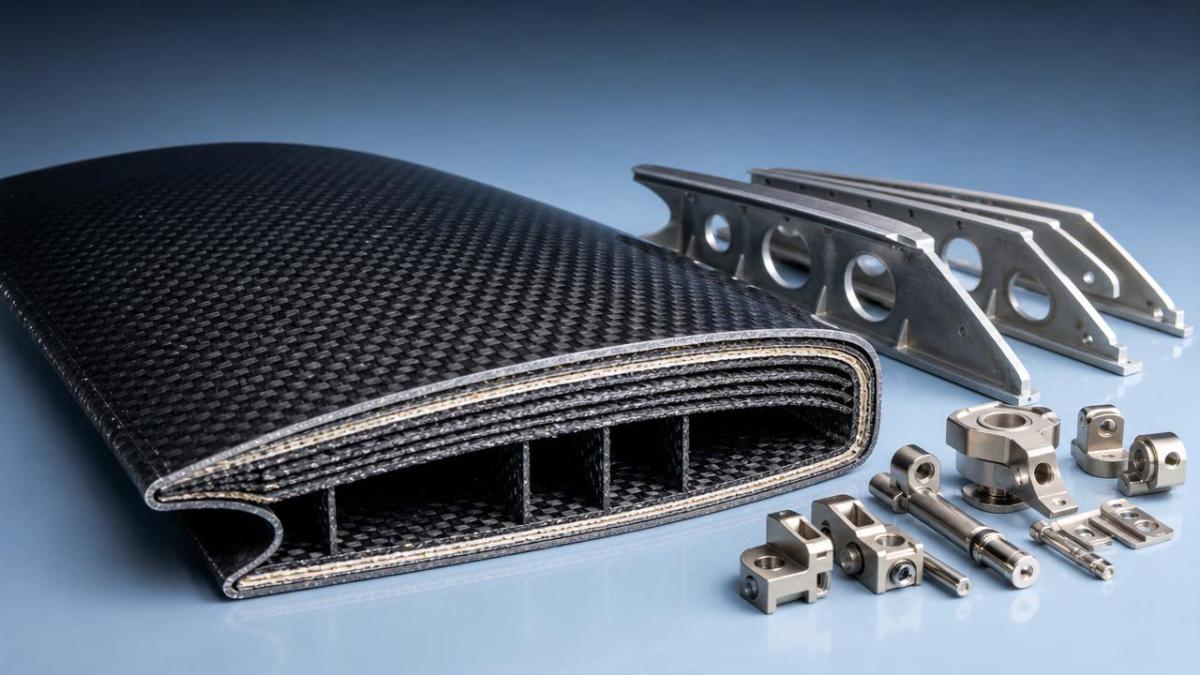
The first question is not material strength alone. It is whether the structure benefits from tailored stiffness, reduced mass, and corrosion resistance.
Carbon fiber composites deliver the strongest value when load paths are predictable, geometry is weight-sensitive, and maintenance access is limited.
They are less attractive when frequent impact, uncertain repair conditions, or low-rate production make inspection and process control disproportionately expensive.
For aerospace evaluators, the correct comparison is system-level performance, not coupon-level tensile strength or density charts.
Why Weight Savings Still Drive Composite Adoption
Weight reduction remains the primary reason aerospace manufacturers consider carbon fiber composites for aerospace structures, interiors, propulsion components, and secondary assemblies.
Compared with aluminum alloys, carbon fiber reinforced polymer structures can reduce component weight significantly when designed around anisotropic properties.
This matters because every kilogram removed can improve payload capacity, range, fuel burn, emissions, or battery endurance in electric aircraft.
However, weight savings only materialize when designers avoid simply replacing metal geometry with composite laminates of similar form.
The material performs best when ply orientation, layup sequence, core materials, joints, and load transfer are optimized together.
A poor composite design can become heavier than aluminum after adding fasteners, doublers, lightning protection, impact protection, and repair margins.
Durability Is More Complex Than Static Strength
Composites often show excellent fatigue resistance, especially compared with metals that accumulate crack growth under repeated loading.
Yet durability must include damage tolerance, environmental exposure, resin behavior, delamination risk, and degradation around holes or bonded interfaces.
Carbon fibers themselves are highly stable, but the polymer matrix can absorb moisture, soften with heat, or become brittle under certain conditions.
Thermal cycling creates additional concerns because carbon fibers and resin systems expand differently, generating internal stresses over time.
Impact damage is another critical issue because barely visible impact damage can reduce compression strength without obvious surface deformation.
For mission-critical parts, durability evaluation should combine coupon testing, element testing, subcomponent validation, and representative service environment simulation.
How Composites Compare With Aluminum and Titanium
Aluminum remains attractive because it is well understood, easily machined, widely available, repairable, and supported by mature certification history.
Titanium offers high strength, heat resistance, and corrosion performance, but it carries higher material and processing costs.
Carbon fiber composites compete differently. They offer high specific stiffness, excellent fatigue behavior, corrosion resistance, and design freedom.
The trade-off is sensitivity to manufacturing defects, inspection complexity, repair limitations, and dependence on qualified material and process control.
Metals typically fail through visible yielding, cracking, or corrosion. Composites may fail through delamination, matrix cracking, fiber breakage, or bondline degradation.
This difference affects inspection planning, maintenance manuals, allowable damage limits, and structural health monitoring strategies.
Where Carbon Fiber Composites Deliver Clear Aerospace Value
Primary aircraft structures can benefit when programs have sufficient production volume, engineering maturity, and certification resources.
Wings, fuselage barrels, control surfaces, fairings, empennage components, and rotor blades are proven areas for composite adoption.
In unmanned aerial vehicles, composites are especially attractive because weight efficiency directly improves endurance, payload capacity, and operating economics.
Satellite structures also benefit from low mass, dimensional stability, and tailored thermal expansion properties.
Interior components can use composites for weight reduction, though fire, smoke, toxicity, and cost requirements strongly influence material selection.
For propulsion-adjacent components, evaluators must focus on temperature limits, erosion resistance, containment requirements, and resin system performance.
Manufacturing Method Determines Real Performance
Composite performance depends heavily on manufacturing consistency, not only fiber type or resin chemistry.
Autoclave-cured prepreg remains common for high-performance aerospace parts because it provides strong control over void content and fiber volume.
Out-of-autoclave prepreg, resin transfer molding, compression molding, and automated fiber placement can reduce cost or improve scalability.
Each method introduces different risks involving porosity, resin distribution, dimensional tolerance, tack life, cure uniformity, and repeatability.
Technical evaluators should review process capability, quality data, equipment control, operator training, and traceability before accepting supplier claims.
A composite part with excellent theoretical properties can underperform if curing, storage, handling, or layup discipline is weak.
Certification Risk Can Outweigh Material Advantages
Aerospace certification demands evidence that materials, design allowables, processes, inspection methods, and repairs remain controlled throughout the product lifecycle.
For composites, this evidence often requires a building-block approach from coupons to structural elements and full-scale testing.
Evaluators should ask whether the supplier has qualified material systems, documented process specifications, and aerospace-grade quality management systems.
They should also assess whether allowables are proprietary, transferable, or tied to a specific facility and process route.
Certification risk rises when new fibers, new resins, novel processes, or unfamiliar hybrid laminates are introduced simultaneously.
A pragmatic strategy is to limit novelty in early programs and introduce innovation where performance gains clearly justify validation burden.
Inspection, Maintenance, and Repair Must Be Planned Early
Composite inspection cannot be treated as an afterthought because some critical damage may not be visible during routine visual checks.
Ultrasonic testing, thermography, shearography, tap testing, and computed tomography may be required depending on part criticality.
Maintenance teams need clear allowable damage limits, repair procedures, environmental controls, and technician training before fleet deployment.
Bonded repairs can restore performance, but they require surface preparation, cure control, and verification discipline.
Bolted repairs may be simpler operationally, but they can introduce stress concentrations and reduce weight-saving benefits.
The best composite programs integrate inspectability, access, repair philosophy, and spare-part logistics during the design phase.
Cost Evaluation Should Include Lifecycle Economics
Carbon fiber composites often have higher raw material and processing costs than aluminum, especially for low-volume programs.
However, lifecycle economics may favor composites when fuel savings, corrosion reduction, lower fatigue maintenance, and longer inspection intervals are significant.
For commercial aerospace, fuel burn and utilization rates strongly influence the business case.
For defense and space applications, payload, range, survivability, and mission capability may justify higher acquisition cost.
Evaluators should model total cost using manufacturing yield, scrap rate, tooling amortization, inspection burden, repair cost, and operational savings.
A narrow purchase-price comparison can reject a material that delivers superior value across the aircraft lifecycle.
Key Material Variables to Review Before Selection
Fiber type affects stiffness, strength, strain capability, conductivity, and cost. High-modulus fibers may improve stiffness but reduce damage tolerance.
Resin selection affects thermal resistance, toughness, moisture behavior, fire performance, processability, and repair compatibility.
Thermoset systems remain dominant in many aerospace structures, while thermoplastics are gaining attention for toughness, weldability, and faster processing.
Core materials, adhesives, coatings, and lightning strike protection also influence durability and certification complexity.
Hybrid designs using carbon fiber with glass, aramid, metallic meshes, or ceramic features can address specific weaknesses.
The evaluation should focus on the complete material system, not isolated fiber performance or marketing datasheets.
Practical Questions for Supplier and Technology Evaluation
Technical evaluators should ask suppliers for verified mechanical properties, environmental conditioning data, fatigue results, and impact damage tolerance evidence.
They should request process control documentation, non-destructive inspection capability, qualification history, and aerospace customer references where available.
It is also important to understand minimum order quantities, lead times, shelf-life management, export controls, and supply chain resilience.
For critical structures, evaluators should confirm whether material substitutions require recertification or additional equivalency testing.
Digital traceability is increasingly important because aerospace buyers need documentation from raw material batch through final assembly.
A strong supplier should demonstrate repeatability, transparency, and engineering support, not just attractive mechanical property tables.
When Metals May Still Be the Better Choice
Despite composite advantages, metals remain preferable in some aerospace applications because they are predictable, repairable, and easier to certify.
High-temperature zones, heavy bearing loads, complex metallic interfaces, and harsh maintenance environments may favor titanium, steel, or aluminum.
Short production runs can also favor metals because composite tooling, qualification, and process development may not amortize effectively.
If field repair must be rapid, visible, and achievable in austere conditions, metallic solutions may reduce operational risk.
Hybrid structures often provide the most balanced answer, using composites for weight-sensitive panels and metals for joints or hot zones.
The right decision depends on mission profile, certification pathway, fleet size, maintenance concept, and acceptable technical risk.
Conclusion: Balance Weight Savings With Verified Durability
Carbon fiber composites for aerospace offer compelling advantages, but only when design, manufacturing, inspection, and certification are aligned.
The strongest business case appears where weight reduction improves mission value and durability can be validated under realistic operating conditions.
Technical evaluators should avoid both enthusiasm-driven adoption and conservative dismissal based on raw material cost.
The most reliable approach is a structured comparison against metals using performance, manufacturability, certification risk, inspection burden, and lifecycle economics.
When those factors support the decision, carbon fiber composites can deliver lighter, more efficient, and highly durable aerospace platforms.