How to Evaluate High Purity Titanium Dioxide for Coating Performance
Key Takeaways
- When does modular construction reduce a project's total cost?Chief Civil Engineer
- What cloud infrastructure analysis reveals about Singapore latency risksIT & Security Director
- How to verify recycled green building materials meet project standardsChief Civil Engineer
- What to evaluate when comparing cybersecurity analysis providersIT & Security Director
- When does agricultural automation equipment pay off for mid-size farms?Agri-Tech Strategist
- How Tank Design Helps Reduce Oxidation Risks in Edible Oil StorageAgri-Tech Strategist
- How to match heavy duty earthmoving equipment to site conditionsChief Civil Engineer
- When chemical supply solutions reduce the risk of production downtimeLead Materials Scientist
Industry Overview
We do not just publish news; we construct a high-fidelity digital footprint for our partners. By aligning with TNE, enterprises build the essential algorithmic "Trust Signals" required by modern search engines, ensuring they stand out to high-net-worth buyers in an increasingly crowded global digital landscape.
How to Evaluate High Purity Titanium Dioxide for Coating Performance
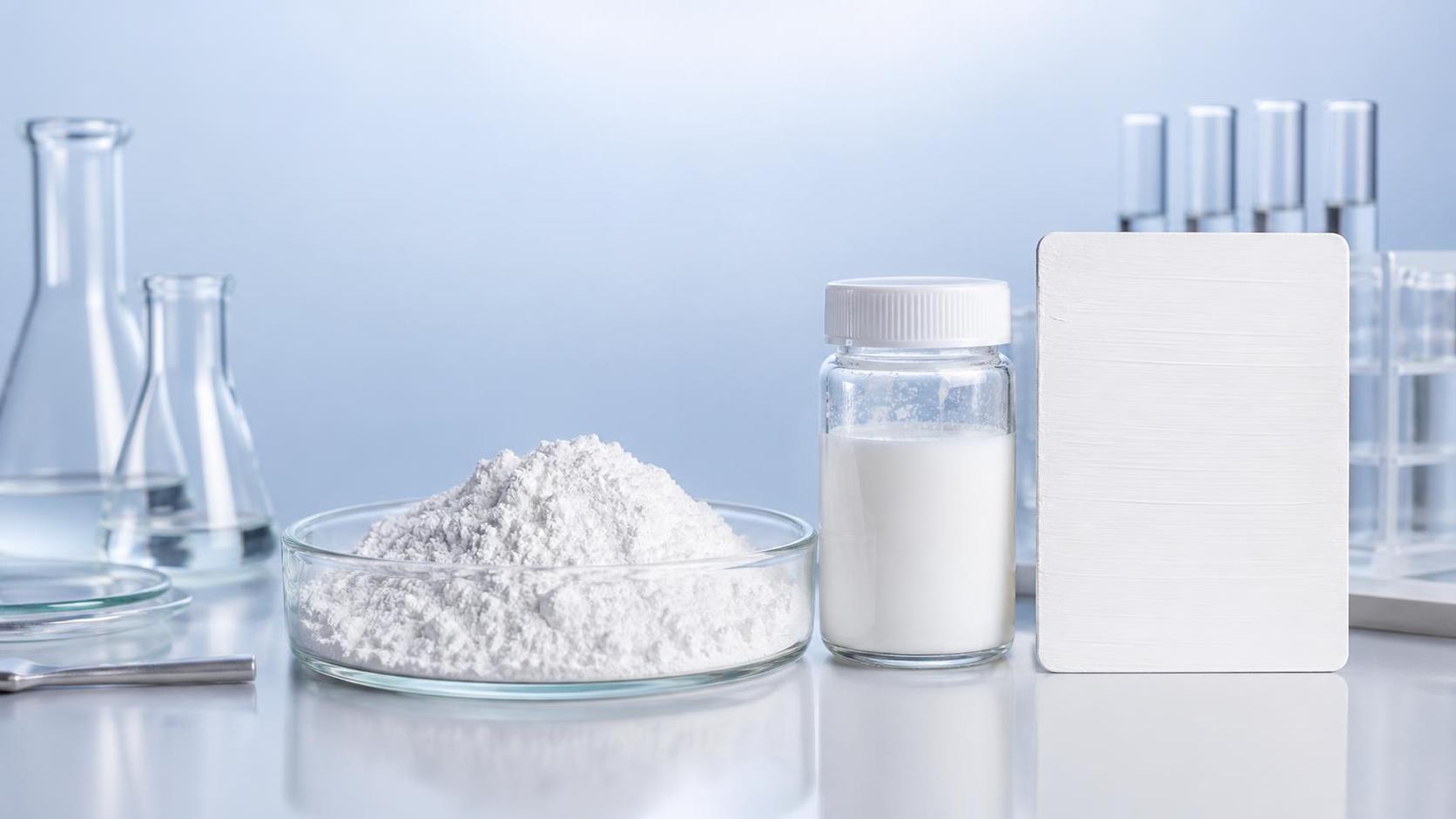
Selecting high purity titanium dioxide for coatings requires more than checking a specification sheet. For technical evaluators, pigment purity directly influences opacity, whiteness, dispersion stability, weather resistance, and long-term film performance. This introduction outlines the key criteria, testing indicators, and practical considerations needed to assess whether a grade can meet demanding coating applications with consistent quality and process efficiency.
The first point worth clearing up is that high purity titanium dioxide is not automatically the best choice in every coating. Purity matters, but coatings do not use purity in isolation. They use a pigment system that has to scatter light efficiently, stay well dispersed in a resin, survive processing stress, and hold appearance over time. A very pure TiO2 grade can still perform poorly if its particle size distribution is off, if the inorganic surface treatment does not suit the formulation, or if it interacts badly with dispersants, extenders, or the curing package.
In practice, when buyers ask for high purity titanium dioxide, they usually mean a grade with tightly controlled TiO2 content and low levels of contaminants that can interfere with appearance, weatherability, conductivity, or process stability. That is especially relevant in premium architectural coatings, industrial finishes, powder coatings, coil coatings, automotive systems, and certain waterborne formulations where small variations become visible fast, either on the line or after exposure.
Purity Is About More Than TiO2 Assay
A common mistake is to treat TiO2 percentage as the single decision metric. High assay is useful, but it does not tell you enough about coating performance. What technical teams usually need to know is what else is present in the pigment and how those residuals affect the film.
For coating applications, the impurities that attract attention are often soluble salts, trace metals, oversized particles, residual moisture, and process-related contaminants from sulfate or chloride route manufacturing. Their impact varies. Some residues can affect dispersion viscosity or water sensitivity. Some can contribute to undertone shifts or reduce gloss retention. In demanding exterior systems, even small differences in surface chemistry may influence chalking resistance and photostability, though that still has to be verified in the finished formulation rather than assumed from pigment purity alone.
This is why experienced evaluators rarely ask only for a certificate showing TiO2 content. They also ask how the pigment was produced, what the post-treatment package looks like, how tightly particle size is controlled, and whether the supplier can provide lot-to-lot consistency data that matches the target coating system.
The Crystal Form and Surface Treatment Usually Decide the Real Fit
Most high-performance coating grades use rutile rather than anatase because rutile offers better durability and lower photocatalytic activity in many coating environments. That is not a trivial distinction. A pigment can be chemically pure and still create long-term issues if its crystal form does not suit the application. Anatase may still appear in some specialty uses, but for mainstream decorative and industrial coatings, rutile is generally the starting point for evaluation.
Then comes surface treatment, which often matters more than buyers expect. Commercial TiO2 pigments are commonly treated with inorganic oxides such as alumina, silica, or zirconia, and sometimes further modified with organic treatment to improve dispersibility. These treatments influence how the particles wet out, how they behave in aqueous or solventborne systems, how abrasive they are to processing equipment, and how the finished coating balances gloss, opacity, and weathering.
A high purity titanium dioxide grade for a flat architectural paint is not necessarily the right grade for a high-gloss topcoat. The first may prioritize easy dispersion and high hiding at practical pigment volume concentrations. The second may need tighter control over gloss development, haze, and undertone. In powder coatings, durability and charge behavior can also become part of the discussion.
What to Check on the Data Sheet, and What Not to Overread
A supplier data sheet can help narrow options, but only if it is read with the right expectations. The useful indicators usually include TiO2 content, rutile or anatase designation, particle size behavior, specific surface area, oil absorption, pH, volatile matter, resistivity, and recommended applications. Some suppliers will also indicate blue undertone or neutral undertone, weatherability grade, and dispersibility characteristics.
Even so, these values are not direct predictions of coating performance. Oil absorption, for example, can hint at formulation demand and processing behavior, but it does not by itself tell you whether a waterborne acrylic system will stabilize well. Resistivity may be relevant in powder coatings or electrostatic application, but less central in standard decorative paint selection. pH can indicate surface treatment behavior in slurry form, yet final compatibility still depends on the whole grind package.
The practical rule is simple: use the data sheet to screen candidates, not to sign off a grade.
Opacity, Undertone, and Tint Strength Need System-Level Testing
Technical evaluation tends to focus first on hiding power, but even that term can be misleading. A pigment that looks strong in drawdown at one PVC may behave differently when the formulation changes extender content, letdown conditions, or film build. The most useful comparisons are side-by-side tests in a representative formulation, using controlled dispersion energy and consistent film application.
Undertone is another area where paper specifications are often too thin. Blue undertone versus neutral undertone can change how a white coating is perceived and how tints develop, especially in pastel shades. For premium decorative and automotive-adjacent finishes, this can affect visual acceptance more than a small difference in nominal whiteness. Buyers sometimes assume the whitest pigment is always preferable; in reality, the better choice is the one that gives the intended shade and stability in the target color space.
Tint strength also needs caution. Strong tinting response can be valuable, but it should be read together with dispersion quality and flocculation resistance. If the pigment delivers good initial color but drifts after storage or during shear, the apparent benefit disappears in production.
Weather Resistance Is Not a Generic Promise
When evaluating exterior coatings, teams often ask whether a high purity titanium dioxide grade has good weather resistance. The better question is how that grade contributes to weather resistance in the intended binder system and exposure environment. The pigment matters, but coating durability is always a combined result of resin choice, pigment treatment, PVC, film thickness, additives, substrate preparation, and service conditions.
Still, there are reasonable screening principles. Rutile grades with robust surface treatment are generally favored where gloss retention, chalk resistance, and color stability are critical. Grades intended for interior use may not be the right fit for high-UV environments even if their basic optical properties look attractive. If the application is sensitive, accelerated weathering and natural exposure data from the supplier can be useful reference material, but internal validation in a relevant formulation remains necessary.
Dispersion Efficiency Often Separates a Good Grade from a Costly One
A pigment can meet purity expectations and still create hidden cost through poor grind efficiency. This shows up as longer dispersion time, higher energy use, filtration problems, unstable viscosity, or visible seeds in the film. For production teams, those issues matter as much as nominal hiding power because they influence throughput and rejection rates.
That is why evaluation should include millbase behavior, ease of wetting, viscosity development over time, and storage stability after letdown. In waterborne systems, interactions with dispersants and pH adjustment are especially important. In solventborne and powder applications, the balance shifts, but the same principle holds: the grade has to work under actual plant conditions, not just under ideal lab dispersion.
Questions That Usually Improve the Selection Decision
When comparing suppliers or shortlisting a grade, a few questions tend to reveal more than broad marketing claims:
- Is the grade designed for interior, exterior, general industrial, or high-durability coatings?
- What is the rutile or anatase basis, and what surface treatment package is used?
- How consistent are key properties across production lots?
- Are there recommended resin systems or known incompatibilities?
- What internal tests were used to support claims around opacity, gloss retention, or weatherability?
- Does the supplier provide regulatory documentation relevant to the destination market?
That last point should not be overlooked. Depending on market and application, compliance documentation, impurity disclosure, and product stewardship support may influence supplier qualification just as much as technical performance.
A Sound Evaluation Uses Both Lab Data and Use-Case Discipline
The most reliable way to assess high purity titanium dioxide is to treat it as part of a coating system rather than a standalone commodity. Start with the obvious screen: crystal form, purity level, treatment type, and intended application. Then move quickly into formulation-specific testing for hiding, undertone, dispersion behavior, viscosity stability, gloss, and weathering risk. If the coating is production-critical, lot consistency and supplier technical support deserve equal weight.
Technical evaluators usually get better decisions when they resist two shortcuts: choosing on TiO2 percentage alone, or choosing on price per kilogram alone. The grade that looks cheaper on paper may need more grinding energy, produce more defects, or underperform in exterior exposure. The grade that looks purer may still be the wrong optical or surface-chemistry fit. The real question is narrower and more useful: which pigment delivers the required coating performance, with stable processing, at acceptable total formulation cost and acceptable risk.
That is the point where high purity stops being a marketing adjective and becomes a meaningful engineering criterion.
Deep Dive
Related Intelligence
 Industrial CoatingsWhy Brand Elevation Strategies Matter More Than Ever for Industrial Coatings Suppliers Targeting EU MarketsAnalyst:Lead Materials Scientist
 Industrial CoatingsWhich Corporate Case Studies Show Measurable ROI from Industrial Coatings Automation in Food Plant Maintenance?Analyst:Lead Materials Scientist
 Industrial CoatingsWhat Makes Industrial Coatings Eco-Friendly in 2026 — And Do They Meet Marine Corrosion Standards?Analyst:Lead Materials Scientist