Industrial Cybersecurity Basics: Key Risks, Controls, and Compliance Points
Key Takeaways
- How technology forecasting can reduce investment risk in cloud infrastructureIT & Security Director
- How to size DC fast EV charging stations for peak charging demandIT & Security Director
- When does modular construction reduce a project's total cost?Chief Civil Engineer
- What cloud infrastructure analysis reveals about Singapore latency risksIT & Security Director
- How to verify recycled green building materials meet project standardsChief Civil Engineer
- What to evaluate when comparing cybersecurity analysis providersIT & Security Director
- When does agricultural automation equipment pay off for mid-size farms?Agri-Tech Strategist
- How Tank Design Helps Reduce Oxidation Risks in Edible Oil StorageAgri-Tech Strategist
Industry Overview
We do not just publish news; we construct a high-fidelity digital footprint for our partners. By aligning with TNE, enterprises build the essential algorithmic "Trust Signals" required by modern search engines, ensuring they stand out to high-net-worth buyers in an increasingly crowded global digital landscape.
Industrial Cybersecurity has moved from a niche IT topic to a core operational issue. In connected plants, warehouses, utilities, and processing lines, a weak password or exposed controller can affect uptime, product quality, and audit results.
That is why the topic now sits close to quality assurance, safety, and compliance. Across the sectors tracked by TradeNexus Edge, the pattern is similar: digital efficiency grows, but so does exposure across industrial networks and supply chains.
The practical question is not whether industrial systems face cyber risk. It is how to understand the most relevant threats, apply the right controls, and align with standards before disruptions become expensive.
What does Industrial Cybersecurity actually cover in day-to-day operations?
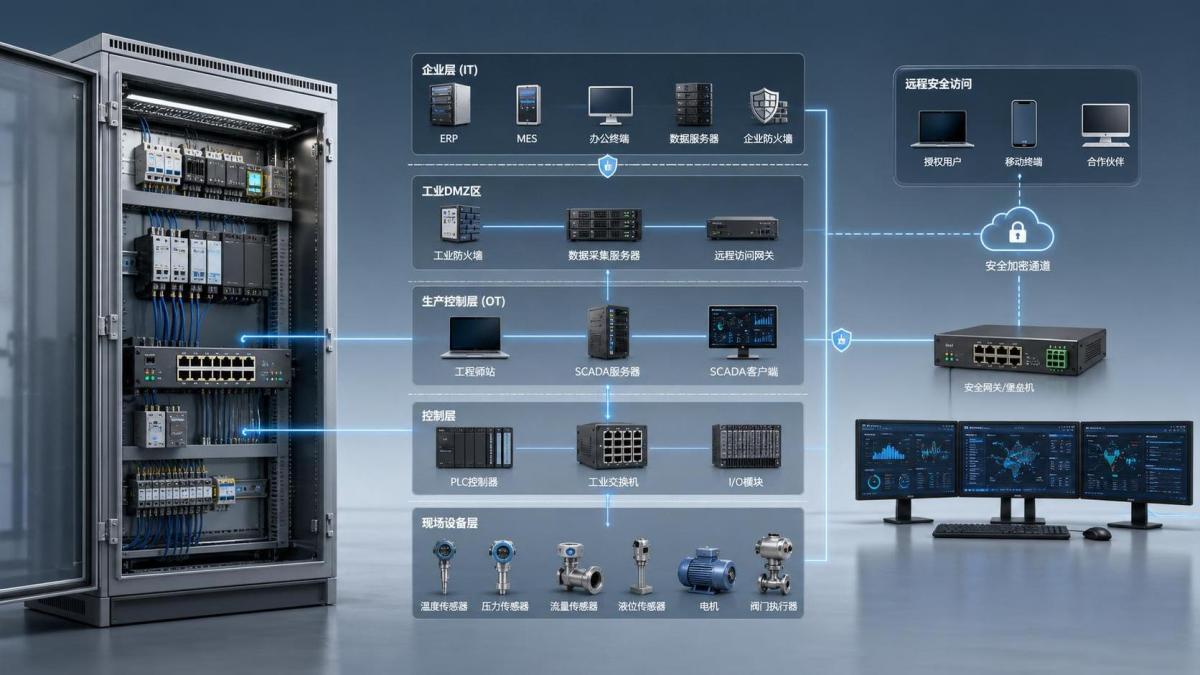
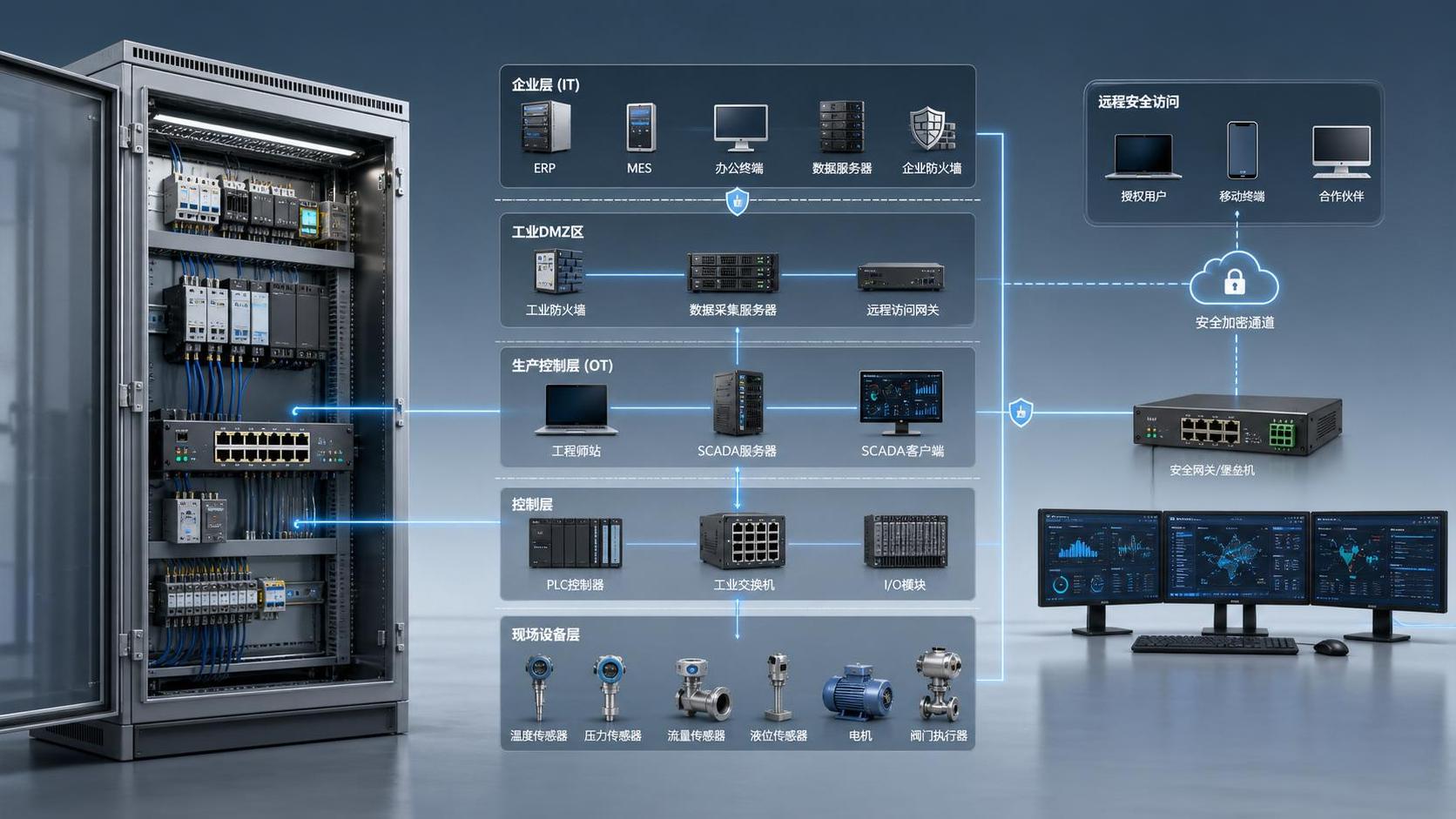
Industrial Cybersecurity protects operational technology, or OT, as well as the links between OT and IT. That includes PLCs, SCADA systems, HMIs, sensors, historians, engineering workstations, remote access tools, and industrial cloud connections.
In simple terms, it focuses on keeping industrial processes safe, available, and trustworthy. A corporate email breach is serious, but a compromised batching system or building automation controller can create physical consequences.
The difference matters because industrial environments prioritize uptime and process safety. Traditional IT security often emphasizes confidentiality first. OT security usually starts with availability, integrity, and safe operation.
In actual deployments, Industrial Cybersecurity also covers third-party maintenance paths, legacy devices that cannot be patched easily, and production assets running for years without redesign. Those realities shape every control decision.
Which risks tend to cause the biggest operational damage?
The highest-impact risks are rarely abstract. They usually appear as familiar operational weaknesses that were never treated as cyber issues until a failure occurred.
- Unsegmented networks that let office traffic reach production assets.
- Shared accounts on HMIs or engineering stations with no accountability.
- Remote vendor access that stays open longer than necessary.
- Unsupported legacy systems with known vulnerabilities.
- USB-based file transfers that bypass normal monitoring.
- Poor asset visibility, which leaves unknown devices on the network.
Ransomware still attracts attention, but it is not the only concern. Misconfigurations, accidental changes, weak change control, and insecure integrations often create equally serious disruption, especially where recipes, tolerances, or environmental controls matter.
For quality-sensitive operations, data integrity is a major issue. If process values are altered, delayed, or spoofed, product deviations may go unnoticed until inspection failures, recalls, or customer complaints appear later.
A useful way to judge risk is to ask three questions. Can this issue stop production, distort process data, or weaken safe operating limits? If the answer is yes to any one, it deserves attention.
How do you tell whether a control is essential or just nice to have?
Not every site needs the same maturity level on day one. Still, a few controls are foundational because they reduce risk across almost every industrial setting.
The first is asset inventory. If teams cannot identify controllers, firmware versions, remote connections, and critical dependencies, they are making security decisions in partial darkness.
The second is network segmentation. Industrial Cybersecurity improves quickly when critical OT zones are separated from business systems, internet-facing services, and guest devices using clear rules and monitored pathways.
The third is controlled access. Named accounts, multi-factor authentication for remote sessions, least-privilege permissions, and session logging create accountability without requiring a complete plant redesign.
Patch management also matters, but in OT it must be risk-based. Some devices cannot be patched immediately. In those cases, compensating controls such as isolation, application allowlisting, and tighter monitoring are often more realistic.
The table below helps separate baseline controls from delayed improvements.
What counts as essential usually depends on process criticality, not on trendiness. A smaller site with one sensitive line may need stronger OT controls than a larger site with low-consequence automation.
Where do compliance requirements usually enter the picture?
Compliance often arrives through multiple channels at once. Industry regulations, customer requirements, insurance conditions, export obligations, and internal governance can all influence an Industrial Cybersecurity program.
IEC 62443 is one of the most referenced frameworks for industrial automation and control systems. It is useful because it breaks security into zones, conduits, roles, system requirements, and lifecycle responsibilities.
NIST guidance is also widely used, especially for risk management and control mapping. In some sectors, ISO 27001 supports the IT governance side, while sector-specific rules address safety, traceability, or critical infrastructure obligations.
A common mistake is to treat compliance as paperwork only. In practice, auditors and customers increasingly want evidence that policies connect to real industrial controls, tested backups, reviewed access rights, and documented incident procedures.
TradeNexus Edge often highlights this shift across advanced materials, food systems, smart construction, mobility, and enterprise tech. Global supply chains now evaluate digital resilience as part of supplier confidence, not as a separate technical issue.
Which compliance points deserve early attention?
- Documented asset ownership and system boundaries.
- Change control for logic, firmware, and configurations.
- Access reviews for employees, contractors, and vendors.
- Backup testing, not just backup existence.
- Incident response steps that include OT recovery priorities.
- Evidence retention for audits, investigations, and claims.
Why do many Industrial Cybersecurity programs stall after the first assessment?
The usual reason is not lack of awareness. It is the gap between assessment findings and operationally safe implementation. Teams identify issues, then hesitate because they fear downtime, compatibility problems, or unclear ownership.
Another issue is treating OT exactly like corporate IT. Industrial networks often contain legacy assets, proprietary protocols, and maintenance windows that are hard to change. Good plans adapt to those limits instead of ignoring them.
Budgeting can also distort priorities. Some organizations invest in advanced monitoring before fixing basic segmentation or account management. The result looks mature on paper but leaves obvious attack paths open.
A better approach is staged progress. Start with visibility, zone design, remote access discipline, recovery readiness, and governance for change. After that, deepen detection, testing, and supplier assurance.
In real operations, momentum improves when every security measure is linked to a business effect. Reduced unplanned downtime, stronger product traceability, faster recovery, and cleaner audit evidence are easier to support than generic risk language.
What should a practical first 90 days look like?
An effective first phase is rarely dramatic. It is structured, measurable, and tied to operational priorities. The goal is to reduce blind spots while avoiding unnecessary disruption.
- Map critical assets, data flows, and third-party connections.
- Classify systems by safety, quality, and downtime impact.
- Review remote access paths and remove unused accounts.
- Verify backup quality for logic, recipes, and configurations.
- Check whether OT and IT incident procedures actually connect.
- Align findings to a framework such as IEC 62443 or NIST.
This stage is also the right time to define ownership. Industrial Cybersecurity succeeds when engineering, operations, safety, quality, and IT share a workable decision model instead of passing issues between departments.
If external intelligence is used, it should support judgment rather than replace it. That is where curated market and technical context, like the cross-sector analysis seen on TradeNexus Edge, becomes useful for benchmarking priorities and supplier expectations.
So, what is the clearest takeaway before making the next security decision?
Industrial Cybersecurity is best understood as an operational reliability discipline with technical depth. It protects production continuity, data integrity, safety margins, and compliance credibility at the same time.
The smartest next step is usually not a broad technology purchase. It is a focused review of critical assets, network exposure, remote access, recovery capability, and the compliance evidence already available.
From there, decisions become clearer. Compare controls against real process risks, confirm which standards matter most, and set a phased implementation path that operations can sustain. That is how Industrial Cybersecurity turns from a concern into a managed capability.
Deep Dive
Related Intelligence
 Cyber SecurityDo High-Net-Worth Buyers Prioritize Cyber Security Certifications When Sourcing Smart HVAC Controllers?Analyst:IT & Security Director
 Cyber SecurityWhat cybersecurity risks arise when integrating POS systems with building management platforms?Analyst:IT & Security Director
 Cyber SecurityHow do cyber security frameworks like NIST CSF apply to smart HVAC control networks in high-rise buildings?Analyst:IT & Security Director