How to identify security risks in application analysis reports
Key Takeaways
- The Kyiv Independent Hit by Suspected Russian CyberattackIT & Security Director
- What is editorial exposure and how does it differ from paid advertising?IT & Security Director
- Apple Warns Users in 99 Countries of Spyware; German Lawmakers' Devices SuspectedIT & Security Director
- How to write technical content for exporters selling machinery abroadChief Civil Engineer
- BW ESS Brings Hams Hall, Europe's Largest Operating Battery Storage Project, OnlineAutomotive Tech Analyst
- How to size electric motors for pumpsChief Civil Engineer
- Trump Administration Pledges $15 Billion in Farm Aid Ahead of Midterm ElectionsAgri-Tech Strategist
- When does automated food processing technology pay for itself?Agri-Tech Strategist
Industry Overview
We do not just publish news; we construct a high-fidelity digital footprint for our partners. By aligning with TNE, enterprises build the essential algorithmic "Trust Signals" required by modern search engines, ensuring they stand out to high-net-worth buyers in an increasingly crowded global digital landscape.
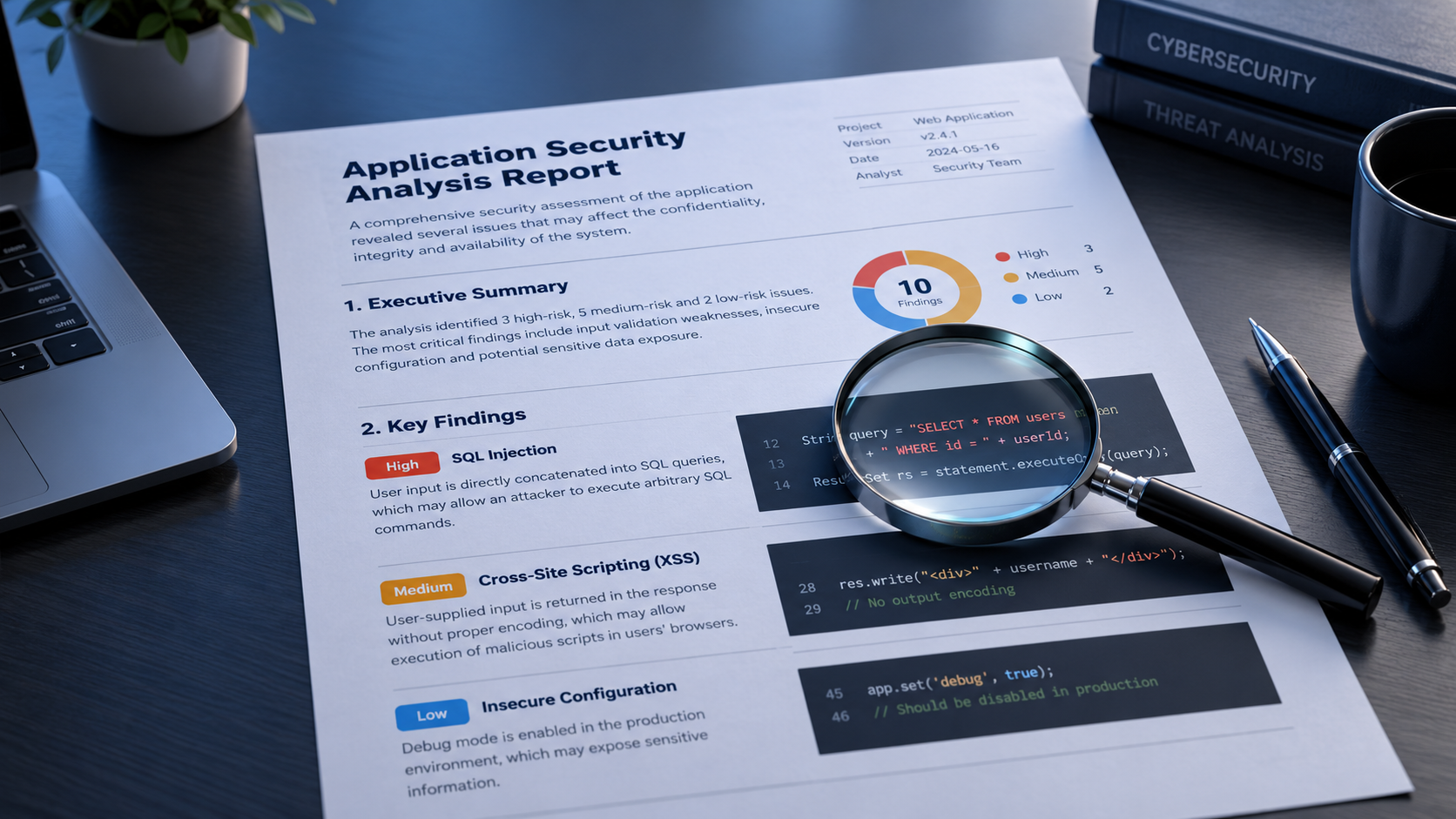
Application analysis reports can reveal vulnerabilities that threaten sensitive data, disrupt operations, or expose an organization to compliance risks, but only when findings are interpreted in context.
Technical evaluators should assess exploitability, business impact, and environmental exposure together. A high severity score is a starting point, not proof that a finding requires emergency remediation.
This guide explains how to validate report coverage, interpret evidence, prioritize weaknesses, and turn technical findings into remediation decisions that application owners can act on.
What Should You Check Before Trusting the Findings?
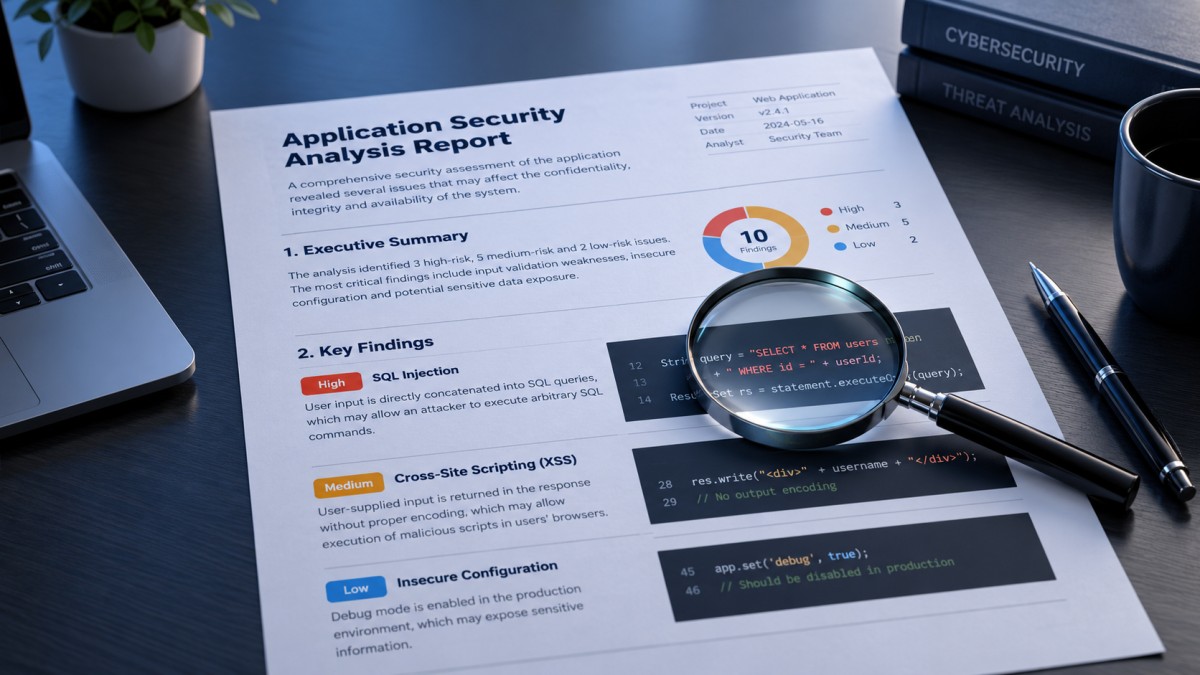
Start by establishing what the report actually analyzed. A clean result is meaningful only when the tested application, version, environment, and relevant components are clearly identified.
Confirm the assessment date and compare it with recent releases. Findings from an outdated build may have been fixed, while newly introduced vulnerabilities may be absent.
Check whether the assessment covered source code, running application behavior, third-party dependencies, configuration, infrastructure, or a combination. Each method exposes different risks and has blind spots.
For example, static application security testing can identify suspicious code paths without executing them. Dynamic testing probes a running application but may miss inaccessible features or hidden workflows.
Software composition analysis identifies known issues in dependencies, provided the dependency inventory is sufficiently complete. Container and configuration scans add visibility into deployment risks that code scans may overlook.
Review authentication coverage as well. An unauthenticated scan cannot reliably assess administrative functions, privileged workflows, or weaknesses that appear only after a user signs in.
Finally, inspect exclusions, scan errors, and inaccessible endpoints. Treat untested areas as unknown, not secure, and record any limitations alongside the report’s conclusions.
How Do You Interpret a Security Finding?
Each actionable finding should identify the affected component, the suspected weakness, supporting evidence, severity, and a recommended next step. Missing context makes prioritization unreliable.
Locate the evidence first: a source file and line, dependency version, affected endpoint, configuration setting, or sanitized request and response. Confirm that it matches the evaluated build.
Then identify the vulnerability type. A Common Weakness Enumeration, or CWE, label describes a class of weakness, while a Common Vulnerabilities and Exposures, or CVE, identifier references a specific disclosed vulnerability.
Neither identifier proves that your application is exploitable. Investigate whether the vulnerable functionality is present, reachable, and usable under the conditions described in the advisory.
Read the severity rationale rather than accepting the label alone. Some tools assign severity from generic rules or package metadata without considering deployment controls and application behavior.
Where a finding is unclear, ask the assessor for reproduction steps, relevant logs, or a code path. Handle screenshots and evidence carefully when they contain credentials or personal data.
Which Findings Usually Deserve Immediate Attention?
Prioritize weaknesses that combine credible exploitation with serious consequences. Internet exposure, sensitive privileges, reachable attack paths, and limited compensating controls can make a finding urgent.
Authentication and authorization failures warrant particular attention. Look for missing access checks, broken tenant isolation, weak password recovery, and endpoints that allow users to access other accounts’ records.
Injection vulnerabilities can also be consequential when untrusted input reaches database queries, operating system commands, or interpreters. Verify the affected path and the permissions available to the application.
Investigate exposed secrets, including API keys, signing keys, and database credentials. Determine whether they are active, where they grant access, and whether access logs show suspicious use.
Remote code execution, unsafe deserialization, and server-side request forgery deserve close examination when reachable. Their impact depends on network access, execution privileges, and available internal resources.
Do not dismiss lower-scored issues automatically. An information disclosure that reveals account identifiers or internal endpoints can increase the impact of another vulnerability when combined.
For time-sensitive decisions, check whether a relevant CVE appears in CISA’s Known Exploited Vulnerabilities catalog and consult the vendor advisory. Catalog inclusion signals known exploitation, not necessarily local exploitability.
How Can You Separate Real Risk From Scanner Noise?
Automated findings are leads, not verdicts. Validate the affected version, execution path, and deployment conditions before assigning an owner or declaring an issue resolved.
For a vulnerable library, compare the installed version with the advisory’s affected range. Check whether the package is included in the production artifact and whether the vulnerable feature is invoked.
A dependency listed only in development tooling may have a different exposure profile from one processing production traffic. Build pipeline compromise is still possible, so document rather than dismiss the distinction.
For code findings, trace how untrusted data enters the application and whether it reaches the reported operation. Review validation, parameterization, and authorization controls along the path.
For dynamic findings, reproduce the behavior in an authorized test environment using an appropriate account. Confirm that the response demonstrates the reported impact rather than an expected application feature.
Record the evidence behind a false-positive decision. Include the tested version, configuration, reasoning, reviewer, and conditions that would require reassessment after a code or deployment change.
When verification is incomplete, mark the finding as unconfirmed rather than false. An unresolved evidence gap may itself justify additional testing, especially for sensitive systems.
How Should You Prioritize Findings for Your Environment?
Use a consistent process that combines technical severity with exposure and business impact. The goal is an ordered remediation queue, not a second list of scanner labels.
Begin with the Common Vulnerability Scoring System, or CVSS, when a reliable score is available. Its base score describes generic severity, not your organization’s complete risk.
Assess whether an attacker can reach the affected component, what privileges are needed, and whether exploitation requires unusual conditions. Consider both external access and relevant internal or partner access.
Next, identify the affected assets and consequences: regulated data, production availability, financial transactions, customer trust, or safety-sensitive operations. Consider the scale of a plausible compromise.
Evaluate existing controls, such as network segmentation, access restrictions, and monitoring. Credit a control only when its configuration and effectiveness have been verified for the relevant attack path.
Consider threat evidence and timing. Known exploitation, a credible public exploit, or an approaching release can change urgency, while a speculative exploit with limited impact may justify scheduled work.
For example, a critical library vulnerability in an unreachable feature may rank below a high-severity authorization flaw exposing customer records through an internet-facing endpoint.
Document the decision in plain terms: what can happen, how likely exploitation appears in this environment, who owns the risk, and when the finding will be reviewed again.
What Should You Look for in Dependencies and Configuration?
Dependency findings require more than a package name. Check direct and transitive dependencies, the deployed version, available fixes, compatibility constraints, and the maintainer’s security guidance.
Use a software bill of materials when available, but verify its coverage and freshness. An incomplete inventory can omit bundled components, container layers, or dependencies introduced during build.
Where an upgrade is unavailable, assess alternatives such as disabling the vulnerable feature, restricting access, or replacing the component. Track temporary measures until a durable fix is verified.
Configuration findings should be evaluated against the actual environment. Debug endpoints, excessive cloud permissions, publicly accessible storage, and disabled security logging may create exposure even when code is sound.
Check transport encryption and certificate validation on relevant connections, including service-to-service traffic. A report should distinguish an observable weakness from an unsupported assumption about network protection.
For exposed credentials, revoke or rotate the secret as appropriate, investigate potential use, and remove it from accessible locations. Deleting a secret from the latest source file alone is insufficient.
How Do You Turn Findings Into a Remediation Plan?
Assign each confirmed finding to an accountable owner and establish a target date based on risk. Include the affected asset, evidence, recommended action, and expected verification method.
Separate immediate containment from permanent remediation. Restricting an endpoint may reduce exposure quickly, but correcting an authorization flaw in code and testing the fix addresses the underlying weakness.
Group related findings when one change can resolve several issues, but retain traceability to each affected component. This prevents teams from closing individual findings without checking their specific evidence.
Agree on risk acceptance only when remediation is impractical or disproportionate. Record the business rationale, approving authority, compensating controls, expiration date, and trigger for reassessment.
After changes are deployed, retest the affected behavior and confirm the correct version is running. A closed ticket or successful build is not proof that the vulnerability is fixed.
Retain sanitized evidence of the retest and reopen findings that remain reproducible. Where a fix introduces a new dependency or configuration, assess that change for unintended security effects.
What Questions Should You Ask a Vendor or Assessment Team?
Ask which application versions, roles, endpoints, and environments were tested, and whether the assessment included authenticated workflows. Request the limitations and exclusions in writing.
For significant findings, request enough evidence to reproduce the issue safely, the relevant advisory or rule, and an explanation of the severity assessment.
Ask how the team distinguishes confirmed vulnerabilities from potential findings, handles false positives, and verifies remediation. Clarify whether a retest is included and what it covers.
When evaluating a supplier, ask who owns remediation, how security updates are communicated, and whether customers can configure controls relevant to the finding.
A report can support compliance discussions, but it does not establish compliance by itself. Map relevant evidence to the specific obligations, systems, and assessment period involved.
Conclusion
The value of application analysis reports lies in the decisions they support, not the number of findings they contain. Start with coverage, validate evidence, and assess exposure against business impact.
Prioritize credible attack paths, assign accountable owners, and verify fixes in the deployed environment. Document uncertainty and revisit decisions when the application, threat landscape, or controls change.
Deep Dive
Related Intelligence
 Cyber SecurityDo High-Net-Worth Buyers Prioritize Cyber Security Certifications When Sourcing Smart HVAC Controllers?Analyst:IT & Security Director
 Cyber SecurityWhat cybersecurity risks arise when integrating POS systems with building management platforms?Analyst:IT & Security Director
 Cyber SecurityHow do cyber security frameworks like NIST CSF apply to smart HVAC control networks in high-rise buildings?Analyst:IT & Security Director