EU Requires Carbon Footprint Labels for Industrial Batteries Over 2kWh
Key Takeaways
- How to size DC fast EV charging stations for peak charging demandIT & Security Director
- When does modular construction reduce a project's total cost?Chief Civil Engineer
- What cloud infrastructure analysis reveals about Singapore latency risksIT & Security Director
- How to verify recycled green building materials meet project standardsChief Civil Engineer
- What to evaluate when comparing cybersecurity analysis providersIT & Security Director
- When does agricultural automation equipment pay off for mid-size farms?Agri-Tech Strategist
- How Tank Design Helps Reduce Oxidation Risks in Edible Oil StorageAgri-Tech Strategist
- How to match heavy duty earthmoving equipment to site conditionsChief Civil Engineer
Industry Overview
We do not just publish news; we construct a high-fidelity digital footprint for our partners. By aligning with TNE, enterprises build the essential algorithmic "Trust Signals" required by modern search engines, ensuring they stand out to high-net-worth buyers in an increasingly crowded global digital landscape.
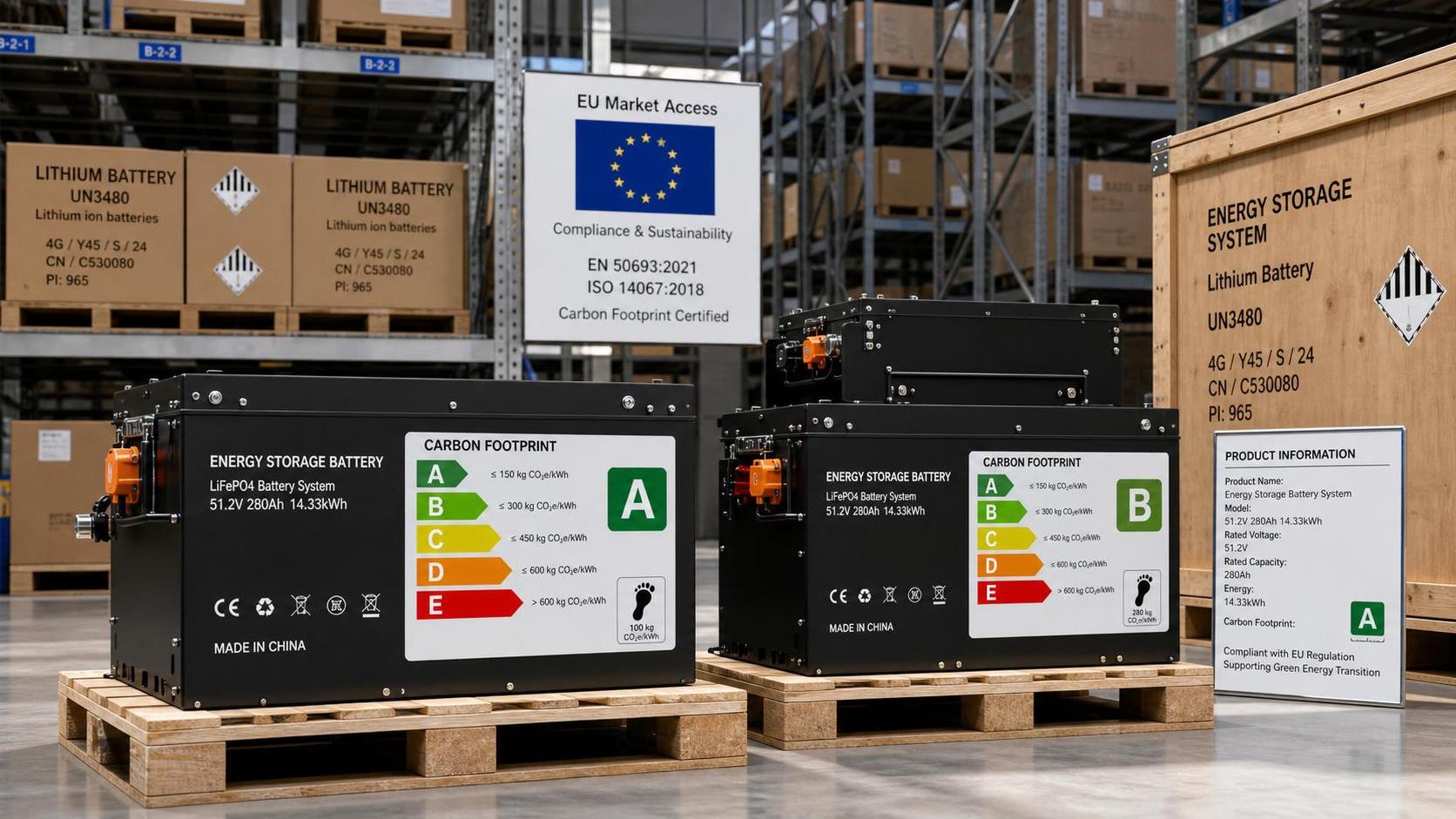
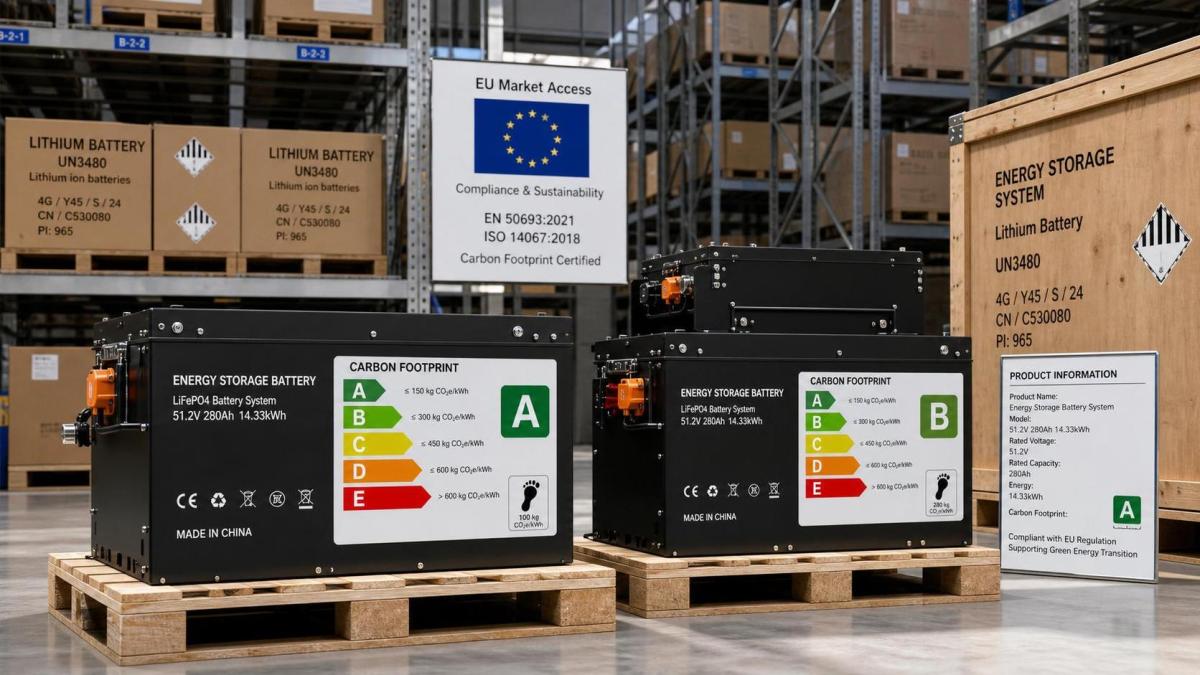
On August 18, 2026, a new compliance threshold takes effect under Regulation (EU)2023/1542: rechargeable industrial batteries with a capacity above 2kWh entering the EU market must carry a carbon footprint performance class label from A to E. The change directly affects energy storage systems, power packs for electric construction machinery, and off-road electrification battery packs, making it especially relevant for battery manufacturers, exporters, supporting equipment suppliers, and teams handling customs, documentation, and product compliance.
What the rule now requires
Based on the provided information, the requirement applies from August 18, 2026 to all rechargeable industrial batteries above 2kWh placed on the EU market. The covered scope includes battery products used in energy storage systems, electric engineering machinery power packs, and off-road electrification applications.
The batteries concerned must display a carbon footprint performance class label rated from A to E. Products that do not meet the requirement will not be allowed to clear customs. The same information set also states that a digital battery passport will become mandatory in 2027.
Where the impact is likely to appear first
Export-facing battery shipments move from product compliance to document compliance
From an industry perspective, the immediate effect is not limited to battery design or manufacturing. Companies shipping covered products into the EU may face impact at the border because non-compliant products are stated to be barred from customs clearance. That makes labeling readiness, supporting documents, and consistency between shipment content and compliance records a practical concern for export operations.
Battery manufacturers face pressure on LCA readiness
Analysis shows that manufacturers of covered industrial batteries are likely to be affected at the calculation and labeling stage first. The provided information specifically points to the need for Chinese battery manufacturers to begin life cycle assessment work and label adaptation immediately, which suggests that data preparation and internal compliance workflows become an operational priority rather than a later-stage filing task.
Supporting equipment exporters also need to review product boundaries
The notice does not only matter to cell or pack producers. Supporting equipment export companies linked to the covered battery categories may also need to examine whether their delivered systems include batteries that fall within the scope, and whether customer-facing specifications, delivery packs, and compliance files align with the EU requirement.
What companies should pay close attention to now
Check whether the exported product falls within the covered category
What deserves closer attention is whether the battery being shipped is a rechargeable industrial battery above 2kWh and whether it is used in one of the covered application areas referenced in the provided information. This is the basic starting point for any response plan.
Prepare LCA work and label adaptation in parallel
Analysis shows that the practical task is not only to understand the rule, but to organize life cycle assessment calculation and convert that work into compliant labeling. For companies serving EU-bound orders, these two steps are closely linked and may affect product release, shipment scheduling, and customer documentation.
Separate the 2026 label deadline from the 2027 passport requirement
Companies should distinguish between what is already becoming mandatory on August 18, 2026 and what is scheduled for 2027. The carbon footprint class label is the immediate compliance point, while the digital battery passport is the next required layer. Treating them as one undifferentiated task could create planning errors in timing and resource allocation.
Review customs, customer communication, and delivery files
Observably, the customs clearance consequence makes front-end communication important. Exporters and suppliers may need to verify how labels, declarations, and shipment files are presented to customers and logistics counterparts, especially where delivery schedules depend on smooth EU entry procedures.
Why this should be read as more than a short-term labeling update
This section is an observation rather than a statement of fact. It is more appropriate to understand this development as a clear compliance signal rather than a temporary market fluctuation. The reason is that the requirement is tied to market access and is followed by a further mandatory step in 2027 through the digital battery passport.
At the same time, it should not be overstated beyond the provided facts. The current information confirms the compliance obligation and the customs consequence, but the wider commercial impact on pricing, order flow, or supplier restructuring still requires continued observation rather than firm conclusions.
How the industry may best frame this development
In practical terms, this update is best understood as an active market-entry requirement for covered industrial batteries entering the EU. For affected businesses, the near-term issue is execution: confirming product scope, preparing LCA calculations, adapting labels, and aligning export documentation. For the broader industry, the more lasting message is that battery compliance in the EU is moving deeper into measurable and document-based requirements.
Basis of this article and points to keep verifying
This article is generated from the user-provided news title, event date, and event summary. The confirmed facts used here are limited to the provided description of Regulation (EU)2023/1542, the August 18, 2026 implementation point, the A-E carbon footprint performance class label requirement for rechargeable industrial batteries above 2kWh entering the EU market, the stated customs clearance consequence for non-compliant products, the 2027 digital battery passport timeline, and the need for Chinese battery manufacturers and related equipment exporters to start LCA and label preparation.
No specific official source link was provided in the input, so the exact official source link remains to be verified. For continued tracking, the most relevant source types would typically include official regulatory notices, company compliance disclosures, industry association updates, authoritative media reporting, and standard-related documentation.
Deep Dive
Related Intelligence
 Off-road ElectrificationNetwork Switches in Farm Control Rooms Must Now Handle Both OT and IT Traffic — Without CompromiseAnalyst:Automotive Tech Analyst
 Off-road ElectrificationSemiconductor Price Hike Impacts Off-Road Electrification ExportsAnalyst:Automotive Tech Analyst
 Off-road ElectrificationChina Port Container Throughput Drops 9.3% YoY in Early April 2026Analyst:Automotive Tech Analyst