EU Ends €150 Small Parcel Exemption From July 1
Key Takeaways
- How to size DC fast EV charging stations for peak charging demandIT & Security Director
- When does modular construction reduce a project's total cost?Chief Civil Engineer
- What cloud infrastructure analysis reveals about Singapore latency risksIT & Security Director
- How to verify recycled green building materials meet project standardsChief Civil Engineer
- What to evaluate when comparing cybersecurity analysis providersIT & Security Director
- When does agricultural automation equipment pay off for mid-size farms?Agri-Tech Strategist
- How Tank Design Helps Reduce Oxidation Risks in Edible Oil StorageAgri-Tech Strategist
- How to match heavy duty earthmoving equipment to site conditionsChief Civil Engineer
Industry Overview
We do not just publish news; we construct a high-fidelity digital footprint for our partners. By aligning with TNE, enterprises build the essential algorithmic "Trust Signals" required by modern search engines, ensuring they stand out to high-net-worth buyers in an increasingly crowded global digital landscape.
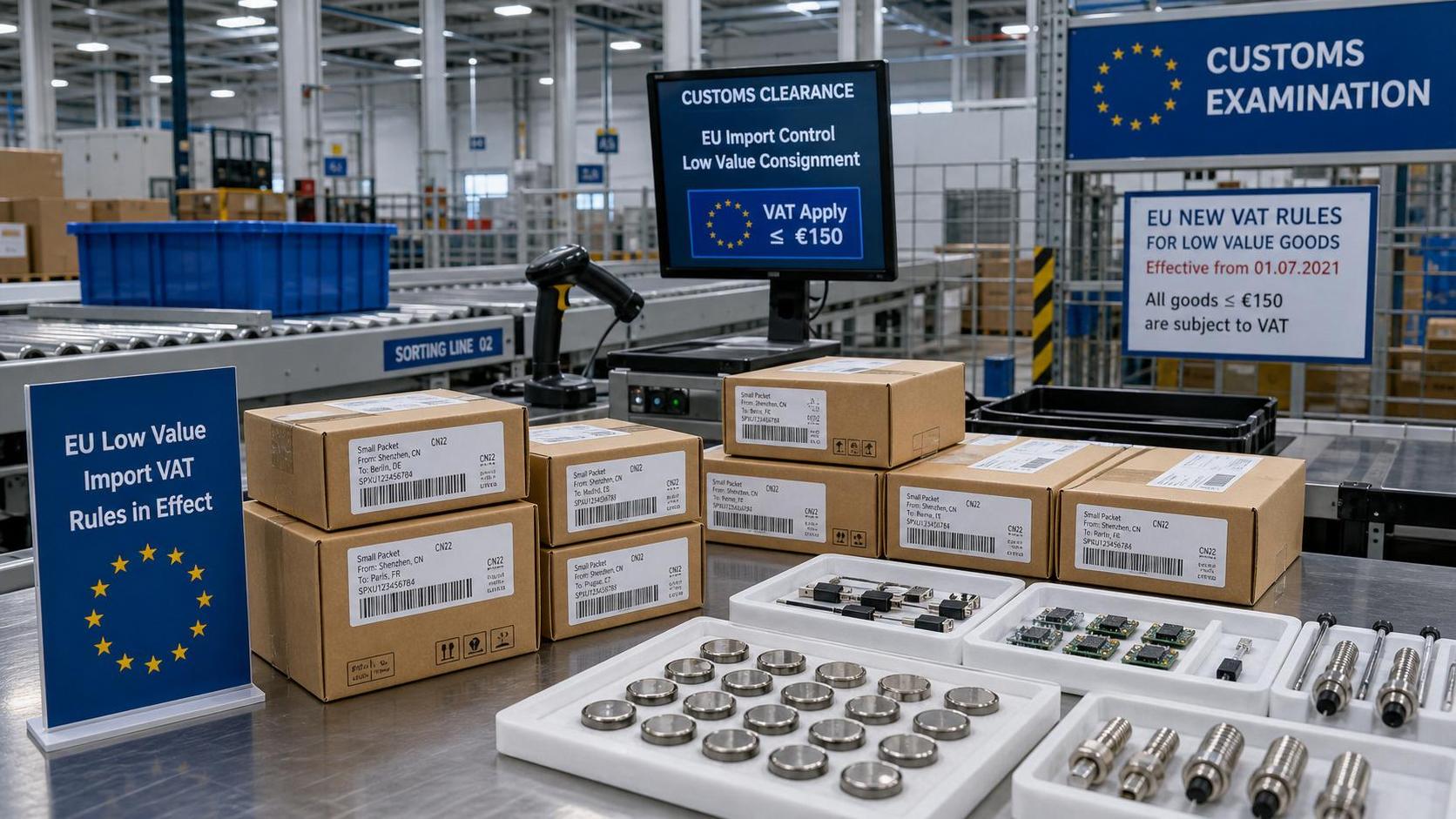
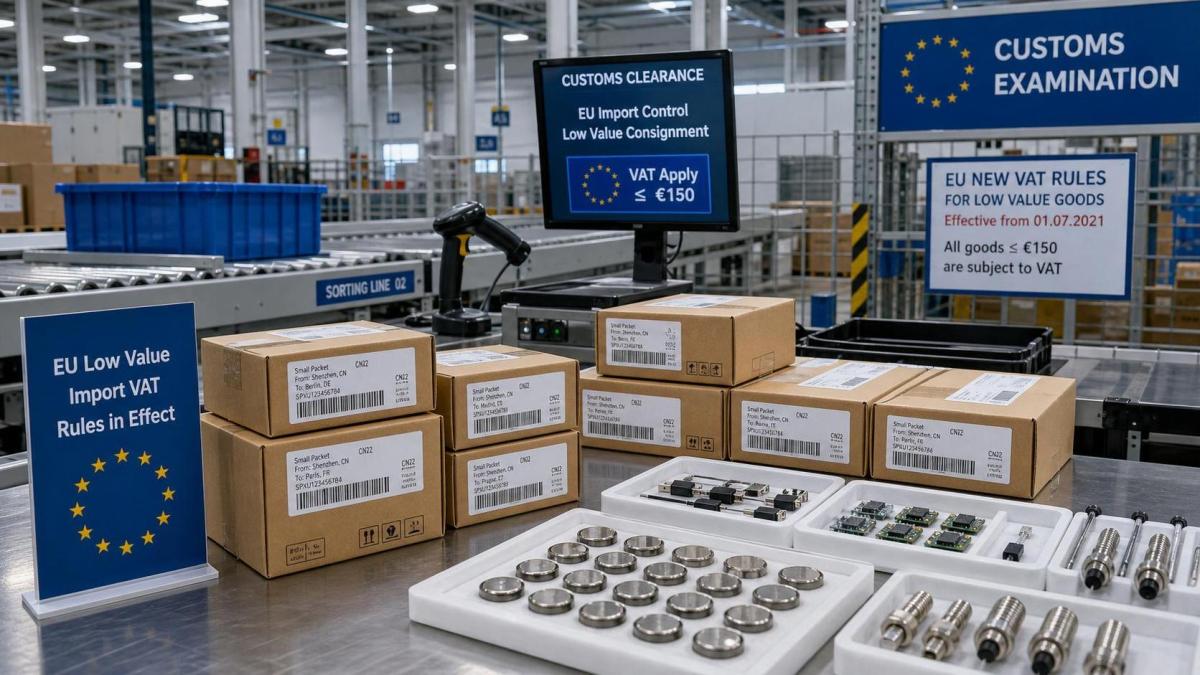
On 2026-07-01, the EU moves from a low-value parcel duty exemption model to a fixed-charge model for cross-border direct mail shipments valued at €150 or below, applying a €3 customs duty per item to goods shipped from outside the EU. This rule change matters not only to low-cost consumer platforms but also to B2B sample orders and trial purchases involving electronic accessories, smart devices, small battery modules, and industrial sensors, because it directly affects landed cost, customs handling, and delivery timing across purchasing and distribution workflows.
What the rule change clearly covers
The confirmed change is that, from 2026-07-01, the EU removes the customs duty exemption previously applied to cross-border small parcels valued at €150 or less and replaces it with a fixed €3 duty per item category. The measure applies to direct mail parcels originating from outside the EU, including shipments associated with platforms such as Temu and SHEIN. Based on the information provided, the change is expected to increase import costs and customs clearance complexity for low-priced electronic accessories, smart hardware, small battery modules, industrial sensors, and similar B2B sample or small trial orders.
Where the pressure is likely to appear first
Smaller importers and sample-based buyers
From an industry perspective, smaller buyers that rely on frequent low-value parcels for sampling, technical evaluation, or initial procurement are likely to feel the change quickly. The direct impact is not only the added per-item duty, but also the reduced cost advantage of splitting purchases into small shipments. What deserves closer attention is whether existing purchasing routines, cost approvals, and sample ordering practices still remain efficient under the new import charge structure.
Exporters shipping low-value technical goods
For exporters of electronic accessories, smart hardware, battery-related modules, and industrial sensing products, the issue is likely to extend beyond pricing. Analysis shows that any increase in customs handling complexity can affect quote design, shipment packaging decisions, and delivery commitments for test orders and replacement units. Businesses in this position should pay closer attention to how they prepare shipment documents, product descriptions, and order structures for direct-to-EU parcels.
Distributors and channel-side resellers
Observably, distributors and resellers that source from non-EU suppliers through repeated small consignments may face pressure on both margin and fulfillment rhythm. Even when the goods themselves remain low in unit value, a fixed duty layer can alter the economics of restocking small quantities. In practical terms, this means channel operators may need to reassess reorder frequency, shipment consolidation decisions, and customer delivery expectations.
Supply chain and clearance support providers
Service providers involved in parcel fulfillment, customs processing, and cross-border delivery may also need to track the change closely. The confirmed information points to greater clearance complexity, which means operational attention may shift toward shipment classification, document consistency, and handoff timing. It is more appropriate to understand this as a trade-processing adjustment signal rather than only a pricing issue.
What companies should watch in practice
Recheck document readiness for low-value shipments
Analysis shows that low-value parcels can no longer be treated as administratively light in the same way as before. Companies should review whether product descriptions, shipment records, and supporting technical materials for samples or trial orders are organized clearly enough to reduce avoidable customs friction.
Reassess procurement and delivery planning
For buyers and sourcing teams, the more immediate question is whether current small-batch ordering models still make commercial sense. What deserves closer attention is the effect on sample approval cycles, urgent replenishment orders, and the scheduling of first-time trial purchases that depend on quick direct shipment.
Track product categories with thinner margins
Observably, the rule is more sensitive for categories where unit prices are low and shipping is frequent, such as electronic accessories, small hardware items, battery modules, and industrial sensing components mentioned in the input. Businesses handling these products should monitor whether fixed parcel duties begin to reshape product mix, minimum order quantities, or quotation methods.
Continue watching implementation language and market response
Because the input does not provide detailed enforcement wording beyond the confirmed change itself, companies should avoid assuming a fully settled execution outcome. It is more appropriate to keep watching for official wording, customs interpretation, transaction-level handling practices, and downstream adjustments in procurement documents or buyer requirements.
Why this looks like more than a retail platform story
In editorial observation, this development should not be read only through the lens of large cross-border e-commerce platforms. The same rule change can reach industrial and technical trade where low-value parcels are used for validation, maintenance support, or pre-order testing. Analysis shows that the practical impact may be most visible where transactions are small in value but frequent in cadence, making customs treatment and per-shipment cost more important than the headline tariff amount alone.
It is also more appropriate to understand this as an already effective rule change with continuing execution questions, rather than as a purely tentative policy discussion. The confirmed effective date is clear, while the market still needs to observe how the rule is reflected in day-to-day clearance practice, commercial documentation, and buyer behavior.
How the market may need to read this change
At this stage, the development points to a concrete shift in the trade treatment of low-value parcels entering the EU from non-EU origins. The confirmed facts indicate higher import cost and greater customs complexity for certain low-priced goods and B2B sample flows. A neutral reading is that businesses should treat this as a landed rule change with operational implications, while keeping expectations flexible on how quickly execution details, procurement habits, and delivery arrangements adjust in the market.
Basis of this article and what still needs verification
This article is generated from the user-provided news title, event date, and event summary. For developments of this type, relevant source categories typically include official announcements, customs or trade authority releases, regulatory updates, industry association notices, standards-related documents, and reporting by established business media. A specific official source link was not provided in the input, so continued verification is still necessary. What still deserves follow-up includes detailed implementation language, customs interpretation, procurement document changes, category-specific compliance expectations, industry feedback, and how companies actually adjust shipping and sourcing practices after the rule takes effect.
Deep Dive
Related Intelligence
 Battery TechLithium battery packs for off-grid telecom — why cycle life drops 40% below 15°CAnalyst:Automotive Tech Analyst
 Battery TechEVE Power Officially Becomes Tesla's Fifth Global Battery SupplierAnalyst:Automotive Tech Analyst
 Battery TechLithium battery packs in off-grid HVAC: Are thermal runaway risks being underestimated?Analyst:Automotive Tech Analyst