For finance leaders, the real question in 2026 is not whether precision farming tech works, but which investments can prove measurable returns under tighter capital discipline.
As farms adopt sensors, AI-driven analytics, autonomous equipment, and variable-rate systems, ROI must be assessed beyond yield gains alone.
This guide outlines the financial metrics, operational indicators, and risk-adjusted benchmarks that approval teams should track to separate strategic agri-tech investments from costly experimentation.
What Finance Teams Are Really Trying to Decide
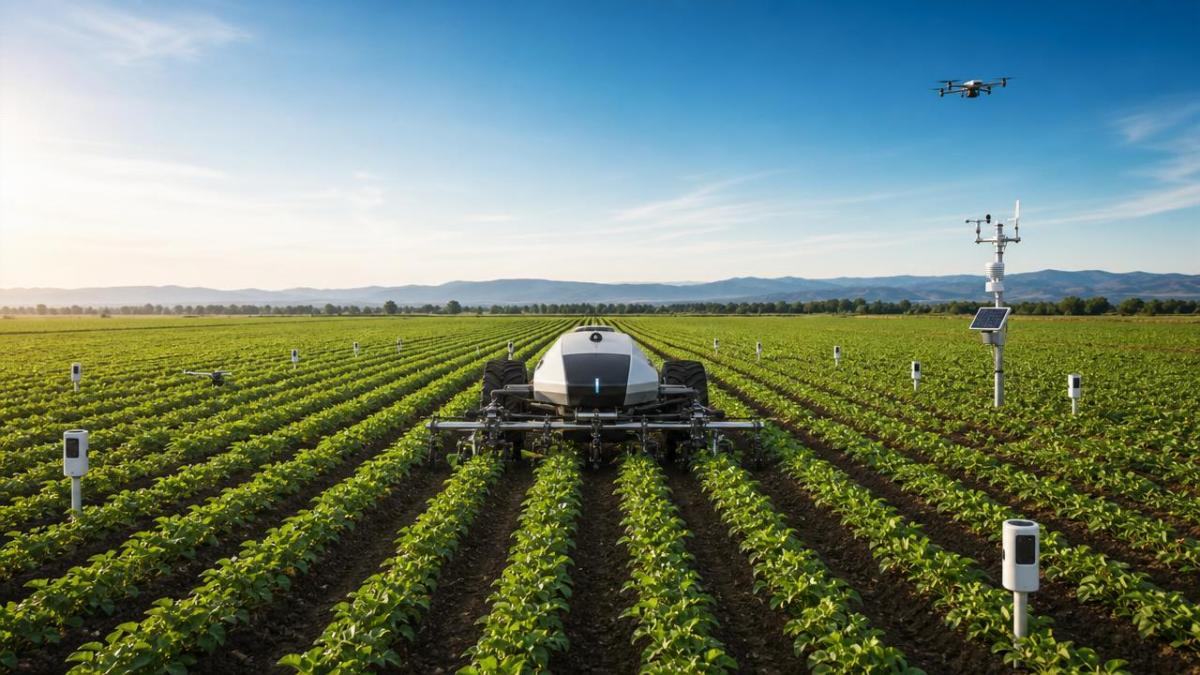
Search intent behind this topic is commercial and evaluative, not academic. Buyers want to know what precision farming tech deserves capital approval.
Financial approvers are asking whether a tool reduces input cost, protects margin, improves labor productivity, or lowers operational risk.
They also need a way to compare different technologies, because sensor networks, autonomous machines, and analytics platforms create value differently.
The strongest ROI cases in 2026 will connect agronomic performance to cash flow, working capital, compliance resilience, and asset utilization.
The weakest cases will rely on broad claims about innovation, sustainability, or yield improvement without farm-level evidence and measurable baselines.
Start With the Investment Category, Not the Vendor Pitch
Precision farming tech is not one uniform asset class. Each category has a different payback pattern, risk profile, and measurement burden.
Variable-rate application systems usually produce returns through lower seed, fertilizer, chemical, or irrigation costs across specific zones.
Field sensors and connected weather stations can reduce uncertainty, but their value depends on decisions triggered by the data.
AI farm management platforms may improve planning and forecasting, yet their ROI often depends on integration with existing workflows.
Autonomous or semi-autonomous equipment affects labor availability, machine hours, fuel use, downtime, and operator consistency.
Remote sensing and drone-based analytics are valuable when they accelerate intervention, reduce scouting labor, or prevent localized losses.
Before approving spend, classify whether the investment is cost-saving, revenue-enhancing, risk-reducing, compliance-enabling, or capacity-expanding.
This classification prevents teams from judging every solution against yield improvement, which is important but rarely the only financial lever.
The Core ROI Formula Still Matters
The basic ROI calculation remains straightforward: net financial benefit divided by total investment cost over a defined evaluation period.
However, precision agriculture requires careful treatment of timing, variability, and baseline assumptions, especially across multiple seasons.
Total investment cost should include equipment, software subscriptions, installation, connectivity, training, maintenance, data management, and integration expenses.
Many weak business cases understate labor required for calibration, data review, field mapping, and change management during adoption.
Net benefit should include direct savings, incremental gross margin, avoided losses, reduced downtime, and measurable efficiency gains.
For finance teams, a three-year view is often more realistic than one season, especially for hardware-heavy precision farming tech.
Annualized ROI, payback period, net present value, and internal rate of return should be calculated under conservative assumptions.
Where seasonal variability is high, include downside scenarios rather than presenting only the expected or best-case outcome.
Measure Input Efficiency Before Celebrating Yield
Yield improvement attracts attention, but input efficiency is often the cleaner, faster, and more controllable ROI metric.
Finance teams should track cost per acre for fertilizer, seed, crop protection, irrigation, fuel, and contracted field operations.
Variable-rate systems may not always raise yield dramatically, but they can protect output while reducing unnecessary application.
Important indicators include nutrient use efficiency, chemical cost per treated acre, irrigation volume per unit of output, and seed placement accuracy.
These metrics are easier to audit because they connect directly to invoices, application records, and machinery data.
Approvers should compare treated fields against control fields, similar historical acres, or matched zones with comparable soil characteristics.
A small percentage reduction in fertilizer or water cost can produce meaningful returns when scaled across large acreage.
The key question is not whether less input was used, but whether margin improved without increasing agronomic risk.
Translate Yield Gains Into Margin, Not Just Bushels
Yield gains matter only when they convert into profitable revenue after accounting for variable costs and market conditions.
Finance leaders should measure gross margin per acre, contribution margin per crop, and revenue variability across production zones.
A technology that adds yield in high-potential zones may create stronger returns than one applied uniformly across every field.
Precision farming tech should help identify where additional spend produces profitable response and where it destroys value.
Use normalized yield data to adjust for weather, crop rotation, soil type, and extraordinary market events.
Without normalization, a favorable season can make a mediocre technology look successful, while a drought can hide real improvement.
Finance teams should request zone-level profitability reports, not only farm-wide averages or vendor-generated yield maps.
The most useful business case shows how technology shifts the distribution of profitable acres over several seasons.
Labor Productivity Is Becoming a Primary ROI Driver
In many agricultural regions, labor availability is now a financial constraint, not merely an operational inconvenience.
Autonomous equipment, assisted steering, connected implements, and decision-support platforms can reduce dependence on scarce skilled labor.
Useful metrics include acres covered per labor hour, machine hours per operator, overtime cost, rework rate, and task completion windows.
For specialty crops, labor-related ROI may include faster scouting, better harvest timing, and reduced manual inspection requirements.
For broadacre operations, automation can improve night operations, reduce fatigue-related errors, and increase equipment utilization.
Finance teams should avoid valuing labor savings only as headcount reduction, because the greater benefit may be capacity preservation.
If technology allows the same workforce to manage more acres or meet tighter weather windows, that value should be quantified.
In 2026, labor resilience may be one of the strongest approval arguments for selected precision farming tech investments.
Asset Utilization and Downtime Must Be Included
Precision agriculture investments often interact with expensive machinery, so asset utilization is a critical part of ROI.
Track equipment uptime, idle time, fuel use per acre, maintenance events, repair cost, and acres completed per operating hour.
Telematics and predictive maintenance tools can reduce downtime during peak windows, when lost time is especially costly.
The financial impact of downtime should include delayed planting, missed application timing, harvest losses, and emergency repair premiums.
When evaluating autonomous equipment, compare total cost per acre against conventional fleets, including supervision and service contracts.
A higher purchase price may be justified if utilization rises, labor bottlenecks fall, and operational windows become more reliable.
For leased equipment, finance teams should examine whether precision features improve lease productivity enough to justify premium terms.
The best cases connect machine data to operating economics, not just technical performance or digital dashboards.
Risk Reduction Has Financial Value, But It Needs Discipline
Risk reduction is real, yet it is often overstated in technology proposals because avoided losses are difficult to prove.
Approvers should assign value only where the technology changes a specific decision, reduces exposure, or improves response time.
Examples include earlier pest detection, irrigation alerts during heat stress, disease risk modeling, and improved compliance documentation.
Risk-adjusted ROI should estimate probability, financial severity, and the portion of loss realistically avoided by the technology.
Do not count the full value of a prevented event unless evidence supports that the system would reliably prevent it.
Scenario analysis helps: model normal, adverse, and severe seasons, then compare outcomes with and without the investment.
Insurance premiums, contract performance penalties, quality claims, and regulatory exposure may also belong in the calculation.
For finance teams, risk value is most credible when supported by farm records, agronomic evidence, and repeatable decision protocols.
Data Quality Determines Whether ROI Can Be Proven
A precision farming tech project can fail financially because the data environment is too fragmented to measure outcomes.
Before approval, confirm that machinery data, input records, yield maps, soil tests, weather data, and financial systems can connect.
Data ownership, export rights, API access, and interoperability should be reviewed before signing long-term vendor agreements.
Finance teams should ask who maintains field boundaries, validates sensor readings, cleans data, and resolves conflicting records.
If the organization cannot establish a reliable baseline, ROI claims will remain vulnerable to dispute after deployment.
Strong governance also reduces vendor lock-in, because historical performance data remains usable if platforms change.
Cybersecurity and operational continuity matter as farms become more connected, especially where equipment depends on cloud services.
Data readiness may sound technical, but it is directly tied to auditability, accountability, and investment confidence.
Build a Business Case With Thresholds, Not Hopes
A finance-ready business case should define what success means before implementation begins.
Set thresholds for payback period, minimum gross margin improvement, acceptable variance, utilization uplift, and measurable cost reduction.
For example, a variable-rate program might require a verified input saving per acre while maintaining yield within tolerance.
An autonomous equipment investment might require fewer operating hours per acre, higher completion reliability, and lower overtime cost.
An analytics platform might require faster decision cycles, documented interventions, and measurable reduction in scouting expense.
Each threshold should be tied to an owner, data source, reporting cadence, and decision point for continuation or adjustment.
Pilot programs should be designed as controlled financial tests, not informal demonstrations or vendor showcases.
The approval team should know in advance whether the next step is expansion, redesign, renegotiation, or termination.
Watch for Hidden Costs That Distort Payback
Many precision farming tech proposals look attractive until hidden implementation costs are included.
Common omissions include connectivity upgrades, software renewals, replacement sensors, agronomy consulting, operator training, and internal analysis time.
Hardware may also require mounting kits, calibration equipment, compatibility updates, or additional service coverage.
Cloud platforms can introduce recurring costs that grow with acreage, users, data volume, or premium analytics modules.
Integration with enterprise resource planning, farm management software, or procurement systems may require specialist support.
Another hidden cost is operational disruption during adoption, especially if teams must run old and new workflows in parallel.
Finance teams should request a full three-year cost stack, including escalation clauses and replacement assumptions.
A transparent total cost model makes vendor comparisons fairer and reduces the risk of post-approval disappointment.
Which Investments Are Most Likely to Clear Approval in 2026
In a tighter capital environment, technologies with direct cost visibility and short feedback cycles will have an advantage.
Variable-rate input systems, irrigation optimization, telematics-based fleet management, and targeted sensing often create measurable early returns.
Autonomous equipment may clear approval where labor scarcity, high acreage, or narrow operating windows create strong economic pressure.
Advanced AI platforms need stronger proof, because their value depends on adoption discipline, data quality, and decision integration.
Drone and satellite analytics work best when linked to defined interventions, not when used only for imagery collection.
Finance leaders should prioritize technologies that improve decisions already tied to major cost centers or revenue risks.
Investments are less compelling when they create interesting data but do not change actions, timing, or resource allocation.
The approval question should be simple: what decision improves, how often, and what is that improvement worth?
A Practical ROI Scorecard for Approval Teams
A scorecard can help compare unlike technologies using a consistent investment framework.
Include financial impact, payback period, implementation complexity, data readiness, operational fit, scalability, vendor risk, and strategic relevance.
Financial impact should separate direct savings, incremental margin, avoided losses, and working capital effects.
Implementation complexity should reflect training needs, compatibility, connectivity, support requirements, and disruption to field operations.
Operational fit should assess whether managers and operators will actually use the system during high-pressure seasonal windows.
Scalability should examine whether the solution can expand across crops, regions, fleets, or business units without proportional cost increases.
Vendor risk should include financial stability, service capability, cybersecurity posture, contract flexibility, and data portability.
A weighted scorecard does not replace judgment, but it improves consistency and exposes weak assumptions before capital is committed.
Final Takeaway: ROI Is a Management System, Not a Spreadsheet
Precision farming tech can deliver strong returns in 2026, but only when finance teams measure the right value drivers.
The most credible cases connect technology to input efficiency, margin improvement, labor productivity, asset utilization, and risk reduction.
Yield remains important, but it should be translated into profitability and evaluated against normalized farm-level evidence.
Approval teams should demand baselines, thresholds, data governance, and full cost visibility before funding large deployments.
The winning investments will not be the most futuristic. They will be the ones that make better decisions repeatable at scale.
For financial approvers, the discipline is clear: fund precision farming tech when the path from data to decision to cash flow is measurable.