Agricultural IoT Choices That Create Data Gaps Later
Key Takeaways
- How specialty functional chemicals affect coating durabilityLead Materials Scientist
- How advanced materials for aerospace reduce aircraft structural weightLead Materials Scientist
- When does cross border manufacturing expansion reduce total landed cost?IT & Security Director
- How technological forecasting helps manufacturers time automation investmentsChief Civil Engineer
- How food traceability solutions help contain recall risks fasterAgri-Tech Strategist
- What low-light performance should an OEM night vision dash cam meet?Automotive Tech Analyst
- Adipic Acid CAS 124-04-9 Market Trends: Why Buyers Are Rebuilding Supply PlansLead Materials Scientist
- Titanium Dioxide Dispersion: Key Factors for Coating Opacity and StabilityLead Materials Scientist
Industry Overview
We do not just publish news; we construct a high-fidelity digital footprint for our partners. By aligning with TNE, enterprises build the essential algorithmic "Trust Signals" required by modern search engines, ensuring they stand out to high-net-worth buyers in an increasingly crowded global digital landscape.
Many Agricultural IoT initiatives begin with a narrow goal: connect sensors, stream field data, and improve visibility fast. But in agri-food operations, the earliest choices around devices, gateways, data schemas, and vendor platforms often determine whether that visibility scales into durable intelligence or breaks into isolated dashboards. When Agricultural IoT architectures are designed for quick deployment rather than long-term interoperability, data gaps appear later in irrigation control, traceability, asset monitoring, cold chain assurance, and yield analysis.
Those gaps rarely come from a single hardware failure. More often, they result from inconsistent timestamps, proprietary protocols, poor edge synchronization, incompatible APIs, incomplete metadata, and connectivity assumptions that do not match real farm conditions. In practical terms, that means sensor readings cannot be trusted across seasons, machine data cannot be matched with agronomic events, and analytics models lose accuracy just when scale makes precision most valuable.
This article explains the Agricultural IoT choices most likely to create blind spots later and offers a practical framework for evaluating deployments before technical debt hardens. For agri-food systems where margins, compliance, and resilience depend on data continuity, the goal is not simply to collect more signals. It is to build Agricultural IoT foundations that preserve context, comparability, and decision value over time.
Why Agricultural IoT needs a structured evaluation before scale
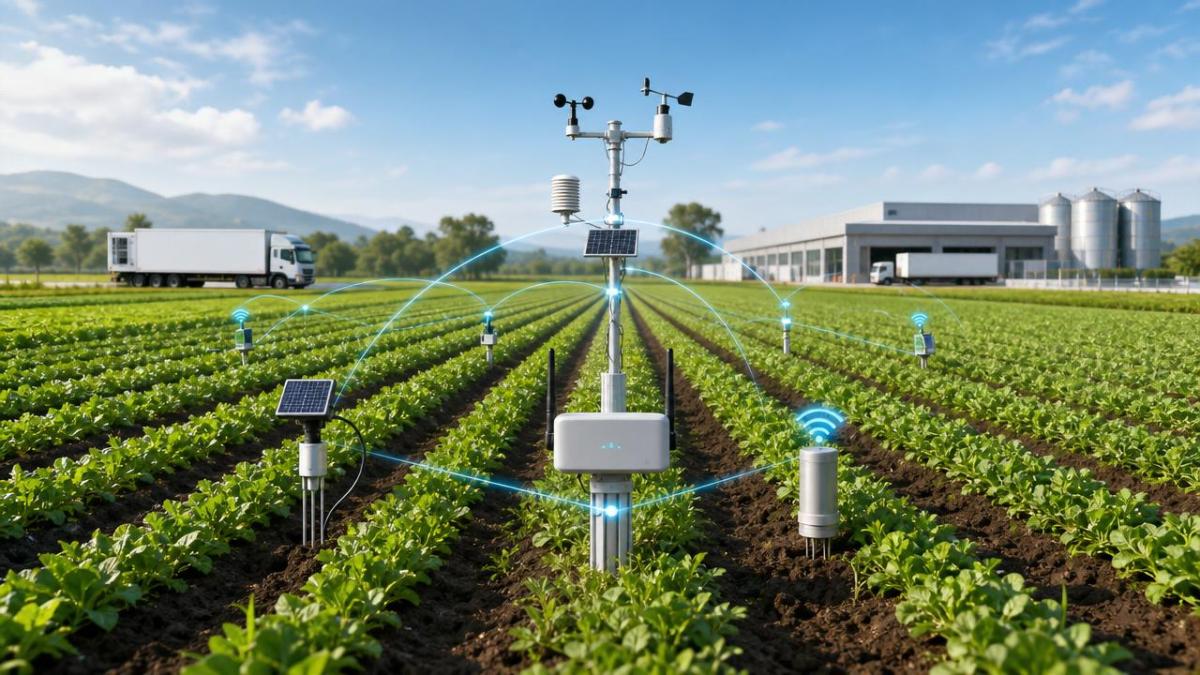
Agricultural IoT environments are unusually complex because biological variability, uneven infrastructure, and seasonal operating windows all influence system design. A greenhouse climate network, an open-field soil sensing grid, and a refrigerated transport chain may all be labeled Agricultural IoT, yet they face very different latency, power, calibration, and data retention requirements. Without a structured evaluation, teams often compare solutions on installation speed or sensor count rather than on data durability.
A checklist-based review helps expose trade-offs early. It forces attention toward questions that are easy to postpone: Can data be exported in standard formats? Will edge devices buffer during outages? How are firmware versions tracked? Can time-series records be aligned with GIS layers, ERP events, or food safety logs? These details decide whether an Agricultural IoT deployment becomes a strategic operational layer or a patchwork of disconnected feeds.
Core points to verify before choosing an Agricultural IoT stack
Use the following points to evaluate Agricultural IoT options before pilot expansion or multi-site rollout. Each item is designed to reduce future data loss, integration friction, and analytics uncertainty.
- Confirm whether sensors, gateways, and software support open protocols and documented APIs instead of locking operational data inside a single Agricultural IoT vendor environment.
- Check how the system handles offline periods, including local buffering, resend logic, and timestamp preservation when rural connectivity drops unexpectedly.
- Verify that every data point carries usable metadata such as device ID, field zone, crop stage, calibration status, and measurement units.
- Review time synchronization across edge devices, tractors, weather stations, and cloud services so cross-system analysis does not become unreliable.
- Assess whether data models can combine agronomic, environmental, machine, and supply chain records without custom rework at every integration stage.
- Examine firmware update governance, version control, and rollback capability to prevent hidden data shifts after sensor or gateway updates.
- Test battery life assumptions under real environmental conditions, especially where temperature, humidity, dust, or distance affect Agricultural IoT performance.
- Ensure that alert rules and analytics thresholds are configurable by site, crop, or facility rather than fixed across all operating contexts.
- Validate export options for raw and processed data so future BI tools, AI models, and compliance platforms can access historical records.
- Check cybersecurity controls at device and network level, including identity management, encrypted transmission, and secure onboarding for new endpoints.
- Inspect how missing values, duplicate events, and anomalous readings are flagged, stored, and corrected within the Agricultural IoT data pipeline.
- Compare total lifecycle cost, including calibration, network maintenance, replacement cycles, integration labor, and long-term storage requirements.
Where Agricultural IoT data gaps emerge in real agri-food scenarios
Open-field crop monitoring
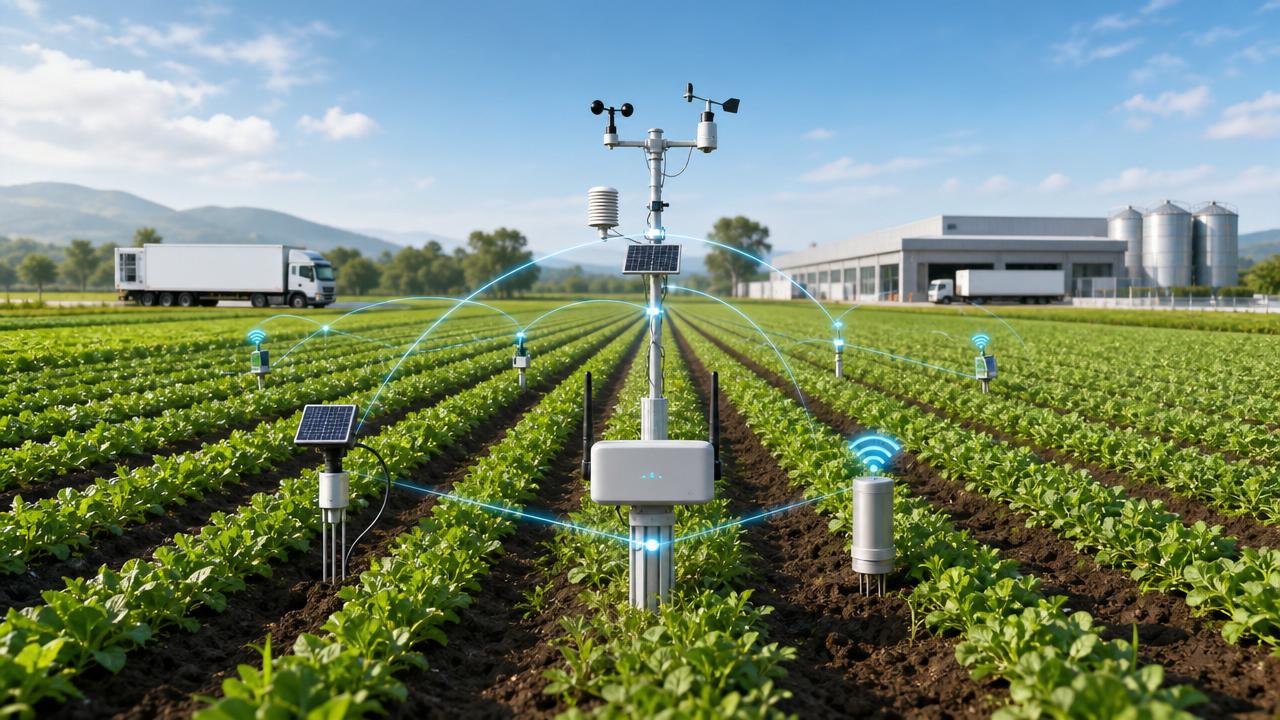
In broad-acre or specialty crop environments, Agricultural IoT data gaps often begin with sparse gateway placement and mixed sensor generations. Soil moisture probes may transmit at different intervals, weather stations may use separate schemas, and machine telematics may not share the same time base. The result is a dataset that looks complete on dashboards but fails when irrigation decisions require zone-level correlation.
The key check here is whether the Agricultural IoT architecture can normalize records across terrain, crop blocks, and changing field boundaries. If plot definitions change seasonally but historical data remains tied to old labels, trend analysis becomes misleading.
Greenhouses and controlled-environment agriculture
Greenhouse operations usually generate denser data, which creates a different risk: overconfidence in volume without validating context. Climate sensors, fertigation controllers, imaging systems, and labor events may all collect data continuously, yet missing calibration logs or incompatible identifiers can break root-cause analysis during quality deviations.
For Agricultural IoT in controlled environments, verify not only precision but also traceability of settings changes. If setpoint adjustments are not recorded in a retrievable format, environmental data loses explanatory value during post-harvest reviews.
Livestock and animal health systems
Wearables, feeding systems, barn climate monitors, and water consumption sensors can create strong Agricultural IoT visibility, but only if animal identity and event timing remain consistent. A gap between biometric alerts and feed intake logs can prevent early detection of stress, illness, or productivity decline.
The critical check is data association. If records are linked only to device serial numbers rather than to stable animal and location identifiers, long-term health analytics become fragmented.
Cold chain and post-harvest logistics
In storage, transport, and distribution, Agricultural IoT failures are frequently invisible until a claim, spoilage event, or audit occurs. Temperature sensors may report correctly, but if location data is delayed or door-open events are not synchronized, compliance records become incomplete.
Here, Agricultural IoT evaluation should focus on chain-of-custody continuity. Data must remain linked from packing to storage to transit, with retained evidence of exceptions and acknowledgments.
Commonly ignored choices that create future blind spots
Choosing proprietary convenience over interoperability
A fast-start platform can simplify early Agricultural IoT deployment, but if device onboarding, data export, and integration logic are tightly controlled by one vendor, expansion becomes expensive. The hidden risk is not only switching cost; it is the inability to build a unified data layer across agronomy, operations, and enterprise systems.
Treating connectivity as a constant rather than a variable
Rural and distributed environments rarely behave like urban networks. Agricultural IoT solutions that assume uninterrupted coverage often lose events silently or resubmit them without consistent timestamps. Connectivity resilience should be designed, not assumed.
Ignoring data governance during pilot stage
Pilots often focus on proof of signal rather than proof of data quality. Yet Agricultural IoT governance rules for naming, units, retention, access, and exception handling should begin in the first deployment. If governance is deferred, scaling multiplies inconsistency.
Undervaluing calibration and maintenance history
Sensor drift can look like a crop, climate, or storage issue when it is really a maintenance issue. Agricultural IoT analytics are only as trustworthy as the calibration records behind them. Missing service history weakens both operational decisions and compliance defensibility.
Separating operational data from business systems
When Agricultural IoT data is isolated from ERP, quality systems, maintenance logs, and shipment records, the result is visibility without context. The most valuable insights usually come from linking physical conditions to inventory, cost, throughput, and quality outcomes.
A practical way to execute Agricultural IoT decisions with less risk
Start by defining the decisions the system must support over three horizons: immediate control, seasonal optimization, and multi-year planning. Then map the minimum data attributes required for each decision, including source, frequency, unit, location reference, and acceptable latency. This prevents Agricultural IoT investments from being judged only by device count or dashboard appearance.
Next, run a pilot that stress-tests failure conditions, not just normal conditions. Simulate network outages, battery degradation, device replacement, field boundary changes, and software updates. A strong Agricultural IoT pilot should prove that data stays usable when reality becomes messy.
After that, establish a small but strict governance model. Standardize naming rules, timestamp format, metadata requirements, firmware logging, and data ownership. Even modest Agricultural IoT programs benefit from a controlled schema register and integration map before adding more vendors or regions.
Finally, evaluate partners and platforms on evidence of long-term support: API maturity, migration tools, historical export, edge intelligence, and documented security practices. In agri-food systems, the best Agricultural IoT choice is rarely the one with the most sensors. It is the one that preserves continuity from edge event to business decision.
FAQ on avoiding Agricultural IoT data gaps
What is the biggest cause of Agricultural IoT data gaps?
The most common cause is fragmented architecture: devices, connectivity, and software selected separately without a shared data model. That creates inconsistent records that are difficult to compare or integrate later.
Are proprietary Agricultural IoT platforms always a bad choice?
Not necessarily. The risk depends on exportability, API openness, integration support, and contract terms. A proprietary platform becomes problematic when it limits access to raw data or blocks cross-system interoperability.
How early should data governance start?
It should start with the first pilot. Early Agricultural IoT governance reduces rework, makes scaling easier, and improves confidence in analytics, audits, and operational decisions.
Conclusion and next actions
Agricultural IoT can transform agri-food operations, but only when early architectural choices support continuity, context, and interoperability. Data gaps do not usually appear as dramatic failures. They emerge quietly through mismatched schemas, weak offline handling, poor metadata, and limited integration design, then reduce ROI when operations depend on historical trust.
The smartest next step is to review any current or planned Agricultural IoT deployment against a fixed set of criteria: protocol openness, buffering logic, timestamp integrity, metadata completeness, calibration history, system integration, and export readiness. In a sector where physical conditions change constantly, durable digital foundations matter as much as the sensors themselves. Strong Agricultural IoT decisions made now can prevent years of fragmented intelligence later.
Deep Dive
Related Intelligence
 Precision FarmingHow Global Commerce Data Helps Precision Farming Equipment Managers Forecast Spare Part Demand AccuratelyAnalyst:Agri-Tech Strategist
 Precision FarmingHow much does deploying automated farming solutions manufacturer hardware increase labor efficiency on layer farms?Analyst:Agri-Tech Strategist
 Precision FarmingWhy automated farming solutions manufacturers prioritize modular design over full-stack integrationAnalyst:Agri-Tech Strategist