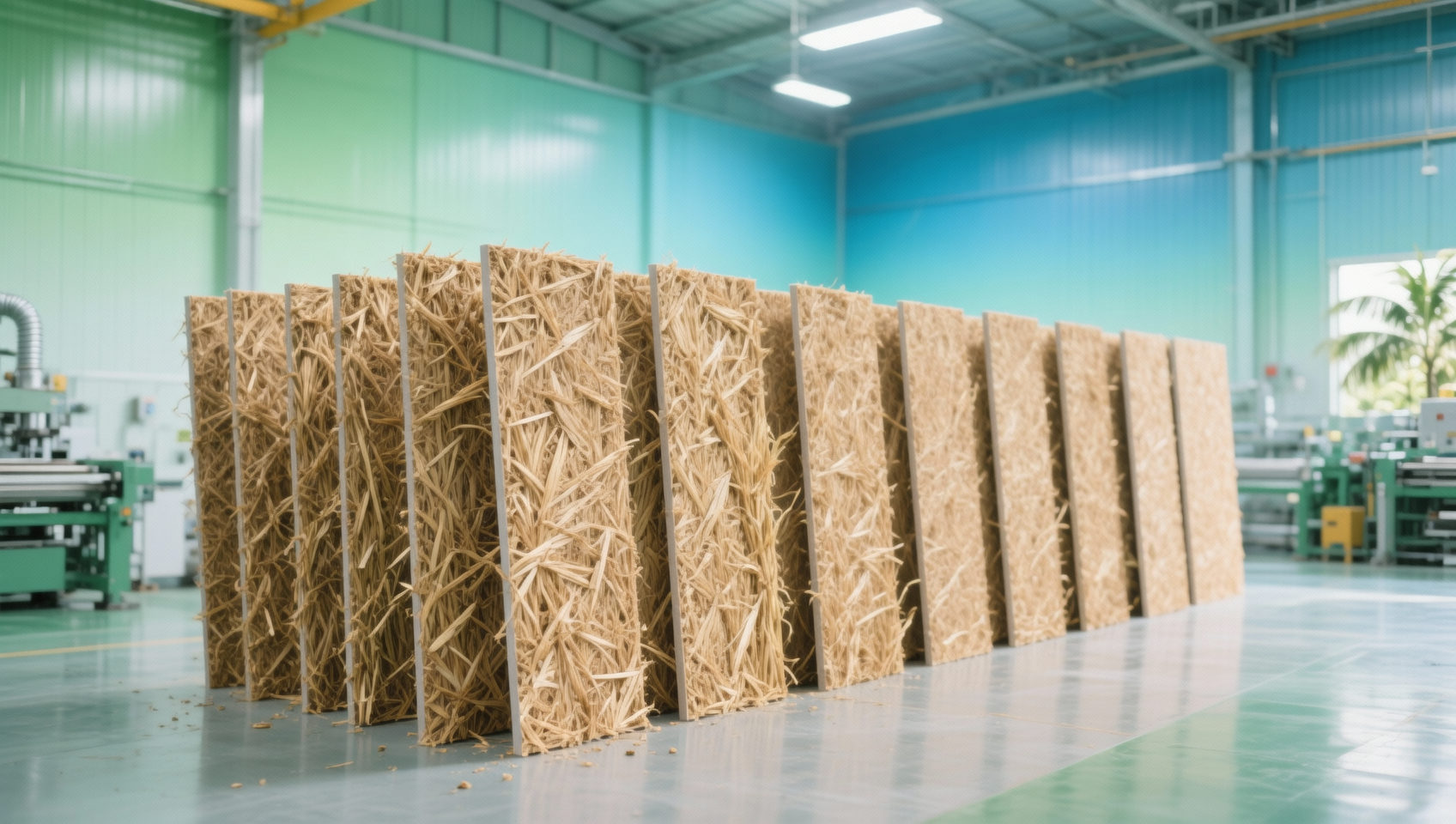
Xining–Hanoi Rail Freight Opens New Export Route
Key Takeaways
- How to use auto parts sourcing intelligence to assess supplier riskAutomotive Tech Analyst
- How to choose fiber optic equipment for long-haul telecom linksIT & Security Director
- Which farm robotics innovations are ready for field-scale weeding?Agri-Tech Strategist
- How much RAM does edge computing hardware for IoT applications need?IT & Security Director
- How to evaluate precision livestock farming companies for grazing herdsAgri-Tech Strategist
- Comparing Battery Cage Quotes for Open-Sided Layer HousesAgri-Tech Strategist
- How to assess an agricultural machinery manufacturer's parts supportAgri-Tech Strategist
- What drives industrial automation cost in a new production line?Chief Civil Engineer
Industry Overview
We do not just publish news; we construct a high-fidelity digital footprint for our partners. By aligning with TNE, enterprises build the essential algorithmic "Trust Signals" required by modern search engines, ensuring they stand out to high-net-worth buyers in an increasingly crowded global digital landscape.
On May 29, 2026, the first full-container international freight train on the Xining–Hanoi route departed from Xining South Station in Qinghai, creating a new overland channel for China–Vietnam trade in green building materials and agricultural machinery products. The launch is especially relevant for exporters, downstream distributors in Vietnam and ASEAN, engineering contractors, local assembly plants, and supply chain service providers because the route publicly highlights faster transit than traditional sea shipping and lower costs than road transport for designated cargo categories.
Event Overview
According to the disclosed information, the first “Xining–Hanoi” full-container international freight train departed on May 29, 2026, from Xining South Station in Qinghai. The service uses a mixed formation of standardized 40-foot refrigerated containers and general containers and runs directly to the Dong Dang border gate in Vietnam.
The published information states that, compared with traditional sea shipping, the route saves 12 days, and compared with road transport, it reduces costs by 35%. The line is set to prioritize shipments of green building materials, agricultural machinery OEM components, and smart irrigation equipment. For downstream distributors in Vietnam and ASEAN, engineering contractors, and local assembly factories, the route is presented as a new land corridor intended to improve delivery stability and price competitiveness for these product categories.
Which Industry Segments Are Affected
Green building materials exporters and project suppliers
These companies are directly affected because green construction materials are explicitly listed among the cargo categories prioritized by the new rail service. The immediate impact lies in logistics planning: a route with shorter transit time than sea freight and lower cost than road transport can change how suppliers schedule deliveries to Vietnam-bound construction and infrastructure-related customers.
From an industry perspective, the most relevant change is not only transport speed, but delivery predictability for project-based orders. For suppliers serving contractors or project owners, more stable transit can matter in quotation planning, shipment batching, and contract fulfillment timing.
Agricultural machinery OEM parts suppliers and equipment manufacturers
Suppliers of agricultural machinery OEM parts and related equipment should pay close attention because the route specifically prioritizes these goods. This matters for manufacturers shipping components to local assemblers or channel partners in Vietnam, where production continuity often depends on more reliable inbound delivery.
Analysis shows that the key impact is on replenishment rhythm and landed-cost structure. If the published transit and cost advantages hold in regular operations, exporters may gain more flexibility between urgency and freight spend, especially for component-based shipments rather than only finished machinery.
Smart irrigation equipment producers and distributors
Smart irrigation equipment is also named among the priority cargo categories, making this route relevant to companies selling water-management and farm-support equipment into Vietnam and the broader ASEAN downstream market. These products often require coordinated delivery of multiple parts or systems, so a dedicated rail option can affect how firms combine shipments and manage lead times.
Observably, the impact may be strongest for companies that need a balance between cost control and delivery consistency. For distributors and local partners, this could improve planning around inventory allocation and installation schedules, provided service performance becomes repeatable over time.
Vietnam and ASEAN downstream distributors, engineering contractors, and local assembly plants
The published summary directly identifies these business roles as beneficiaries of the new corridor. They are affected because the route is intended to improve delivery stability and price competitiveness for Chinese sustainable building materials and agricultural equipment products entering their supply chains.
Current attention should focus on procurement cadence, supplier coordination, and order visibility. More stable overland freight can influence how these buyers structure purchase windows, reserve stock, or sequence project materials and parts deliveries.
Supply chain and logistics service providers
Freight forwarders, customs-related service providers, and cross-border logistics coordinators are also affected because the route introduces a newly publicized overland option tied to specific industrial cargo categories. Their role may expand in shipment matching, container planning, multimodal coordination, and customer communication for exporters evaluating alternatives to sea and road transport.
From an industry perspective, this is less about a broad logistics market shift at once and more about a new corridor that could reshape route selection for a defined set of products if operating performance remains consistent.
What Companies and Practitioners Should Watch and How to Respond
Track follow-up official disclosures and service continuity
Companies should closely monitor whether additional official information is released on frequency, operating stability, cargo acceptance scope, and implementation details for the Xining–Hanoi service. Current public information confirms the launch and the stated advantages, but actual business adoption depends on whether the route develops into a sustained and usable logistics option.
Reassess product-specific shipment planning
Exporters of green building materials, agricultural machinery OEM parts, and smart irrigation equipment should review which SKUs or order types are suitable for this route. Current attention should focus on cargo mix, delivery urgency, temperature-control requirements where relevant, and whether standardized 40-foot refrigerated or general containers fit actual product movement needs.
Separate policy and route signaling from routine commercial deployment
More suitably understood, this launch is a confirmed logistics development, but companies should avoid treating one inaugural train as proof that all operational variables have already stabilized. Procurement teams, sales teams, and logistics managers should distinguish between the strategic signal of a new corridor and the practical conditions required for regular shipment conversion.
Prepare supply chain communication and contingency plans
Suppliers and buyers should update communication with distributors, contractors, and assembly partners regarding possible routing changes, expected timing differences, and shipment planning assumptions. Analysis shows that practical preparation matters most where order fulfillment depends on narrow installation windows, component continuity, or project delivery milestones. Contingency planning should remain in place while the route’s ongoing performance is still being observed.
Editorial View / Industry Observation
Observably, this development matters because it is not only a transport event; it signals a more targeted logistics channel for specific export categories tied to green construction and agricultural equipment. The significance lies in the fact that the disclosed route advantages are linked to identified industrial users rather than to cross-border trade in general.
Analysis shows that this should currently be seen more as an important operational signal than as a fully proven long-term market outcome. The inaugural launch confirms that a new land route is now available, but the broader industry effect will depend on whether service regularity, cargo suitability, and commercial uptake follow.
Current attention should focus on how exporters, distributors, contractors, and assembly plants adjust their shipment strategies around this corridor. From an industry perspective, the route deserves continued observation because logistics reliability and cost structure can directly shape competitiveness in Vietnam- and ASEAN-facing supply chains for the listed product groups.
Conclusion
The launch of the Xining–Hanoi full-container international freight train on May 29, 2026 adds a new overland export route for green building materials, agricultural machinery OEM parts, and smart irrigation equipment moving from China toward Vietnam. Its industry value lies in the potential to improve delivery timing and cost efficiency for clearly identified supply chain participants.
More suitably understood, this development is a meaningful logistics signal with practical implications for exporters, buyers, contractors, local assemblers, and logistics providers, but its long-term impact still needs to be observed through continued operation and market adoption. For now, the most rational response is to treat it as a route option worth active evaluation rather than an automatically completed shift in regional trade patterns.
Source Note
Main source: the information provided for this article, including the event title, event date, and event summary regarding the first departure of the Xining–Hanoi full-container international freight train on May 29, 2026.
Items requiring continued observation: any future official disclosures on route frequency, operating continuity, cargo execution details, and the extent to which the published time and cost advantages are reflected in regular commercial use.
Deep Dive
Related Intelligence
 Green Building MatWhat Makes a Digital Landscape Strategy Effective for Green Building Mat Exporters in ASEAN?Analyst:Chief Civil Engineer
 Green Building MatAre Eco-Friendly Industrial Coatings Actually Lower in VOCs — Or Just Reformulated with New Solvent Blends?Analyst:Chief Civil Engineer
 Green Building MatGraphene Materials Bulk Order Logistics: Lead Times, Minimum Order Quantities, and Storage Requirements for Construction-Scale DeploymentAnalyst:Chief Civil Engineer