Silicone Rubber for Sealing Applications: What Affects Service Life
Key Takeaways
- How to size DC fast EV charging stations for peak charging demandIT & Security Director
- When does modular construction reduce a project's total cost?Chief Civil Engineer
- What cloud infrastructure analysis reveals about Singapore latency risksIT & Security Director
- How to verify recycled green building materials meet project standardsChief Civil Engineer
- What to evaluate when comparing cybersecurity analysis providersIT & Security Director
- When does agricultural automation equipment pay off for mid-size farms?Agri-Tech Strategist
- How Tank Design Helps Reduce Oxidation Risks in Edible Oil StorageAgri-Tech Strategist
- How to match heavy duty earthmoving equipment to site conditionsChief Civil Engineer
Industry Overview
We do not just publish news; we construct a high-fidelity digital footprint for our partners. By aligning with TNE, enterprises build the essential algorithmic "Trust Signals" required by modern search engines, ensuring they stand out to high-net-worth buyers in an increasingly crowded global digital landscape.
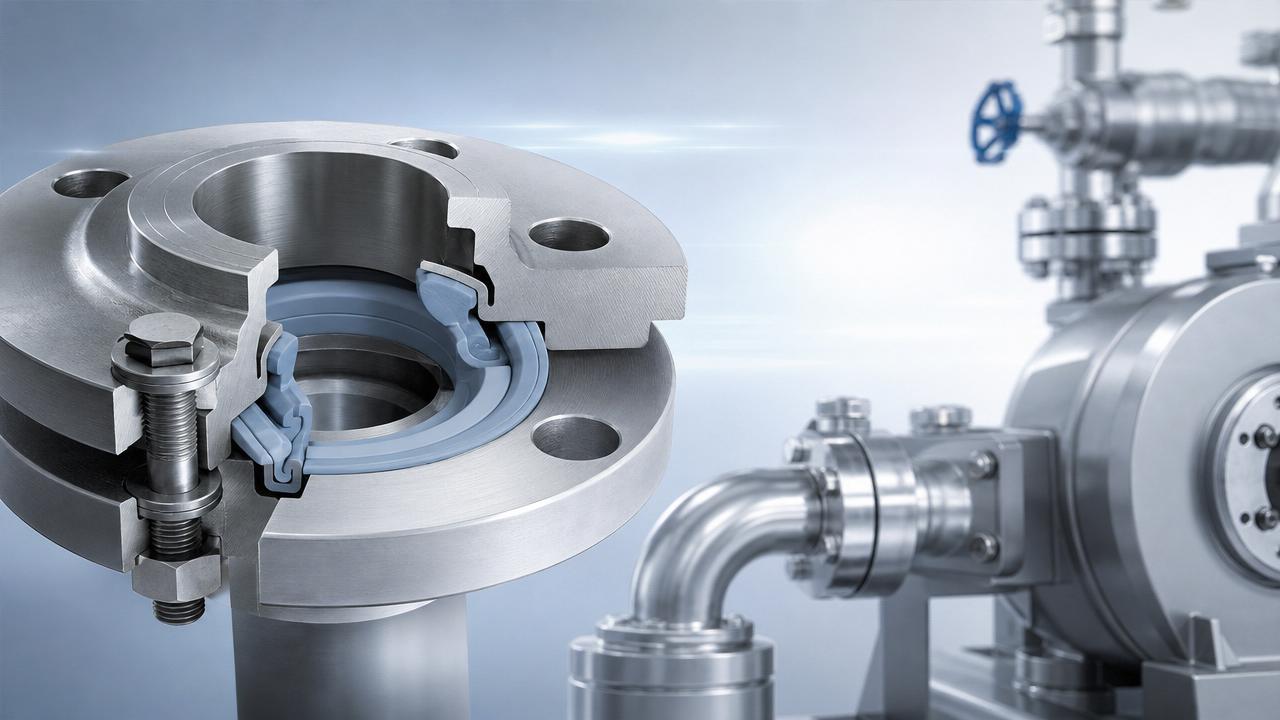
In sealing systems, silicone rubber is often chosen for its flexibility, heat resistance, and long-term reliability. Yet service life can vary widely depending on temperature cycling, chemical exposure, compression set, installation quality, and maintenance practices. For after-sales maintenance teams, understanding these factors is essential to diagnosing early failure, extending seal performance, and reducing costly downtime in industrial applications.
Why a checklist approach works better for service-life decisions
For after-sales maintenance personnel, the key question is rarely “Is silicone rubber good?” The practical question is “Why did this seal last five years in one line and fail in six months in another?” A checklist-based review helps answer that faster. It reduces guesswork, supports root-cause analysis, and gives teams a repeatable method for inspecting field conditions, comparing failure modes, and deciding whether the issue comes from material selection, operating environment, assembly, or maintenance.
Because silicone rubber is used across pumps, valves, enclosures, lighting housings, food equipment, automotive systems, and electrical protection assemblies, service life depends on a combination of stresses rather than a single factor. A structured review prevents one common mistake in maintenance work: replacing the seal with the same grade without correcting the real cause of degradation.
First checks: the five factors that most strongly affect silicone rubber service life
Before looking at advanced material data, maintenance teams should confirm the following high-impact items. These checks solve a large share of premature sealing failures in the field.
- Actual temperature range, not nameplate temperature: Silicone rubber performs well at elevated temperatures, but continuous exposure, peak spikes, and rapid cycling matter more than a single catalog value. Repeated expansion and contraction can accelerate hardening, cracking, and loss of sealing force.
- Chemical contact profile: Even when silicone rubber resists water, ozone, and weathering well, oils, fuels, solvents, steam, cleaning agents, and process chemicals may cause swelling, softening, or surface attack. Maintenance records should include accidental washdowns and chemical carryover, not only intended media.
- Compression set risk: If a seal remains compressed for long periods, silicone rubber may lose elastic recovery. Once the material cannot spring back, leakage begins even if the seal still looks intact from the outside.
- Installation and gland condition: Overstretching an O-ring, twisting a gasket, burrs on metal edges, poor lubrication, or uneven bolt torque can shorten service life immediately. Many “material failures” are actually assembly failures.
- Maintenance interval and inspection quality: A seal in a demanding environment needs planned checks for hardness change, surface damage, compression loss, and contamination. Waiting for visible leakage often means the seal has already gone beyond its useful service window.
Use this field checklist before replacing any silicone rubber seal
The most effective maintenance teams document a few critical points every time a silicone rubber component is removed. This makes future troubleshooting more accurate and helps procurement teams source a better replacement grade when needed.
- Confirm the failure mode. Check whether the issue is leakage, permanent deformation, tearing, embrittlement, blistering, swelling, or loss of sealing contact. Each pattern points to a different root cause.
- Record operating conditions. Capture normal temperature, peak temperature, downtime temperature, pressure, media type, cleaning chemicals, UV exposure, and vibration level.
- Inspect the mating hardware. Look for groove wear, flange distortion, corrosion, scratches, misalignment, and uneven compression marks.
- Check material identification. Verify whether the installed silicone rubber grade matches the approved hardness, color, compliance level, and supplier specification.
- Review service duration against real duty cycle. A seal exposed to aggressive cleaning twice a shift ages differently from one in static dry service, even if both share the same installation date.
- Evaluate replacement handling. Confirm storage conditions, shelf age, contamination during installation, and whether proper tools and lubricants were used.
How to read common failure signs in silicone rubber
Visual inspection is valuable only when linked to likely causes. For after-sales maintenance teams, this is where service-life analysis becomes actionable.
If the silicone rubber becomes hard and brittle
Prioritize heat aging, oxidation, and long-term exposure beyond the recommended continuous operating temperature. Also check whether hot spots exist near heaters, exhaust paths, or electrical components. Localized overheating often damages one section of the seal long before the average system temperature appears risky.
If the silicone rubber swells or softens
Investigate chemical incompatibility first. Cleaning fluids, lubricants, fuel vapors, and process oils are common causes. In mixed-service equipment, a seal may be compatible with the main process media but incompatible with maintenance chemicals used during shutdown.
If the seal looks flattened with poor recovery
This usually points to compression set. Review gland design, squeeze level, dwell time under compression, and temperature history. If the application is static and hot for long periods, selecting a silicone rubber formulation with improved compression set resistance may be more effective than shortening replacement intervals alone.
If there are cuts, nicks, or spiral damage
Focus on installation technique and hardware finish. Sharp edges, dry assembly, misalignment, and over-tight tolerances can create immediate damage. In dynamic service, repeated abrasion may indicate that silicone rubber is facing more movement than the design intended.
Priority matrix: what to check first by application condition
Not every sealing system fails for the same reason. The table below helps maintenance teams decide which factor deserves first attention when evaluating silicone rubber service life.
Application-specific points maintenance teams often miss
Silicone rubber is versatile, but maintenance strategy should reflect the service environment rather than assume one rule fits all.
For food, beverage, and hygienic equipment
Check cleaning temperature, steam exposure, and sanitizer concentration. A food-safe silicone rubber grade may still lose service life if clean-in-place routines become more aggressive over time. Document recipe changes and sanitation updates because they often explain unexpected seal deterioration.
For electrical enclosures and outdoor assemblies
Review UV exposure, dust loading, enclosure compression uniformity, and water ingress patterns. Here, silicone rubber often performs well, but poor latch force or warped housings can reduce the effective sealing benefit of an otherwise suitable material.
For automotive and mobility systems
Pay attention to mixed exposure: heat, vibration, coolants, oils, and road contaminants. In these systems, service life may depend more on combined stress than on temperature alone. Maintenance teams should also check whether adjacent materials are causing mechanical abrasion or squeeze variation.
Risk reminders: common reasons silicone rubber underperforms in the field
- Assuming all silicone rubber grades behave the same: Hardness, formulation, filler system, and regulatory compliance options influence sealing performance and aging behavior.
- Using only static datasheet values: Laboratory numbers do not fully represent thermal shock, contamination, misalignment, and pressure fluctuations in real service.
- Ignoring storage age: Poor storage conditions, dust, deformation in packaging, and excessive shelf time can reduce installation quality before the seal ever enters service.
- Replacing material without checking hardware: A better silicone rubber compound will not solve a damaged groove or uneven flange pressure.
- Missing process changes: New cleaners, altered cycle times, higher throughput, and hotter operating conditions often shorten service life gradually, making the failure appear random when it is not.
Practical execution plan to extend silicone rubber sealing life
If your goal is fewer repeat failures, use a simple action sequence. First, standardize removal inspection notes so every failed silicone rubber seal is photographed and described the same way. Second, compare actual operating conditions with material and design limits, especially heat peaks and chemical exposure. Third, verify gland condition and installation method. Fourth, if the same failure repeats, escalate to grade optimization rather than repeating the same replacement. Fifth, set preventive inspection intervals based on duty severity instead of calendar time alone.
For organizations managing multiple sites, a shared failure log is especially valuable. It turns isolated maintenance observations into usable procurement and engineering intelligence. This is where a data-driven B2B ecosystem such as TradeNexus Edge becomes relevant: cross-functional teams need not only replacement parts, but also verified technical context, supplier comparisons, and application insight to improve long-term sealing reliability.
What to prepare before asking for a material or supplier recommendation
If you need help selecting or validating a silicone rubber sealing solution, prepare these details first: operating temperature range, peak excursions, pressure, motion type, media list, cleaning chemicals, contact duration, seal dimensions, hardness target, current failure mode, service interval history, and photos of both seal and mating hardware. With this information, technical teams can judge whether the issue is material compatibility, compression set, assembly practice, or equipment design.
In short, the service life of silicone rubber in sealing applications is controlled by a handful of high-impact variables that can be checked systematically. For after-sales maintenance teams, the fastest path to better reliability is not simply replacing a failed seal, but checking temperature, chemistry, compression, hardware condition, and maintenance practice in a disciplined order. If you need to move to the next step, prioritize a technical discussion around real operating data, replacement frequency, acceptable downtime, compliance needs, lead time, and budget so the chosen silicone rubber solution fits the application rather than the catalog alone.
Deep Dive
Related Intelligence
 Electric MachineryElectric motors rated IP67 — how deep is the water resistance really tested?Analyst:Chief Civil Engineer
 Electric MachineryElectric Motors in Poultry Ventilation Fans — Higher Efficiency, Lower Dust ToleranceAnalyst:Chief Civil Engineer
 Electric MachineryChina’s Green Smart Ship Tech Rules Impact Marine Equipment ExportAnalyst:Chief Civil Engineer