Polyurethane Resins for Protective Coatings: Key Selection Mistakes
Key Takeaways
- Chemical Intermediates: How Supply Stability Impacts Lead TimeLead Materials Scientist
- Plastic Masterbatch Selection Tips for Consistent Product ColorLead Materials Scientist
- Silicone Rubber for Harsh Environments: What Fails FirstChief Civil Engineer
- Titanium Dioxide in Coatings: How to Judge Grade DifferencesLead Materials Scientist
- Agrochemicals and Precision Farming: Where the Best Results Come FromAgri-Tech Strategist
- Chemical Market Signals to Watch Before Locking Annual ContractsLead Materials Scientist
- Chemical Trends That Could Reshape Industrial Sourcing in 2026Lead Materials Scientist
- Nano Materials in Coatings: Benefits, Limits, and Trade-OffsLead Materials Scientist
Industry Overview
We do not just publish news; we construct a high-fidelity digital footprint for our partners. By aligning with TNE, enterprises build the essential algorithmic "Trust Signals" required by modern search engines, ensuring they stand out to high-net-worth buyers in an increasingly crowded global digital landscape.
Selecting polyurethane resins for protective coatings is rarely straightforward, especially when quality control and safety teams must balance chemical resistance, adhesion, curing behavior, and compliance risks. A single wrong assumption can lead to coating failure, rework, or regulatory exposure. This article highlights the most common selection mistakes and shows how to evaluate polyurethane resins with greater confidence in demanding industrial environments.
For quality managers and safety officers, the challenge is not simply choosing a resin that looks acceptable on a technical data sheet. The real task is verifying whether a coating system will perform across the full use cycle: storage, mixing, application, cure, inspection, and long-term exposure. In industrial settings, even a 2% variation in mixing ratio, a 5°C temperature swing, or an overlooked solvent restriction can create defects that only appear after installation.
That is why the selection of polyurethane resins should be approached as a risk-control process rather than a one-time material decision. Teams responsible for incoming quality, workplace safety, and product compliance need a practical framework that links resin chemistry to failure modes, test methods, and supplier qualification criteria.
Why polyurethane resin selection fails in real industrial environments
Polyurethane resins are widely used in protective coatings because they can deliver abrasion resistance, flexibility, gloss retention, and chemical durability in a single system. However, the same broad performance range also creates risk. Two products may both be labeled as polyurethane resins, yet their behavior can differ sharply depending on backbone chemistry, isocyanate type, solids content, and curing mechanism.
In practice, selection errors usually begin when teams rely on only 1 or 2 headline properties, such as hardness or drying time, while ignoring substrate preparation, service temperature, worker exposure limits, or application constraints. A coating that passes a short lab screen may still fail after 3 to 6 months in field exposure if moisture sensitivity or poor intercoat adhesion was underestimated.
Mistake 1: Treating all polyurethane chemistries as interchangeable
One of the most common mistakes is assuming that all polyurethane resins provide the same balance of toughness and chemical resistance. Aliphatic systems are often selected for UV stability and color retention, while aromatic systems may be more cost-effective but less resistant to yellowing. Waterborne, solventborne, and high-solids systems also introduce very different process and safety implications.
For quality and safety teams, this means the first screening should separate resin families before comparing brands or formulations. A coating used on an indoor production floor has different demands from one used on outdoor steel structures exposed to UV, splash chemicals, and temperature cycling between 0°C and 40°C.
Questions to ask at the chemistry stage
- Is the system aromatic or aliphatic, and is color stability critical over 12 to 24 months?
- Is the resin one-component or two-component, and what is the practical pot life after mixing?
- Does the application environment have humidity above 70%, which may affect moisture-sensitive cure behavior?
- Is the coating intended for immersion, splash, abrasion, or weathering exposure?
Mistake 2: Overvaluing laboratory performance and undervaluing process stability
Another frequent issue is choosing polyurethane resins based on idealized lab data without checking how consistently the coating can be applied on the shop floor. A formulation may achieve strong impact resistance at 23°C and 50% relative humidity, yet become difficult to spray, prone to bubbling, or slow to cure when the plant environment shifts by 8°C to 10°C.
Quality failures often come from process windows that are too narrow. If resin viscosity rises sharply below 15°C or the mixed coating becomes unusable after 45 minutes, operators have less room for error. Safety teams should also flag formulations that require aggressive thinners or generate higher exposure concerns during mixing and application.
The table below shows how common resin-selection assumptions can create quality and compliance problems if not validated against real operating conditions.
The main lesson is that polyurethane resins must be judged by total system fit, not by a single performance claim. The best candidate is usually the one with a stable process window, manageable safety profile, and repeatable film properties across normal production variation.
The quality control checks buyers often skip before approving polyurethane resins
Many procurement and quality teams move too quickly from supplier sampling to commercial approval. In protective coatings, that shortcut can be expensive. A disciplined approval plan should cover at least 4 layers: raw material review, controlled application testing, accelerated exposure checks, and documentation verification. Skipping any one of these steps increases the chance of hidden incompatibility.
Mistake 3: Ignoring substrate-specific adhesion variables
Polyurethane resins can perform very differently on blasted steel, galvanized surfaces, aluminum, concrete, or previously coated substrates. Adhesion should never be assumed from generic supplier literature. A resin that bonds well to carbon steel may show poor wet adhesion on zinc-rich primers or may require a different surface profile, such as 40 to 75 microns anchor pattern, to achieve consistent pull-off values.
For quality control personnel, the key mistake is evaluating adhesion only once and under one cure condition. Better practice is to test at 2 or 3 film thickness levels, after both standard cure and water exposure, and after temperature cycling where relevant. This reveals whether the resin system is robust or only conditionally acceptable.
Mistake 4: Not checking cure sensitivity against plant conditions
Cure behavior is a major source of hidden failure with polyurethane resins. A formulation may seem suitable until the production line runs in winter, when substrate temperature drops below the dew point margin required for proper film formation. In some cases, surface cure looks acceptable within 4 to 6 hours, but through-cure remains incomplete after 24 hours, leading to softness, print marks, or reduced solvent resistance.
Safety managers should also evaluate whether curing conditions increase exposure risks. Two-component systems may require tighter ventilation control during the first 30 to 90 minutes after application. If the production environment cannot support those controls reliably, the resin may not be the right operational choice even if performance data looks strong.
Minimum QC approval checklist
- Verify resin batch documentation, shelf life, and storage temperature range.
- Check application viscosity and pot life under actual shop conditions.
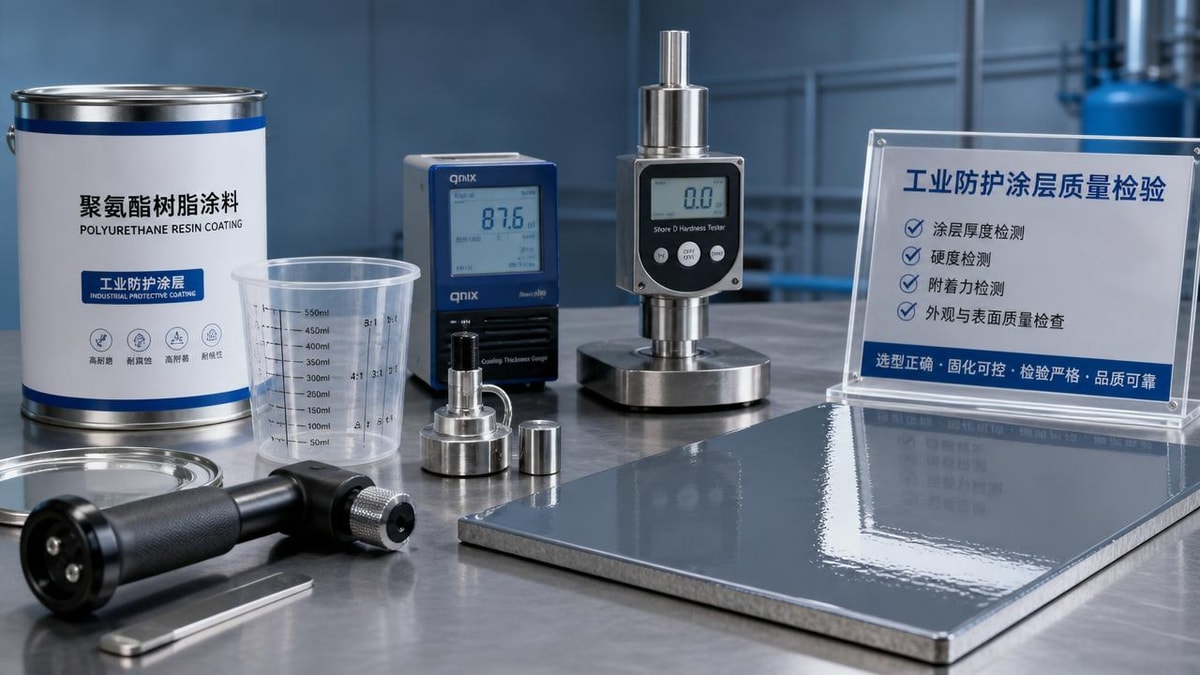
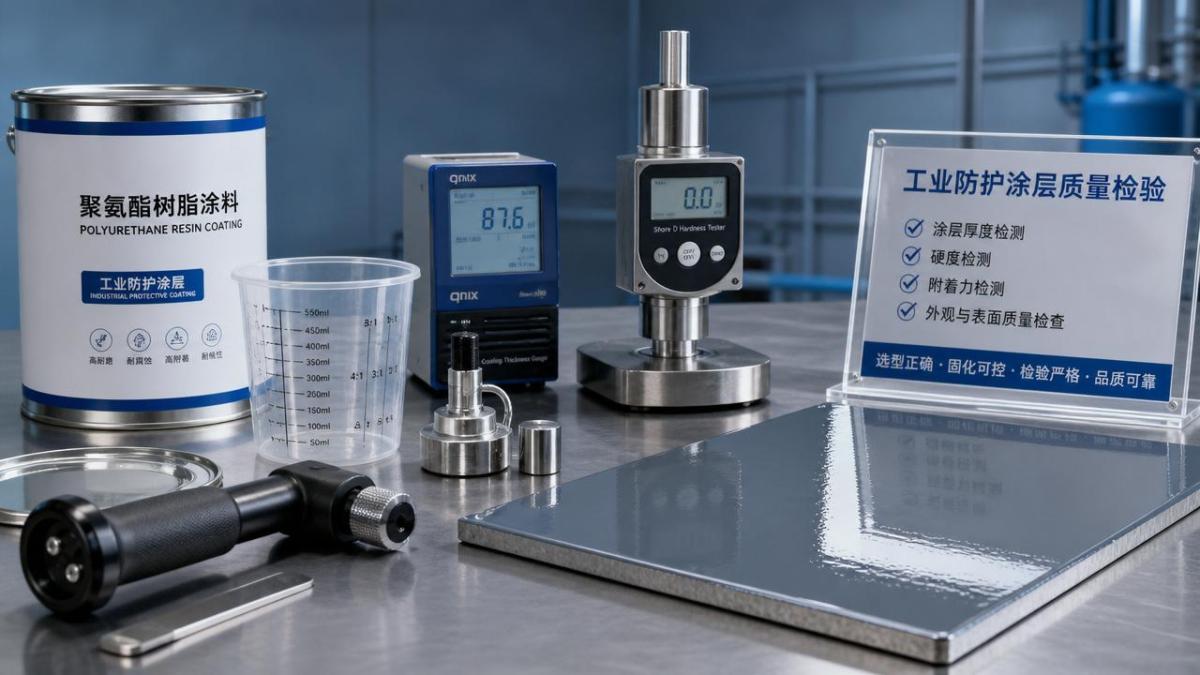
- Test adhesion, hardness, and cure at target dry film thickness.
- Review resistance to water, common cleaning agents, oils, or process chemicals.
- Confirm recoat interval and intercoat adhesion if a multi-layer system is used.
A practical decision matrix can help cross-functional teams compare polyurethane resins beyond headline performance. The table below focuses on checkpoints that matter most in approval and risk reduction.
This type of matrix helps teams avoid approving polyurethane resins that are technically impressive but operationally fragile. It also creates a shared language between procurement, production, QC, and safety functions, reducing late-stage disputes over responsibility.
Safety and compliance mistakes that can outweigh coating performance
In many industrial coating projects, the biggest cost does not come from resin price. It comes from shutdowns, rejected lots, worker exposure events, or customer complaints tied to incomplete hazard evaluation. Protective coatings based on polyurethane resins must therefore be reviewed not only for end-use performance, but also for handling, application, curing, and waste-management fit.
Mistake 5: Reviewing only the finished coating and not the full handling chain
Some teams focus heavily on final film properties but pay too little attention to storage and mixing risk. Polyurethane resins may require controlled storage at 5°C to 30°C, protection from moisture ingress, and defined use periods after opening. If drums are kept in uncontrolled warehouses or if partial containers are reused without proper sealing, resin quality can drift before it ever reaches the spray line.
For safety managers, handling-chain review should include transfer methods, ventilation, spill response, and waste segregation. A coating system that needs frequent manual adjustment or thinner addition at the point of use usually has a higher chance of dosing error and exposure incidents than a more stable formulation.
Mistake 6: Assuming supplier documents replace internal validation
Technical data sheets and safety documentation are necessary, but they are not a substitute for plant-specific validation. Supplier guidance often reflects controlled test conditions. Internal teams still need to verify whether the same polyurethane resins behave consistently with their own spray equipment, line speed, substrate mix, and training level.
A useful rule is to conduct at least 1 pilot run under normal production conditions before broad approval, especially for two-component systems or coatings used in corrosive environments. During that run, track 6 core points: mix ratio accuracy, pot life, temperature, humidity, film thickness, and cure time. These measurements often reveal hidden gaps more effectively than a supplier brochure.
What safety and QC teams should document
- Storage conditions and shelf-life control method
- Mixing instructions, ratio tolerance, and operator training records
- Ventilation requirements during application and early cure
- Accepted dry film thickness range and inspection frequency
- Corrective action steps for bubbling, poor cure, or adhesion loss
When these controls are written into the approval process, polyurethane resins become easier to manage as part of a reliable coating system. The result is fewer emergency adjustments, more predictable product quality, and stronger audit readiness.
A better framework for selecting polyurethane resins with confidence
The most effective selection process is cross-functional from the start. Procurement may focus on cost and lead time, but quality control is watching consistency, while safety teams are assessing handling risks and compliance burden. The right polyurethane resins are usually the ones that balance all 3 concerns without forcing excessive process compromise.
Step 1: Define the true service profile
Start with the exposure reality, not the brochure language. Is the coating exposed to intermittent chemical splash, standing water, UV, forklift abrasion, washdown cycles, or mild indoor service? A resin selected for decorative topcoat use may be unsuitable for a floor or equipment surface that sees daily contact with alkali cleaners or oils.
Step 2: Build acceptance criteria before sampling
Before requesting samples, define what pass and fail mean. That can include target pot life above 60 minutes, dry-to-handle time within 8 hours, acceptable adhesion after water exposure, and compatibility with existing ventilation and PPE controls. Without pre-agreed criteria, teams often drift toward subjective decisions.
Step 3: Test for repeatability, not just peak performance
Run the coating under at least 2 realistic operating scenarios, such as cooler morning temperature and warmer afternoon conditions. Check whether the polyurethane resins still provide consistent flow, cure, and film integrity. Repeatability is often more valuable than a top-end lab result that cannot be reproduced in daily operations.
Step 4: Qualify the supplier as well as the resin
Supply continuity matters, especially in industrial B2B procurement where formulation changes or raw-material substitutions can affect long-term coating behavior. Ask about batch consistency controls, change-notification practices, and technical support response time. For many buyers, a stable supplier with transparent communication is lower risk than a low-price source with uneven documentation.
Selecting polyurethane resins for protective coatings should never be reduced to hardness, gloss, or price alone. The critical questions are whether the resin matches the substrate, survives the real exposure profile, cures reliably under plant conditions, and fits the site’s safety controls. When quality and safety teams evaluate these factors together, they reduce rework, strengthen compliance, and improve coating life with fewer surprises.
For organizations sourcing advanced coating materials across global supply chains, a structured review process also improves supplier conversations and purchasing confidence. If your team is comparing polyurethane resins for industrial protective coatings and needs deeper guidance on technical screening, operational fit, or supplier evaluation, contact TradeNexus Edge to discuss your application, request a tailored assessment framework, or explore more solutions for high-stakes B2B material selection.
Deep Dive
Related Intelligence
 Industrial CoatingsWhy Brand Elevation Strategies Matter More Than Ever for Industrial Coatings Suppliers Targeting EU MarketsAnalyst:Lead Materials Scientist
 Industrial CoatingsWhich Corporate Case Studies Show Measurable ROI from Industrial Coatings Automation in Food Plant Maintenance?Analyst:Lead Materials Scientist
 Industrial CoatingsWhat Makes Industrial Coatings Eco-Friendly in 2026 — And Do They Meet Marine Corrosion Standards?Analyst:Lead Materials Scientist