Titanium Dioxide in Coatings: How to Judge Grade Differences
Key Takeaways
- Chemical Intermediates: How Supply Stability Impacts Lead TimeLead Materials Scientist
- Plastic Masterbatch Selection Tips for Consistent Product ColorLead Materials Scientist
- Silicone Rubber for Harsh Environments: What Fails FirstChief Civil Engineer
- Titanium Dioxide in Coatings: How to Judge Grade DifferencesLead Materials Scientist
- Agrochemicals and Precision Farming: Where the Best Results Come FromAgri-Tech Strategist
- Chemical Market Signals to Watch Before Locking Annual ContractsLead Materials Scientist
- Chemical Trends That Could Reshape Industrial Sourcing in 2026Lead Materials Scientist
- Nano Materials in Coatings: Benefits, Limits, and Trade-OffsLead Materials Scientist
Industry Overview
We do not just publish news; we construct a high-fidelity digital footprint for our partners. By aligning with TNE, enterprises build the essential algorithmic "Trust Signals" required by modern search engines, ensuring they stand out to high-net-worth buyers in an increasingly crowded global digital landscape.
For procurement teams, choosing the right titanium dioxide for coatings is not just about price—it directly affects opacity, durability, dispersibility, and long-term cost performance. With multiple grades on the market, understanding how to judge their differences is essential for reducing sourcing risk and ensuring consistent product quality. This article outlines the key factors buyers should compare before making a decision.
Why grade differences matter in real coating procurement scenarios
In coatings procurement, titanium dioxide is rarely purchased as a generic white pigment. Buyers usually source it for a defined application: interior architectural paint, exterior wall coatings, industrial primers, wood finishes, powder coatings, marine systems, or high-gloss decorative products. Each of these scenarios places different demands on hiding power, weather resistance, dispersibility, gloss retention, and formulation efficiency. That is why two titanium dioxide grades with similar pricing can deliver very different total value in production and end-use performance.
For procurement personnel, the practical question is not simply “Which titanium dioxide is better?” but “Which grade is better for this coating system, process condition, customer specification, and cost target?” A grade optimized for exterior durability may be unnecessary for low-cost interior paint. A highly treated rutile product may improve gloss and weathering, but if the coating line has weak dispersion capability, the expected performance may not fully materialize. Sound purchasing decisions therefore depend on matching grade properties to application context.
This scenario-based approach also helps teams avoid a common sourcing mistake: focusing only on ex-works price per ton. In many coating businesses, the true cost impact of titanium dioxide comes from usable opacity, tint strength stability, ease of dispersion, scrap reduction, batch consistency, and how much extender can be balanced without sacrificing performance. Grade judgment is therefore a technical-commercial decision, not a simple commodity comparison.
Start with the application: where the titanium dioxide will actually be used
Before comparing suppliers, procurement teams should classify the intended use scenario. This first step narrows the list of suitable titanium dioxide grades and prevents overbuying or underbuying performance. In coatings, the main application split is usually between interior decorative systems, exterior architectural systems, industrial protective coatings, and specialty finishes.
Once the scenario is defined, buyers can compare grades more efficiently. A supplier pitch that emphasizes one performance advantage may be impressive, but if that advantage does not align with the coating’s business purpose, it may add cost without improving real procurement outcomes.
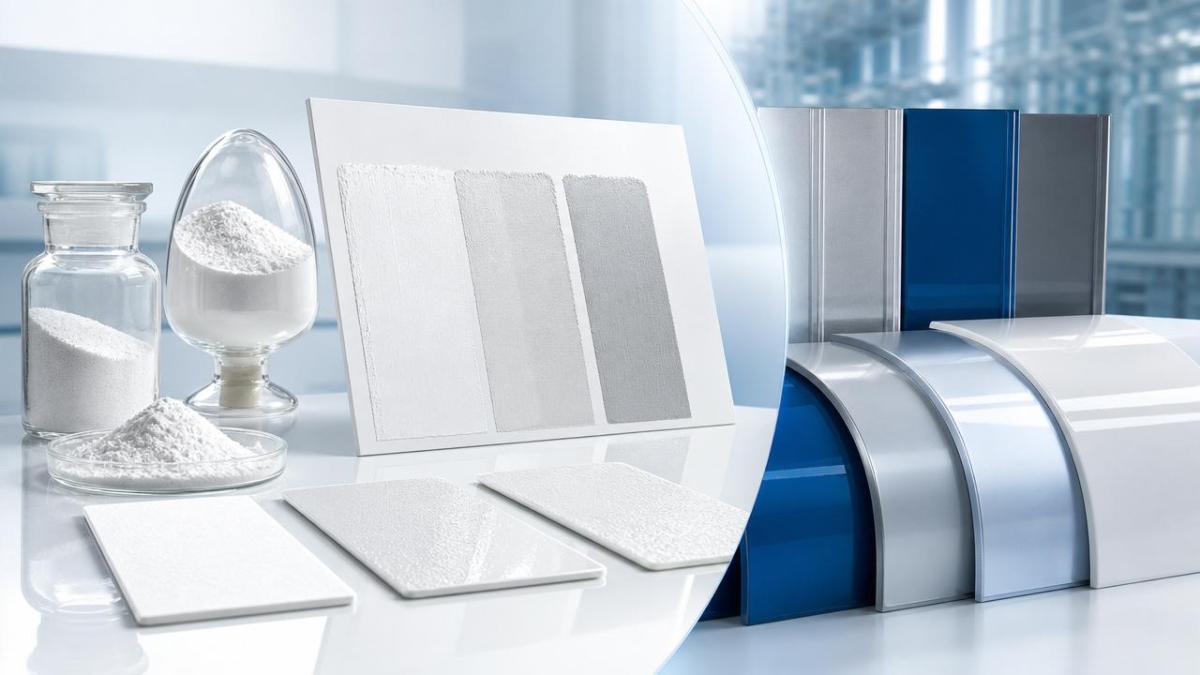
How to judge titanium dioxide grade differences in key coating scenarios
Scenario 1: Cost-sensitive interior decorative coatings
In economy and mid-range interior paints, buyers often need a titanium dioxide grade that delivers acceptable hiding power and whiteness without driving up formulation cost. Here, procurement should pay attention to effective opacity per unit cost, not just nominal TiO₂ content. A grade that disperses faster and develops opacity more efficiently may allow lower dosage or better extender balance, reducing total formulation cost.
For this scenario, useful indicators include hiding power, undertone consistency, slurry behavior, and batch-to-batch stability. If the plant uses standard dispersion equipment rather than high-energy systems, easy dispersibility becomes especially important. A technically “higher” grade may not perform better if processing conditions cannot unlock its full value.
Scenario 2: Exterior architectural coatings exposed to UV and weather
Exterior applications place much greater stress on titanium dioxide. Buyers should prioritize rutile grades with robust inorganic surface treatment, because outdoor durability depends heavily on resistance to UV-driven degradation, chalking, and gloss loss. In this context, low initial price can become expensive if repaint cycles shorten or customer complaints rise.
Procurement teams should ask suppliers about weathering performance data, surface treatment type, and use cases in exterior coatings. It is also useful to request trial evidence under similar binder systems, because titanium dioxide does not perform in isolation. Resin selection, PVC level, and additive package all influence final durability.
Scenario 3: Industrial coatings with complex resin systems
Industrial coating buyers often work with epoxy, polyurethane, alkyd, or hybrid systems that demand predictable dispersion and compatibility. In these cases, titanium dioxide quality is judged less by headline whiteness and more by process stability. Poorly matched grades can increase grind time, raise viscosity unexpectedly, or create floating, flooding, and inconsistent film appearance.
For this scenario, procurement should compare oil absorption, surface treatment, particle distribution quality, and impurity control. The goal is to reduce operational variation across batches and facilities. If coatings are exported or sold into regulated industrial markets, documentation quality, traceability, and supply consistency also become part of grade evaluation.
Scenario 4: Premium decorative, wood, and high-gloss finishes
In premium finishes, the visual standard is tighter. Titanium dioxide must support high brightness, controlled undertone, gloss development, and a clean surface appearance. Minor differences in particle quality or treatment can show up more clearly in high-gloss systems than in flat paints.
Buyers in this segment should request data on brightness, undertone, gloss impact, and dispersibility in the intended resin system. Even when two grades show similar opacity, one may produce a more attractive finish or more stable tinting result. In value-added coatings, these quality effects can justify paying more for a more specialized titanium dioxide grade.
The core technical checkpoints buyers should compare
After identifying the application scenario, procurement teams should evaluate titanium dioxide grades through a practical set of checkpoints. These factors connect supplier specifications to real coating performance.
- Crystal form: Rutile is typically preferred for coatings because it offers better opacity and weather durability than anatase in most paint applications.
- Surface treatment: Alumina, silica, zirconia, or combined treatments influence durability, dispersibility, and interaction with the coating system.
- Hiding power and tint strength: These determine how efficiently the titanium dioxide delivers whiteness and coverage in practical formulations.
- Particle size distribution: Well-controlled distribution supports optical efficiency and more consistent processing behavior.
- Oil absorption: This affects formulation viscosity and can signal how the pigment may behave in grinding and let-down.
- Dispersibility: Especially important for plants with moderate equipment capability or high-throughput production lines.
- Whiteness and undertone: Critical for premium finishes, tint consistency, and visual acceptance in decorative products.
- Durability metrics: Outdoor coatings require stronger confidence in weathering resistance, gloss retention, and chalking control.
- Consistency and documentation: Stable lot quality, COA reliability, and technical responsiveness are essential for repeat procurement.
A practical comparison framework for procurement teams
When evaluating multiple titanium dioxide suppliers, a weighted decision method is often more effective than relying on a single laboratory metric. Procurement should combine commercial and technical criteria based on business scenario. For example, an exterior coatings producer may place heavier weight on weather durability and supplier technical support, while an interior paint manufacturer may focus more on opacity cost efficiency and ease of dispersion.
A comparison framework like this helps buyers avoid switching grades based on small price movements alone. In many cases, a lower-priced titanium dioxide leads to hidden losses through reformulation time, unstable production, or reduced field performance.
Common misjudgments when selecting titanium dioxide for coatings
Several procurement errors appear repeatedly across coating businesses. The first is assuming all rutile titanium dioxide grades are interchangeable. In reality, surface treatment, particle control, and process behavior can differ meaningfully. The second is overvaluing a supplier’s generic data sheet without confirming performance in the actual coating formula. The third is separating purchasing from technical evaluation too early, which can cause price-led decisions that increase downstream cost.
Another frequent issue is judging titanium dioxide only by initial whiteness. For many coating systems, opacity development, weathering resistance, and ease of dispersion contribute more to business value than a small visual difference in raw pigment form. Finally, buyers sometimes ignore logistics and supply continuity. Even a high-performing grade becomes risky if lead times are unstable or lot variation causes repeated production adjustment.
How different buyer types should make the final decision
Not all procurement teams evaluate titanium dioxide in the same way. Large coating manufacturers often have lab resources to run side-by-side tests and optimize formulations around each grade. Mid-sized producers may need a shorter approved list with dependable all-round performance. Traders and sourcing intermediaries usually need stronger documentation, supplier responsiveness, and broad market acceptance because they must serve multiple customer scenarios.
For buyers serving diverse downstream accounts, it is often wise to maintain a portfolio approach: one cost-effective titanium dioxide grade for mainstream interior systems, one higher-durability grade for exterior coatings, and one premium grade for demanding visual applications. This reduces dependence on a single product while improving fit across customer segments.
FAQ: procurement questions about titanium dioxide grade differences
Is the cheapest titanium dioxide always more economical?
No. Procurement should compare usable hiding power, dosage efficiency, processing ease, and quality stability. A cheaper grade may increase total coating cost if more pigment, more grinding time, or more rework is required.
Should buyers always choose rutile titanium dioxide for coatings?
For most coating applications, rutile titanium dioxide is the standard choice because of its stronger opacity and durability profile. However, exact suitability still depends on the formulation and performance target.
What is the fastest way to compare suppliers?
Use a scenario-specific shortlist, request matched technical data, and run controlled formulation trials. Compare not only lab numbers but also dispersion behavior, batch consistency, and total delivered value.
Final takeaways for scenario-based sourcing
The best way to judge titanium dioxide grade differences is to start from the coating scenario, then work backward to the pigment properties that matter most. Interior decorative paints usually reward cost-efficient opacity and good dispersibility. Exterior systems require stronger durability and weather resistance. Industrial coatings demand process compatibility and consistency. Premium finishes need more control over undertone, gloss, and appearance.
For procurement teams, the smartest sourcing decision comes from combining technical fit, business risk, and long-term cost performance. If your organization is evaluating titanium dioxide across multiple coating applications, build a comparison matrix tied to real use conditions, supplier documentation, and trial results. That approach will deliver better purchasing accuracy than comparing price alone, and it will help ensure that every titanium dioxide grade supports the right coating outcome for your market.
Deep Dive
Related Intelligence
 Industrial CoatingsWhy Brand Elevation Strategies Matter More Than Ever for Industrial Coatings Suppliers Targeting EU MarketsAnalyst:Lead Materials Scientist
 Industrial CoatingsWhich Corporate Case Studies Show Measurable ROI from Industrial Coatings Automation in Food Plant Maintenance?Analyst:Lead Materials Scientist
 Industrial CoatingsWhat Makes Industrial Coatings Eco-Friendly in 2026 — And Do They Meet Marine Corrosion Standards?Analyst:Lead Materials Scientist