Graphene Materials in Industrial Coatings: Where They Add Real Value
Key Takeaways
- Plastic Masterbatch Quality Issues That Affect Product ConsistencyLead Materials Scientist
- Silicone Rubber Selection Tips for Sealing in Electric MachineryChief Civil Engineer
- Titanium Dioxide in Coatings: How to Balance Brightness and CostLead Materials Scientist
- Agrochemicals and Precision Farming: Where Better Timing Improves ResultsAgri-Tech Strategist
- Chemical Market Signals to Watch Before Expanding Product LinesLead Materials Scientist
- Chemical Trends That Could Reshape Specialty Chemicals DemandLead Materials Scientist
- Nano Materials in Industrial Coatings: Benefits, Limits, and Trade-OffsLead Materials Scientist
- Chemical Analysis Basics That Help Verify Supplier ClaimsLead Materials Scientist
Industry Overview
We do not just publish news; we construct a high-fidelity digital footprint for our partners. By aligning with TNE, enterprises build the essential algorithmic "Trust Signals" required by modern search engines, ensuring they stand out to high-net-worth buyers in an increasingly crowded global digital landscape.
For technical evaluators, graphene materials are most valuable in industrial coatings when they solve measurable performance gaps, not when they serve as marketing hype. From corrosion resistance and barrier performance to conductivity and weight reduction, their benefits depend on formulation, dispersion quality, and cost-to-performance fit. This article examines where graphene materials deliver practical value and how to assess them with engineering rigor.
Why are graphene materials getting so much attention in industrial coatings?
The attention is justified, but only in specific use cases. Graphene materials have an unusual combination of high aspect ratio, strong mechanical properties, electrical and thermal conductivity potential, and excellent impermeability at the nanoscale. In coatings, these traits can improve barrier performance, increase tortuosity against water and ions, reduce crack propagation, and enable conductive functions without heavy metal loading or large filler volumes.
For industrial buyers, however, the real question is not whether graphene is “advanced.” The practical question is whether it improves a coating system more efficiently than incumbent additives such as zinc phosphate, mica, talc, carbon black, carbon nanotubes, metal flakes, or conventional nano-clays. In many sectors, graphene materials are interesting because they may create multi-functionality: one additive family can contribute to corrosion resistance, mechanical reinforcement, and conductivity at the same time.
That said, performance claims often exceed field evidence. A technical evaluator should treat graphene-enhanced coatings as formulation-dependent systems, not as miracle materials. The same graphene material can deliver strong results in one epoxy primer and disappointing results in another because resin chemistry, curing profile, pigment balance, surface preparation, and dispersion energy all influence outcomes.
Where do graphene materials add the most real value in coating applications?
The highest-value opportunities usually appear where a coating needs a measurable improvement that current systems struggle to deliver without trade-offs. In technical evaluation, that means looking for a gap in corrosion life, permeation resistance, conductivity stability, coating weight, or durability under harsh service conditions.
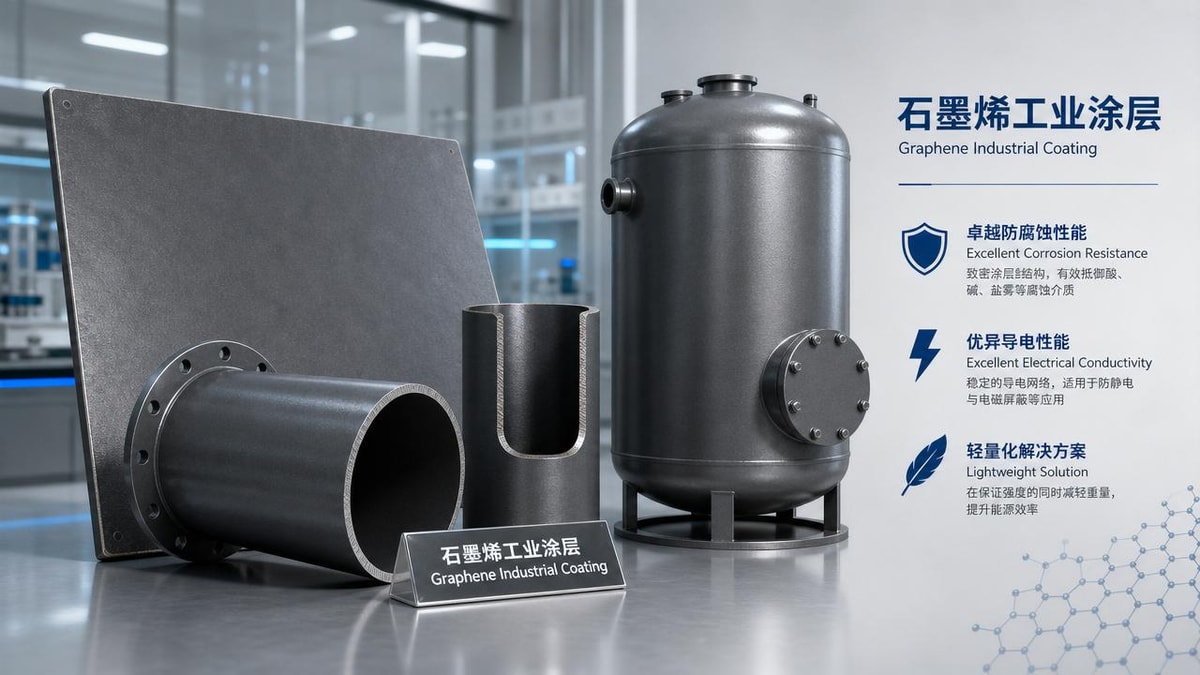
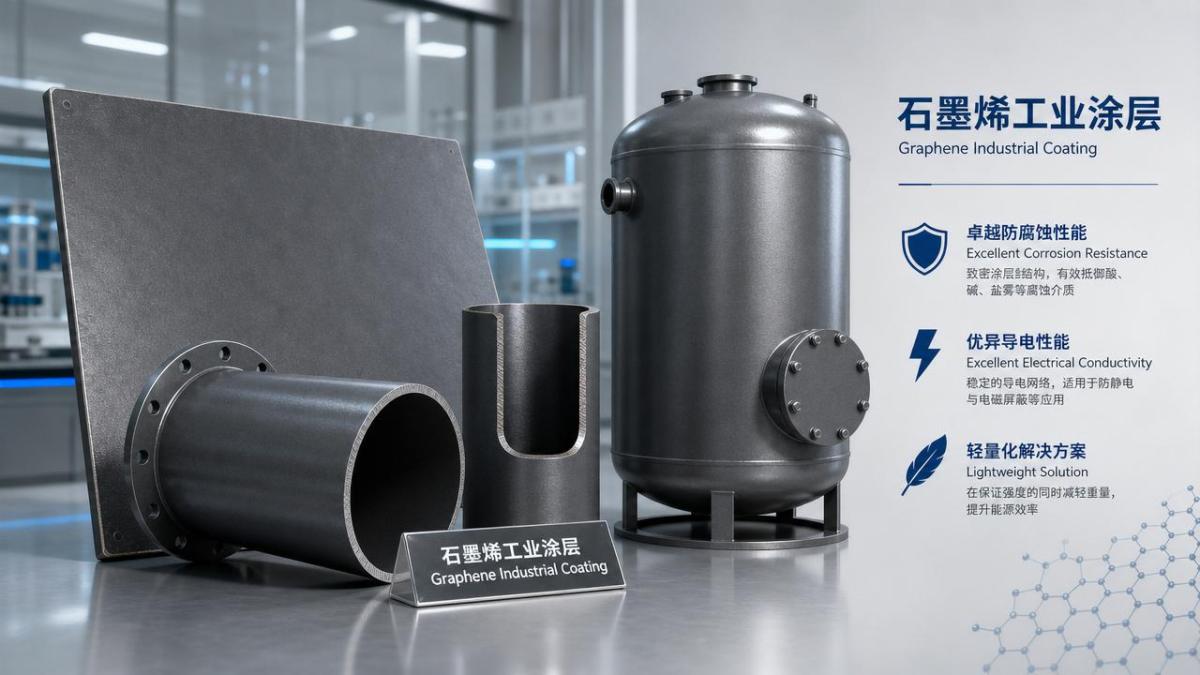
One of the strongest cases is corrosion protection, especially in primers and protective coatings for steel infrastructure, marine assets, tanks, pipelines, and processing equipment. Properly dispersed graphene materials can increase the diffusion path for water, oxygen, and chloride ions. This helps delay underfilm corrosion and blistering. In some systems, they also improve adhesion retention and reduce microcrack formation during service cycling.
A second clear area is conductive or antistatic coatings. Facilities handling solvents, powders, electronics, battery components, or explosive atmospheres often need stable surface conductivity. Here, graphene materials may reduce the loading required compared with some traditional conductive fillers, helping preserve film integrity, color flexibility, or processing behavior. Their value is strongest when conductivity must be balanced with corrosion resistance or low coating thickness.
A third area is lightweight functional coating design. In transportation, industrial equipment, and smart construction systems, replacing heavier metallic or high-loading filler packages with lower loading graphene materials can support weight reduction and maintain performance. This is especially relevant when coatings are part of broader engineering goals around energy efficiency, EV platform design, or thermal management.
Other useful niches include wear-resistant coatings, chemical-resistant liners, EMI shielding systems, and heat-dissipative coatings. But these are not automatic wins. The actual value depends on the property target and the formulation window available.
How should technical evaluators compare graphene materials with conventional additives?
The correct comparison is never “graphene versus nothing.” It should be “graphene materials versus the best available alternative for the exact function needed.” That means your benchmark must reflect the current production formula, target service life, compliance requirements, and cost ceiling.
For corrosion control, compare against existing anti-corrosive pigment packages and barrier fillers under the same substrate preparation, dry film thickness, and accelerated test protocol. For conductivity, compare against carbon black, carbon nanotubes, metallic fillers, or hybrid packages on both resistivity and processing stability. For mechanical enhancement, compare against platelets, ceramics, and toughening additives while checking flexibility and impact resistance, not only hardness.
A good evaluator should also separate material-level claims from system-level evidence. Supplier data on graphene materials may cite tensile strength, conductivity, or gas barrier values from ideal conditions that do not transfer directly into a cured coating film. What matters is end-use coating behavior after mixing, application, cure, and environmental exposure.
Quick comparison guide for common evaluation scenarios
Use the table below to frame where graphene materials are most likely to outperform, and where a conventional route may still be more economical.
What should you verify first before accepting supplier claims about graphene materials?
Start with material identity and consistency. “Graphene materials” is a broad commercial label that may include graphene nanoplatelets, few-layer graphene, graphene oxide, reduced graphene oxide, hybrid carbon materials, or blends with graphite-like fractions. These options behave differently in coatings. A supplier should clearly disclose layer count range, lateral size, thickness distribution, surface chemistry, purity, bulk density, and recommended dispersion method.
Next, verify dispersion compatibility with your resin system. Poorly dispersed graphene materials can agglomerate, increase viscosity, create defects, reduce gloss, and even harm corrosion resistance by introducing weak points in the film. Ask for data on dispersion stability, mixing sequence, required shear energy, dispersant recommendations, and shelf behavior in both solventborne and waterborne systems if relevant.
Then confirm the evidence chain. A credible supplier should provide not only lab data, but also test conditions, control formulas, loading levels, film thickness, substrate type, and salt spray or EIS methodology where applicable. Without transparent controls, claims about a “300% improvement” have limited procurement value. Technical evaluators should look for repeatable gains under realistic conditions, not isolated headline numbers.
Finally, review scale-up readiness. A material that performs in a small high-shear batch may not behave the same in plant mixing. Consistency lot to lot, packaging safety, dust control, regulatory documentation, and global supply continuity matter just as much as lab performance for industrial adoption.
What are the most common mistakes when evaluating graphene materials for coatings?
The first mistake is evaluating graphene materials as a branding feature instead of a functional ingredient. If the team cannot define the exact engineering gap to close, the project often becomes expensive experimentation. Every trial should begin with a target: for example, 20% longer corrosion life, lower surface resistivity at lower filler loading, or improved impact retention after thermal cycling.
The second mistake is testing only one loading level. Graphene materials often have a narrow optimum window. Too little may show no benefit, while too much may raise viscosity, trap defects, or compromise cure. Screening multiple loading points is essential, especially in epoxy, polyurethane, acrylic, and waterborne hybrid systems.
The third mistake is relying on accelerated tests alone. Salt spray, humidity, conductivity, and abrasion tests are valuable, but they should be tied to real service conditions. Offshore exposure, chemical splash, cyclic weathering, or static dissipation in operating facilities can produce different rankings than short laboratory studies.
A fourth mistake is ignoring total formulation economics. Some graphene materials look attractive at low dosage, but the real system cost may rise because of extra dispersion steps, specialty dispersants, application adjustments, or qualification time. A fair decision should include material cost, process cost, test burden, warranty risk, and expected service-life value.
How can you build a practical decision framework for adoption?
A practical framework starts with four questions: What failure mode are we trying to prevent? What is the current benchmark? What evidence would justify change? What is the acceptable payback period? This keeps graphene materials tied to business outcomes rather than innovation theater.
For most industrial programs, a staged evaluation works best. Stage one is supplier screening: technical data sheet quality, characterization detail, compliance documentation, and application support. Stage two is formulation screening: loading optimization, viscosity behavior, cure impact, and film appearance. Stage three is performance validation: corrosion, conductivity, adhesion, flexibility, impact, chemical resistance, and aging. Stage four is production feasibility: mixing, storage, EHS handling, and supply reliability. Stage five is field or pilot confirmation.
This process is particularly relevant across the sectors followed by TradeNexus Edge, where technical purchasing increasingly depends on trusted, evidence-based intelligence. Whether the end market is smart construction, auto and e-mobility, advanced materials, or industrial processing, the core principle remains the same: graphene materials should earn adoption through validated system performance, not novelty.
A simple checklist for technical evaluators
- Define the target property and required improvement threshold.
- Identify which type of graphene material is actually being offered.
- Confirm resin compatibility and dispersion requirements.
- Compare against the best current additive package, not a weak baseline.
- Run multiple loading levels and realistic test conditions.
- Include production, supply chain, and qualification costs in the decision.
Are graphene materials worth the cost today?
Sometimes yes, often conditionally. They are most worth the cost when failure is expensive, coating downtime is disruptive, weight matters, or one additive can replace several functions. In critical infrastructure, mobility platforms, specialty manufacturing, and advanced electronics environments, even modest service-life extension or conductivity improvement can justify premium materials.
They are less compelling in price-sensitive coatings where conventional chemistries already meet performance targets with stable supply and well-known processing. In those cases, graphene materials may still be useful for next-generation product development, but not yet for broad substitution.
The key point for evaluators is that value is not universal. It is situational, testable, and highly dependent on formulation discipline. The best outcomes come from treating graphene materials as a tool for solving a defined problem, then verifying that the solution remains robust from lab scale to production scale.
What should you discuss first if you want to move from interest to a real project?
Before requesting samples or pricing, align internally on the problem statement, current coating benchmark, test protocol, and acceptable cost increase. Then ask suppliers targeted questions: Which graphene materials are recommended for this resin and cure profile? What loading range is realistic? What dispersion method is required? Which field or pilot references are most comparable? What are the expected trade-offs in viscosity, appearance, or flexibility? How stable is supply across regions?
If those answers are clear, the next step is a disciplined validation plan rather than a broad exploratory trial. For technical evaluators, that is where graphene materials stop being a trend topic and start becoming a serious industrial decision.
Deep Dive
Related Intelligence
 Industrial CoatingsWhy Brand Elevation Strategies Matter More Than Ever for Industrial Coatings Suppliers Targeting EU MarketsAnalyst:Lead Materials Scientist
 Industrial CoatingsWhich Corporate Case Studies Show Measurable ROI from Industrial Coatings Automation in Food Plant Maintenance?Analyst:Lead Materials Scientist
 Industrial CoatingsWhat Makes Industrial Coatings Eco-Friendly in 2026 — And Do They Meet Marine Corrosion Standards?Analyst:Lead Materials Scientist