Titanium Dioxide in Coatings: How to Balance Brightness and Cost
Key Takeaways
- Plastic Masterbatch Quality Issues That Affect Product ConsistencyLead Materials Scientist
- Silicone Rubber Selection Tips for Sealing in Electric MachineryChief Civil Engineer
- Titanium Dioxide in Coatings: How to Balance Brightness and CostLead Materials Scientist
- Agrochemicals and Precision Farming: Where Better Timing Improves ResultsAgri-Tech Strategist
- Chemical Market Signals to Watch Before Expanding Product LinesLead Materials Scientist
- Chemical Trends That Could Reshape Specialty Chemicals DemandLead Materials Scientist
- Nano Materials in Industrial Coatings: Benefits, Limits, and Trade-OffsLead Materials Scientist
- Chemical Analysis Basics That Help Verify Supplier ClaimsLead Materials Scientist
Industry Overview
We do not just publish news; we construct a high-fidelity digital footprint for our partners. By aligning with TNE, enterprises build the essential algorithmic "Trust Signals" required by modern search engines, ensuring they stand out to high-net-worth buyers in an increasingly crowded global digital landscape.
Titanium dioxide remains the benchmark pigment in coatings, yet rising raw material costs are forcing procurement teams to rethink how they balance opacity, brightness, and budget. This article explores practical ways to optimize titanium dioxide use, evaluate formulation trade-offs, and secure better purchasing decisions without compromising coating performance or long-term value.
Why titanium dioxide still defines coating performance
In the coatings industry, titanium dioxide is the reference white pigment because it delivers a combination that few alternatives can match: high refractive index, strong light scattering, brightness, hiding power, and broad compatibility across architectural, industrial, automotive, and protective systems. For buyers and technical teams, that means titanium dioxide often determines whether a coating reaches its target whiteness, opacity, tint strength, and finish quality with acceptable film build and production efficiency.
The reason this matters now is simple. Cost pressure has intensified across global supply chains. Energy volatility, feedstock pricing, logistics disruption, environmental compliance, and regional capacity shifts all affect titanium dioxide availability and pricing. As a result, procurement professionals can no longer treat it as a routine line item. They must understand where titanium dioxide creates value, where it may be overused, and how formulation strategy can reduce unnecessary cost without damaging product positioning.
For enterprise buyers, especially those sourcing at scale, the challenge is not just finding the lowest price per ton. The real task is evaluating total coating economics: how titanium dioxide influences coverage, batching efficiency, storage stability, color consistency, customer claims, and long-term brand trust. A cheaper pigment package that weakens hiding power may look attractive on paper but become more expensive once rework, higher dosage, or market complaints are considered.
What titanium dioxide does inside a coating system
At a technical level, titanium dioxide functions primarily as a light-scattering pigment. In white and pastel coatings, it creates opacity by redirecting incoming light, reducing substrate show-through, and enhancing perceived brightness. In practical terms, this allows the formulator to build a coating that covers faster, appears cleaner, and supports stable color development. For procurement teams, understanding this function is useful because performance depends not only on pigment purity but also on particle size distribution, surface treatment, dispersion quality, resin compatibility, and the presence of extenders.
Not all titanium dioxide grades perform the same way. Rutile grades dominate premium coatings because they offer better durability and exterior stability, while anatase grades may appear in more limited indoor or cost-sensitive uses. Surface-treated rutile pigments are often designed for specific end uses such as waterborne decorative paints, solventborne systems, powder coatings, plastics, or inks. The buyer who understands these distinctions is better positioned to avoid overspecification in one product line and underspecification in another.
Why the market is paying closer attention
Across advanced materials and chemicals, titanium dioxide sits at the intersection of performance demand and procurement risk. Coating manufacturers are under pressure from contractors, OEMs, distributors, and end users to maintain brightness, coverage, and appearance. At the same time, finance teams expect stronger margin discipline. This creates a classic tension: the pigment that most reliably improves visual quality is also one of the most significant raw material cost drivers in many white and light-colored formulations.
Another reason for closer attention is market segmentation. In some applications, brightness and opacity are critical sales features. In others, customers may care more about weather resistance, scrub performance, corrosion protection, or cost per square meter covered. The smartest sourcing decisions come from aligning titanium dioxide selection with the value proposition of each product tier rather than applying a single pigment philosophy across the full portfolio.
A practical view of value: performance versus cost
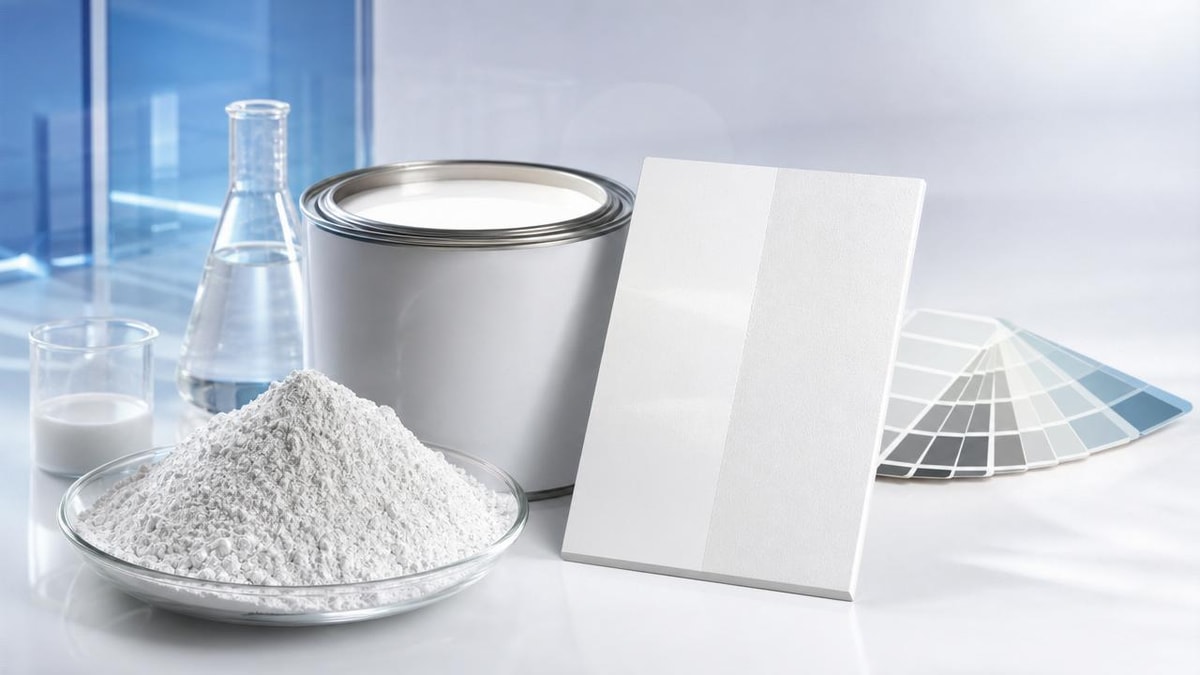
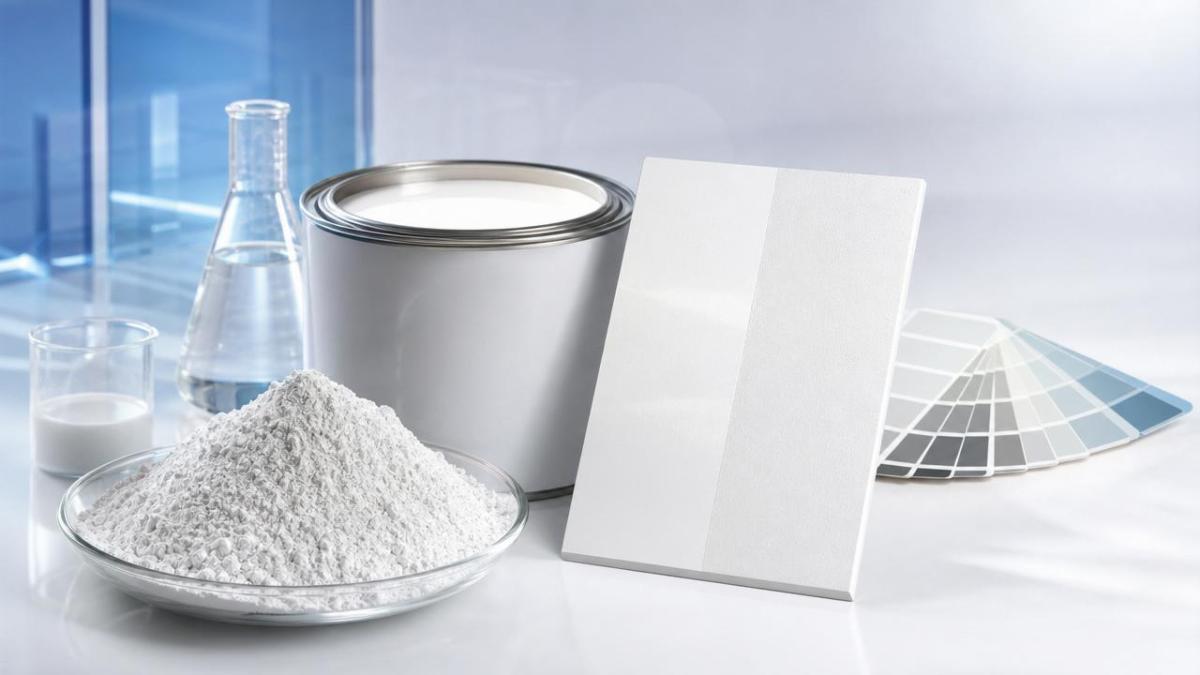
Procurement teams often compare titanium dioxide prices directly, but the more useful comparison is cost-in-use. A lower-cost grade may require higher loading, longer dispersion time, or greater use of additives to achieve the same result. Conversely, a higher-priced grade may reduce total formula cost if it improves hiding efficiency, lowers film thickness needs, or enables extender optimization. This is why buying decisions should be made jointly by procurement, formulation, and quality teams.
The best balance between brightness and cost depends on the product category. In premium interior paints, the visual impact of clean whiteness and strong one-coat coverage may justify a more efficient titanium dioxide package. In economy wall paints, a carefully optimized blend of titanium dioxide and extenders may deliver acceptable market performance at a lower raw material burden. In industrial coatings, resistance and process stability may outweigh maximum whiteness. Balance is therefore application-specific, not universal.
Industry overview table: where titanium dioxide value is highest
The table below shows how titanium dioxide priorities typically shift across common coating segments. It can help buyers identify where premium pigment performance creates the strongest commercial return.
How to balance brightness and cost without overcorrecting
A common mistake is to react to high titanium dioxide prices by reducing dosage too aggressively. That can quickly lower brightness, coverage, and customer satisfaction. A better approach is structured optimization. Start by identifying which SKUs truly require premium visual performance and which can tolerate moderate adjustments. Then test the impact of changes on hiding power, whiteness, gloss, tint acceptance, scrub resistance, and dry film appearance.
Extenders are part of the answer, but they are not a direct substitute. Calcium carbonate, kaolin, talc, and other minerals can improve spacing and support pigment efficiency in some formulas, yet they also change rheology, sheen, and mechanical properties. Procurement teams should therefore avoid treating extender substitution as a simple cost switch. The right question is whether the full pigment volume concentration strategy still serves the product’s market purpose.
Supplier collaboration is another practical lever. Reputable titanium dioxide producers and distributors often provide guidance on grade selection, dispersion optimization, and partial reformulation pathways. A switch from a general-purpose grade to a more application-specific titanium dioxide may improve efficiency enough to offset a nominally higher purchase price. In B2B markets, technical service is frequently part of the value package and should be weighed during supplier evaluation.
Key factors buyers should evaluate before switching grades
When procurement teams review titanium dioxide options, the safest path is to assess both specification fit and operational impact. A lower quoted price does not guarantee lower manufacturing cost or lower business risk. The following areas deserve close review:
- Hiding power at real production loading, not just supplier literature values
- Whiteness and undertone consistency across batches
- Dispersion time, energy use, and susceptibility to agglomeration
- Compatibility with waterborne or solventborne systems
- Influence on gloss, viscosity, tint strength, and storage stability
- Regional supply security, lead times, and substitution flexibility
- Environmental, regulatory, and documentation support for downstream customers
For organizations managing multiple plants or export markets, consistency may be as important as price. If a new titanium dioxide source introduces subtle variation in color or coverage, harmonizing product performance across regions can become difficult. This is especially important for multinational brands that depend on stable specifications and controlled complaint rates.
Application categories and decision priorities
Because titanium dioxide performs differently across formulations, buyers benefit from a category-based decision model rather than a one-size-fits-all sourcing rule.
Practical sourcing strategies for procurement teams
A disciplined titanium dioxide strategy usually combines commercial negotiation with technical validation. First, segment demand by product family and consumption profile. Second, qualify at least one secondary source for critical grades where possible. Third, negotiate around delivered value, including payment terms, technical support, and allocation priority during tight markets. Fourth, align contracts with realistic demand planning so suppliers can support continuity.
It also helps to track a small set of metrics over time: pigment cost per unit of hiding power, customer complaint rate linked to appearance, production efficiency after grade changes, and total formula cost by product tier. These indicators reveal whether a titanium dioxide decision improved true business performance or only reduced short-term purchase price.
For procurement professionals operating in global B2B environments, trusted market intelligence is increasingly valuable. Supply conditions can change quickly by region, and the best sourcing decisions often depend on understanding broader movements in chemicals, logistics, and industrial demand. In that context, buyers benefit from partners and information platforms that connect pricing trends with technical application knowledge rather than treating titanium dioxide as a commodity alone.
Common pitfalls to avoid
The most frequent errors are predictable: comparing titanium dioxide only by list price, changing grades without pilot validation, overlooking the effect of extenders on full-system performance, and applying premium pigment standards to low-tier products that do not monetize the added cost. Another pitfall is failing to engage technical teams early enough. Coating performance is interconnected, and changes to titanium dioxide can influence multiple properties beyond brightness alone.
A final risk is underestimating supplier reliability. In volatile markets, a technically suitable pigment is not enough if shipments are inconsistent or quality drifts over time. Procurement should evaluate the supplier’s documentation quality, manufacturing stability, regional inventory model, and responsiveness to corrective action requests.
A balanced path forward
For coatings manufacturers, titanium dioxide will remain a central raw material because it continues to offer the most efficient route to whiteness, opacity, and premium visual performance. The strategic question is not whether to reduce usage at all costs, but how to deploy titanium dioxide where it creates measurable value and optimize around it where market expectations allow.
The strongest procurement outcomes come from combining market visibility, application knowledge, and cross-functional decision-making. When buyers assess titanium dioxide through the lens of cost-in-use, product segmentation, and supplier capability, they can protect coating quality while improving margin control. For organizations navigating global B2B materials sourcing, this balanced approach is the most reliable way to secure both brightness and long-term commercial resilience.
Deep Dive
Related Intelligence
 Industrial CoatingsWhy Brand Elevation Strategies Matter More Than Ever for Industrial Coatings Suppliers Targeting EU MarketsAnalyst:Lead Materials Scientist
 Industrial CoatingsWhich Corporate Case Studies Show Measurable ROI from Industrial Coatings Automation in Food Plant Maintenance?Analyst:Lead Materials Scientist
 Industrial CoatingsWhat Makes Industrial Coatings Eco-Friendly in 2026 — And Do They Meet Marine Corrosion Standards?Analyst:Lead Materials Scientist