Hydroponic Systems: Which Setup Is Easiest to Scale Without Waste
Key Takeaways
- Plastic Masterbatch Quality Issues That Affect Product ConsistencyLead Materials Scientist
- Silicone Rubber Selection Tips for Sealing in Electric MachineryChief Civil Engineer
- Titanium Dioxide in Coatings: How to Balance Brightness and CostLead Materials Scientist
- Agrochemicals and Precision Farming: Where Better Timing Improves ResultsAgri-Tech Strategist
- Chemical Market Signals to Watch Before Expanding Product LinesLead Materials Scientist
- Chemical Trends That Could Reshape Specialty Chemicals DemandLead Materials Scientist
- Nano Materials in Industrial Coatings: Benefits, Limits, and Trade-OffsLead Materials Scientist
- Chemical Analysis Basics That Help Verify Supplier ClaimsLead Materials Scientist
Industry Overview
We do not just publish news; we construct a high-fidelity digital footprint for our partners. By aligning with TNE, enterprises build the essential algorithmic "Trust Signals" required by modern search engines, ensuring they stand out to high-net-worth buyers in an increasingly crowded global digital landscape.
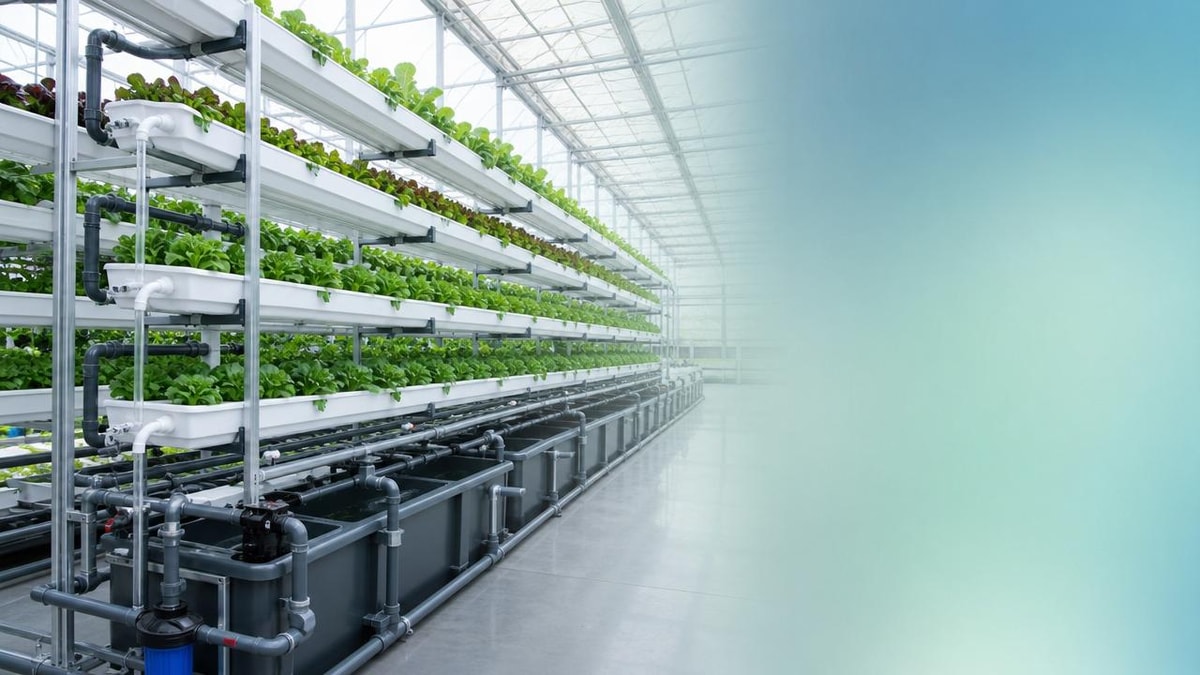
Choosing among hydroponic systems is not just about yield—it is a project decision that affects scalability, input efficiency, labor control, and long-term waste reduction. For project managers and engineering leads, the easiest setup to scale is the one that balances modular expansion, predictable nutrient management, and minimal resource loss. This article examines which system delivers practical growth without unnecessary waste.
In commercial Agri-Tech planning, the wrong hydroponic systems choice often creates hidden waste long before production volumes increase. Waste appears in oversupplied nutrient reservoirs, underused floor area, uneven irrigation, labor-intensive cleaning cycles, and costly retrofits when a pilot site expands from 200 square meters to 2,000 square meters. For B2B decision-makers, scalability is therefore not a marketing claim but an engineering and operations question.
For project leaders managing greenhouse rollouts, urban farm infrastructure, or controlled environment agriculture facilities, the most scalable setup is usually the one that can be replicated in modules, monitored with simple controls, and expanded without redesigning the entire hydraulic layout. That makes system architecture, not just crop output, the primary selection factor.
What “easy to scale without waste” really means in hydroponic systems
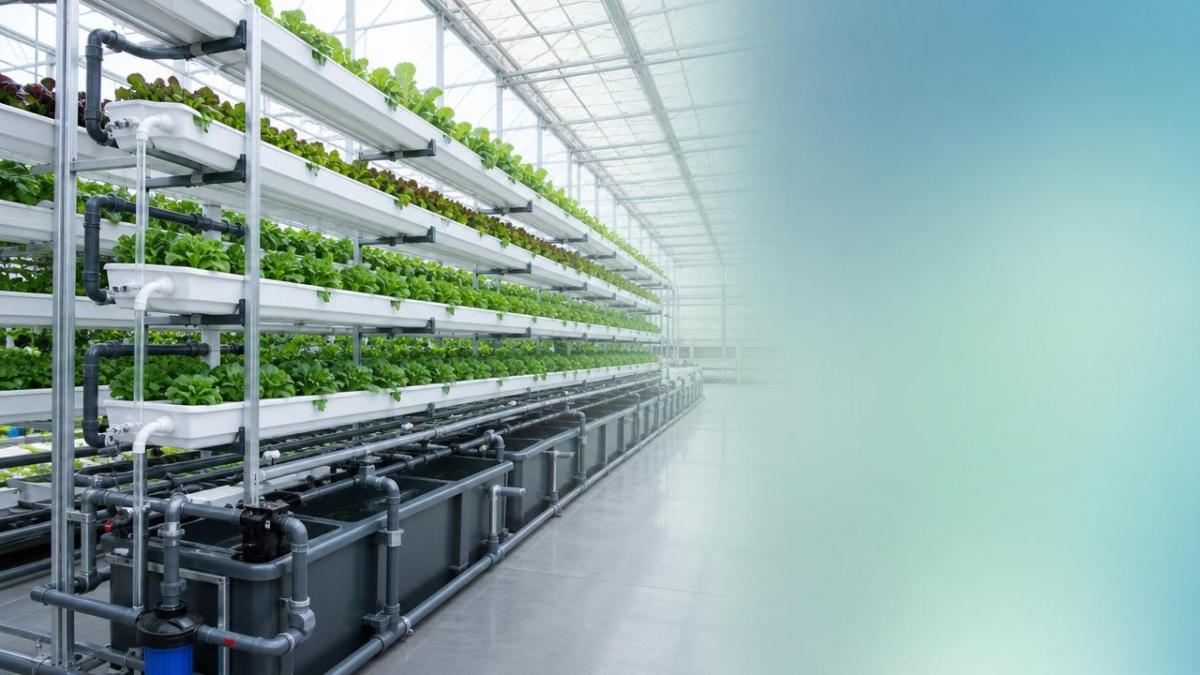
In practical terms, easy scalability means a site can add production capacity in 20% to 30% increments without multiplying waste streams at the same rate. A system that works efficiently at 50 channels but becomes unstable at 500 channels is not truly scalable. Project teams should evaluate at least 4 variables: water recirculation efficiency, nutrient dosing consistency, labor hours per growth unit, and cleaning downtime per expansion phase.
For most commercial hydroponic systems, waste reduction comes from closed-loop irrigation, predictable root-zone behavior, and components that can be replaced in sections rather than as a full network. If operators must drain an entire production block to service one pump line, expansion will raise both maintenance cost and nutrient loss. That is a critical issue in multi-zone facilities operating 16 to 20 hours per day.
The five waste points project teams should measure
- Water loss from leaks, overflow, evaporation, or non-recoverable discharge
- Nutrient waste from unstable EC and pH control across multiple grow zones
- Labor waste caused by manual inspection, uneven access, and repetitive cleaning
- Space waste from layouts that reduce aisle efficiency or block future expansion
- Capital waste when pilot infrastructure cannot be reused in phase 2 or phase 3
Why scalability is often limited by layout, not biology
In procurement discussions, teams frequently focus on crop type first: leafy greens, herbs, strawberries, or nursery propagation. Crop matters, but layout usually determines whether hydroponic systems can scale cleanly. Pipe routing, reservoir zoning, pump redundancy, drainage slope, and sensor placement directly affect whether the farm can double output within 6 to 12 months without replacing core infrastructure.
A scalable design also needs process standardization. If one technician can manage 300 to 500 square meters with a repeatable workflow, the operation is easier to scale than a system where labor productivity drops every time a new rack or channel line is added. This is why project owners increasingly assess hydroponic systems as infrastructure assets rather than stand-alone growing methods.
Comparing the main hydroponic systems for low-waste expansion
Among the most common commercial hydroponic systems, Nutrient Film Technique (NFT), Deep Water Culture (DWC), drip irrigation with substrate, and ebb-and-flow benches each offer different scaling profiles. The table below compares them from a project execution perspective rather than a hobby farming perspective.
For low-waste expansion, NFT is often the easiest hydroponic systems format to scale in modular phases, especially for short-cycle crops. DWC can also scale well, but only when the site is designed for higher water management complexity from day 1. Drip systems are versatile, yet they tend to generate more waste if runoff capture and media replacement are not engineered carefully.
Why NFT frequently leads in modular scale-up
NFT channels are relatively simple to replicate. A project can start with 10 lines, validate flow rates and nutrient stability, then expand to 100 or 300 lines using the same pattern. Because nutrient solution moves in a shallow film, total water volume per production unit remains lower than in raft-based systems, which reduces losses during cleaning, emergency draining, or recipe changes.
For engineering teams, the advantage is not only lower water volume but also easier fault isolation. If one manifold serves 20 channels, a local shutdown affects one module instead of the entire hall. This sectional logic is valuable in phased CAPEX planning, where each expansion block should connect to existing hydroponic systems with minimal rework.
Where DWC can outperform NFT
DWC becomes attractive when crop uniformity, thermal stability, and mass production outweigh the cost of higher water volume. In facilities above 5,000 square meters, well-designed DWC hydroponic systems can deliver highly consistent output. However, they demand stronger biosecurity routines, more aeration management, and more disciplined reservoir turnover planning, often on a 7-day to 21-day operating schedule depending on crop cycle and sanitation protocols.
Selection criteria for project managers and engineering leads
Selecting hydroponic systems for scale is rarely a single-variable decision. Most project teams should use a 6-point screening model before supplier engagement or pilot approval. This prevents overbuying infrastructure that looks efficient in a demonstration unit but becomes wasteful under continuous commercial use.
A practical 6-point screening model
- Can the system expand by module without replacing pumps, tanks, or controls?
- Is nutrient management stable across short and long irrigation loops?
- What is the cleaning frequency: daily, weekly, or per crop cycle?
- How many labor steps are required per zone for inspection and servicing?
- Can failures be isolated within one section in less than 30 minutes?
- Will phase 1 hardware remain usable when capacity grows 2x to 4x?
Decision factors by project objective
The table below helps B2B buyers align hydroponic systems with business goals, operational constraints, and waste-control priorities.
The key takeaway is that there is no universal winner across all crop and facility types. However, if the brief is specifically “easiest to scale without waste,” NFT usually leads for leafy greens and herbs, while carefully designed drip systems lead for fruiting crops. DWC is strongest when the site can absorb higher utility and sanitation complexity without compromising operating discipline.
Thresholds worth defining before procurement
Before issuing an RFQ, teams should define several thresholds: target water reuse rate, acceptable cleaning downtime per zone, labor hours per 100 square meters, and expansion trigger points such as 70% utilization or 85% order-book occupancy. These thresholds make hydroponic systems comparisons measurable instead of subjective, especially when multiple suppliers describe similar performance in different terms.
Implementation risks that create waste during scale-up
Even the right hydroponic systems can become wasteful if scale-up is rushed. In many projects, the major losses do not come from the growing method itself but from poor integration between irrigation design, utilities, environmental controls, and maintenance workflows. That is why project managers should treat expansion as a systems engineering exercise.
Common mistakes in phased expansion
- Oversizing the central reservoir in phase 1, which increases nutrient replacement losses
- Using non-standard channel or pipe dimensions that complicate future sourcing
- Installing pumps without N+1 redundancy in facilities running continuous cycles
- Adding grow lines without recalculating flow balance, pressure drop, and return capacity
- Ignoring cleaning access, leading to more labor and slower sanitation every cycle
How to reduce waste in a 3-stage rollout
A low-risk rollout usually follows 3 stages. Stage 1 validates crop behavior and hydraulic performance in a limited area. Stage 2 standardizes modules, spare parts, and SOPs. Stage 3 expands capacity only after flow stability, nutrient consistency, and labor productivity hit predefined targets for at least 2 full crop cycles. This sequence reduces expensive redesign and prevents inventory waste from mismatched components.
For example, if an NFT block shows stable EC and flow distribution across 40 channels for 30 to 45 days, the same module can often be replicated with controlled risk. If a drip system shows persistent 5% to 10% emitter variability during the pilot, scaling before correction will multiply runoff and crop inconsistency. Waste control is therefore inseparable from commissioning discipline.
Maintenance planning is part of scaling strategy
Maintenance planning should be built into early layout decisions. Access aisles, valve placement, sensor visibility, and drain location can determine whether weekly inspection takes 45 minutes or 4 hours. In larger hydroponic systems, every additional manual touchpoint raises the probability of leaks, dosing errors, and delayed intervention. The easiest setup to scale is often the one that simplifies maintenance by design.
Which setup is usually easiest to scale without waste?
For most project-managed commercial deployments focused on leafy greens, herbs, and repeatable production blocks, NFT is typically the easiest of the main hydroponic systems to scale without unnecessary waste. Its modular structure, low solution volume, and line-by-line expansion logic make it well suited to facilities that need disciplined CAPEX growth and tight operational control.
That said, the best answer changes with crop type and site constraints. Drip-fed substrate systems are often the more scalable choice for vine crops because they support individualized feeding zones and plant structure. DWC can be the right answer for large greenhouse operations with robust water treatment, sanitation teams, and centralized utilities. The scalable choice is not the simplest-looking system; it is the one whose waste profile remains controllable as volume rises.
A final decision rule for B2B buyers
If a hydroponic systems design can be expanded in standard modules, serviced in isolated sections, cleaned on a predictable schedule, and monitored with clear nutrient and flow data, it is likely a strong candidate for scale. If expansion requires redesigning the hydraulic backbone, replacing core equipment, or accepting more runoff and downtime, it will create waste even if yields look attractive in the early stage.
TradeNexus Edge supports decision-makers who need more than surface-level product descriptions. If you are evaluating hydroponic systems for a new facility, phased greenhouse upgrade, or controlled environment agriculture project, now is the right time to compare modular design logic, maintenance burden, and waste-control performance before procurement. Contact us to explore tailored sourcing intelligence, technical comparison support, and practical solutions for scalable B2B agri-tech investment.
Deep Dive
Related Intelligence
 Precision FarmingHow Global Commerce Data Helps Precision Farming Equipment Managers Forecast Spare Part Demand AccuratelyAnalyst:Agri-Tech Strategist
 Precision FarmingHow much does deploying automated farming solutions manufacturer hardware increase labor efficiency on layer farms?Analyst:Agri-Tech Strategist
 Precision FarmingWhy automated farming solutions manufacturers prioritize modular design over full-stack integrationAnalyst:Agri-Tech Strategist