Selecting the right edge computing hardware is no longer a simple performance checklist. It is a strategic trade-off between latency, power, thermals, and cost.
For technical evaluators, the real question is whether a platform can sustain real-time workloads without exceeding energy budgets or deployment constraints.
This article examines how latency and power use shape hardware decisions across industrial IoT, smart infrastructure, autonomous systems, and enterprise edge deployments.
What Evaluators Are Really Trying to Decide
Most buyers searching for edge computing hardware are not looking for a generic definition. They are comparing architectures under operational pressure.
The core intent is to understand which hardware delivers required response times while remaining deployable in constrained, distributed environments.
Technical evaluators usually care about deterministic performance, power envelopes, thermal behavior, ruggedization, software compatibility, and lifecycle availability.
The useful answer is not “choose the fastest device.” It is “choose the lowest-power system that reliably meets latency targets.”
Why Latency and Power Cannot Be Evaluated Separately
Latency and power use are tightly linked because faster processing often requires higher clock speeds, larger memory bandwidth, or dedicated acceleration.
However, more power creates heat, and heat can cause throttling, reducing the very latency advantage the hardware promised.
A system that performs well on a lab bench may behave differently inside a sealed cabinet, roadside enclosure, or autonomous vehicle.
Evaluators should therefore test sustained latency, not only peak benchmark results, under realistic workload and temperature conditions.
The best edge hardware is often not the highest-performing option. It is the platform with stable response times across duty cycles.
Start With the Workload, Not the Processor
Hardware selection should begin with workload characterization. Image inference, sensor fusion, protocol translation, and local analytics stress systems differently.
A machine vision application may require GPU or neural accelerator throughput, while an industrial gateway may need reliable CPU and I/O performance.
Latency-sensitive workloads should be mapped into specific stages, including sensor capture, preprocessing, inference, decision logic, storage, and network transmission.
This breakdown reveals whether bottlenecks come from compute, memory, storage, networking, drivers, or application scheduling.
Without this analysis, teams risk overspending on accelerators while ignoring the bus, memory, or operating system limits causing delay.
Processor Choices: CPU, GPU, FPGA, NPU, or Hybrid
General-purpose CPUs remain valuable for control logic, protocol handling, security functions, and workloads that change frequently.
GPUs are strong for parallel tasks such as video analytics, but they may increase power draw and thermal design complexity.
FPGAs can deliver low and predictable latency for specialized pipelines, although development effort and skills requirements are higher.
NPUs and AI accelerators improve inference efficiency, especially when models are optimized for supported precision and operator sets.
Hybrid platforms often provide the best balance, allowing CPUs to manage orchestration while accelerators handle repetitive compute-heavy operations.
The decisive factor is not accelerator presence, but whether the actual workload can use that accelerator efficiently and consistently.
Memory and Storage Often Determine Real Latency
Many edge deployments underestimate memory architecture. Insufficient bandwidth can starve accelerators and create unpredictable processing delays.
Shared memory systems may improve integration but create contention when multiple workloads run simultaneously on compact hardware.
For video, radar, and high-frequency sensor workloads, memory throughput and buffer management can matter as much as raw compute capacity.
Storage also affects latency when systems log events, cache models, or retain operational data during network interruptions.
Evaluators should examine endurance, write performance, failure modes, and industrial temperature ratings for SSDs or embedded flash modules.
A balanced edge computing hardware design treats memory and storage as performance components, not secondary specifications.
Power Budgets Must Include More Than the Chip
Datasheet thermal design power can be misleading because complete systems include memory, storage, radios, sensors, fans, and power conversion losses.
PoE devices, battery-powered nodes, and solar-assisted installations require strict accounting for average and peak consumption.
Peak draw matters because transient spikes can reset systems, stress power supplies, or exceed infrastructure limits.
Average draw matters because it determines operating cost, battery life, enclosure temperature, and long-term reliability.
Evaluators should request measured system-level power under representative workloads, not just processor-level claims from component vendors.
They should also check sleep states, wake latency, dynamic voltage scaling, and whether power-saving modes disrupt real-time responsiveness.
Thermal Design Is a Performance Requirement
At the edge, cooling is rarely ideal. Hardware may sit in dusty factories, outdoor cabinets, vehicles, kiosks, or telecom shelters.
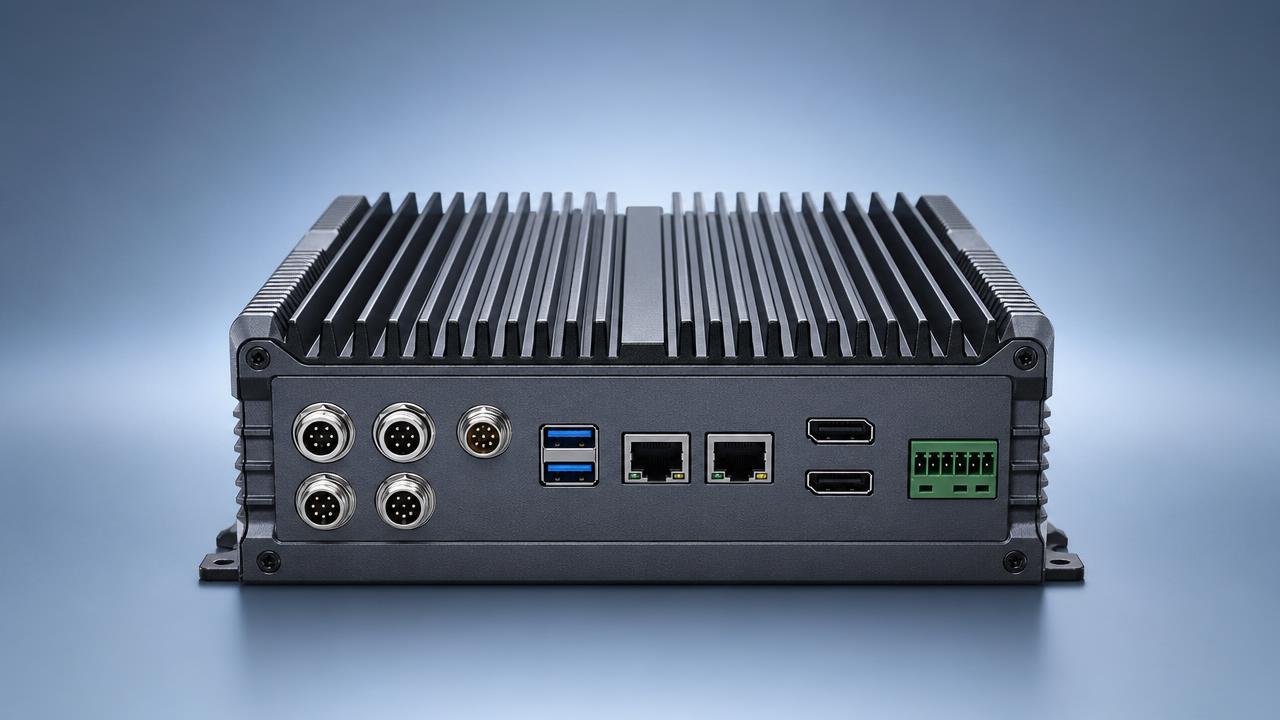
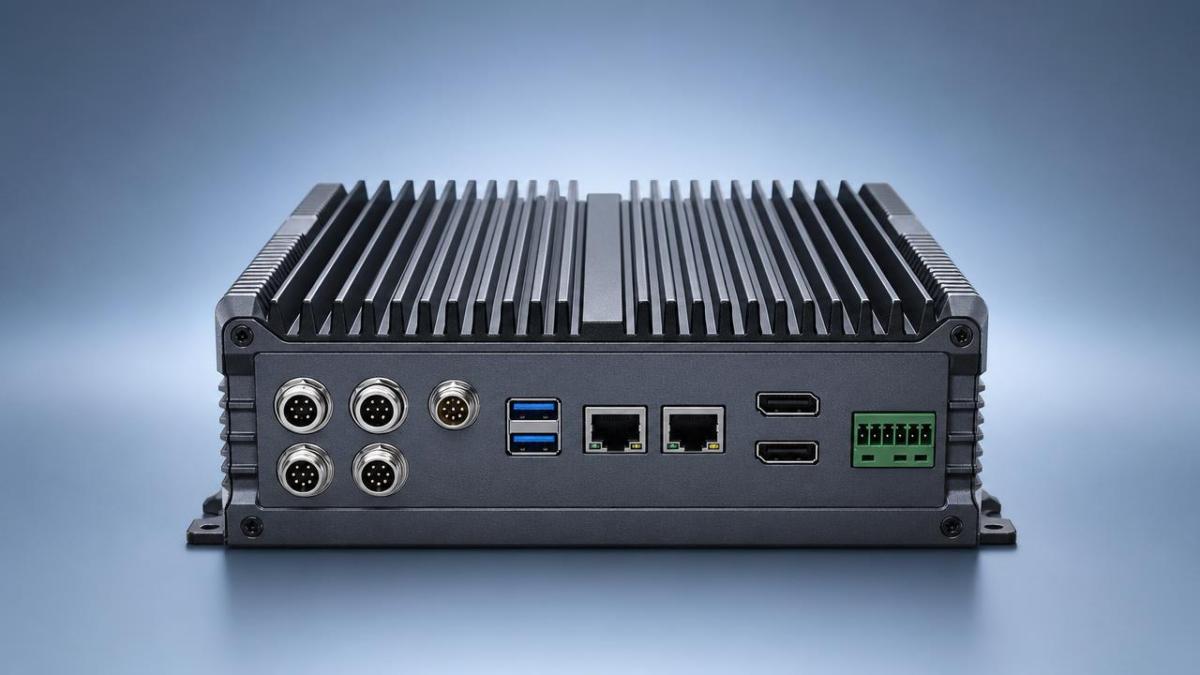
Fanless systems reduce maintenance but require careful heat spreading, enclosure design, and workload-aware performance planning.
Active cooling improves sustained performance but introduces moving parts, acoustic concerns, dust exposure, and maintenance requirements.
Thermal throttling can transform a low-latency device into an unpredictable system during high ambient temperature or continuous inference.
Evaluation should include soak tests at maximum expected temperature, with real workloads running long enough to reveal throttling behavior.
For industrial deployments, stable thermal performance is usually more valuable than short benchmark bursts measured under comfortable conditions.
Connectivity and I/O Can Make or Break Edge Performance
Edge systems interact with physical environments, so I/O capacity is central to latency and reliability.
Camera interfaces, fieldbus connections, Ethernet ports, serial links, CAN, GPIO, and wireless modules all influence system responsiveness.
A powerful processor cannot compensate for an overloaded interface, poor driver support, or unstable network module.
In industrial IoT, deterministic Ethernet, time synchronization, and protocol support may be more important than additional compute cores.
In smart infrastructure, 5G, Wi-Fi, LPWAN, or fiber backhaul choices affect how much processing must remain local.
Evaluators should validate end-to-end latency from signal acquisition to action, not only processing time inside the compute module.
Ruggedization and Lifecycle Matter in Real Deployments
Edge computing hardware often operates far from centralized IT support, making reliability and serviceability critical purchasing criteria.
Ruggedized systems may offer wide temperature ratings, vibration resistance, ingress protection, conformal coating, and industrial power input options.
These features raise upfront cost but reduce field failures, truck rolls, and unplanned downtime across distributed fleets.
Lifecycle availability is equally important. Industrial projects may need compatible hardware for five to ten years.
Consumer-grade boards can be attractive for prototypes but risky for regulated, safety-critical, or large-scale enterprise deployments.
Technical evaluators should ask vendors about revision control, spare parts, security updates, and long-term software support commitments.
How to Build a Practical Evaluation Framework
A disciplined evaluation framework prevents teams from selecting hardware based on isolated specifications or vendor demonstrations.
Start by defining maximum acceptable latency, target average power, peak power ceiling, ambient temperature range, and installation constraints.
Next, create benchmark workloads using real models, real sensor feeds, realistic concurrency, and expected communication patterns.
Measure median latency, tail latency, throughput, power draw, thermal behavior, startup time, and recovery after network interruption.
Tail latency deserves special attention because occasional spikes may violate safety, quality, or user experience requirements.
Finally, compare platforms using total deployment cost, including enclosure, cooling, power infrastructure, certification, maintenance, and software engineering effort.
Common Trade-Off Patterns by Use Case
Industrial IoT gateways often prioritize reliability, protocol support, moderate compute, and low power over maximum AI acceleration.
Machine vision systems usually need strong accelerator performance, fast memory, predictable thermals, and robust camera interface support.
Autonomous robots and vehicles require tight latency budgets, sensor fusion capability, rugged mechanical design, and efficient battery operation.
Smart city devices must balance environmental durability, remote management, power limits, and connectivity diversity.
Enterprise branch edge systems often focus on virtualization support, security features, manageability, and predictable multi-application performance.
These differences show why a universal “best” edge platform rarely exists. The optimal choice depends on workload and operating context.
Security and Manageability Should Influence Hardware Choice
Power and latency are central, but unmanaged edge fleets can become operational and security liabilities.
Hardware root of trust, secure boot, TPM support, encrypted storage, and signed firmware updates help protect distributed infrastructure.
Remote monitoring, out-of-band management, and automated provisioning reduce operational burden when devices are deployed across many locations.
Security features may consume compute resources, so evaluators should include encryption, logging, and monitoring in performance tests.
A platform that meets latency goals only when security is disabled is not suitable for enterprise edge deployment.
Strong manageability also improves lifecycle economics by lowering maintenance effort and shortening incident response time.
Vendor Questions That Reveal Real Capability
Technical evaluators should ask vendors for measured performance under sustained workloads, not only synthetic benchmark scores.
Useful questions include ambient test conditions, workload duration, thermal throttling thresholds, supported accelerators, and validated software stacks.
Ask whether latency numbers include data ingestion, preprocessing, inference, decision output, and network communication.
Request information on operating system support, driver maturity, container compatibility, model optimization tools, and security patch cadence.
For rugged systems, confirm certifications, ingress ratings, vibration testing, power input tolerance, and warranty terms.
Vendors that provide transparent test methodology usually reduce evaluation risk and shorten proof-of-concept cycles.
Conclusion: Choose for Sustained Fit, Not Peak Specification
The central lesson is simple: edge computing hardware must be evaluated as a complete system under realistic operating conditions.
Low latency has little value if it depends on excessive power, fragile cooling, or idealized benchmark conditions.
Power efficiency has limited value if the system cannot meet real-time response requirements during peak workload periods.
The strongest decisions come from matching workload profiles to processor architecture, memory design, thermal capacity, I/O, and lifecycle needs.
For technical evaluators, the winning platform is the one that delivers predictable performance within the actual deployment envelope.
That means testing sustained latency, measured power, thermal stability, security overhead, and operational manageability before committing to scale.