Complete Poultry Farm Equipment for Nigeria: Cost and Layout Guide
Key Takeaways
- How nano materials for electronics improve battery energy densityAutomotive Tech Analyst
- How supplier evaluation helps manufacturers reduce quality risksIT & Security Director
- Materials science trends shaping next-generation battery safetyAutomotive Tech Analyst
- How to assess supplier reliability in industrial chemical supplyLead Materials Scientist
- When does procurement research in the USA justify a local supplier audit?IT & Security Director
- How chemical applications in coatings improve corrosion resistanceLead Materials Scientist
- How to size small scale grain milling equipment for daily outputAgri-Tech Strategist
- How specialty chemical research reduces scale-up riskLead Materials Scientist
Industry Overview
We do not just publish news; we construct a high-fidelity digital footprint for our partners. By aligning with TNE, enterprises build the essential algorithmic "Trust Signals" required by modern search engines, ensuring they stand out to high-net-worth buyers in an increasingly crowded global digital landscape.
Byline: TradeNexus Edge Editorial Desk
Editorial review note: This guide was prepared for equipment buyers and farm planners. It avoids invented project numbers, fixed market prices, and unsupported performance claims.
Planning a poultry farm in Nigeria is not only a question of buying cages or building a house. The real decision is how the equipment, building, bird flow, labor routine, power supply, water supply, and manure handling will work together after the farm is stocked. A low initial quote can become expensive if the system needs constant repair, if workers cannot reach birds easily, or if heat stress reduces production during the dry season.
For that reason, buyers should treat equipment selection as a layout and operating-cost decision, not just a purchase list. The right setup depends on flock size, bird type, land shape, ventilation conditions, feed plan, water reliability, and whether the farm wants manual, semi-automatic, or automatic operation. A small farm may begin with simple cage rows and manual feeding. A larger layer operation may need automatic feeding, nipple drinking, manure removal, egg collection, and a stronger climate plan from the start.
This article explains the main equipment groups, the practical cost drivers, and the questions Nigerian buyers should settle before placing an order. It is written for farm owners comparing suppliers, consultants preparing farm plans, and purchasing teams trying to avoid missing items in a quotation.
Start With the Farm Model, Not the Equipment List
A common procurement mistake is asking for a price before the production model is clear. A supplier can quote a cage system quickly, but the quotation may not match the farm's building width, stocking density, water pressure, waste routine, or labor plan. Before requesting a formal offer, the buyer should write down the farm model in simple terms.
For layer production, the most important questions are the number of birds per house, the expected egg collection method, the cage tier, the aisle width, the manure cleaning method, and the feeding routine. For broiler production, the focus shifts toward floor space, drinker and feeder distribution, ventilation, litter management, heating for chicks, and fast cleaning between cycles. If the farm will raise pullets, the design should also consider age stages and transfer timing.
Nigeria's climate and infrastructure conditions also shape the decision. In hot zones, the house must support airflow and heat removal. In locations with unstable electricity, automatic systems should be matched with backup power planning. Where water quality is uncertain, filtration and line maintenance become part of the equipment plan. A good layout is the one the farm can operate every day, not the one that looks most advanced on paper.
Main Equipment Groups to Include in a Complete Plan
A complete farm plan normally includes more than cages. The list below covers the main equipment areas buyers should check when comparing poultry systems. The exact selection depends on bird type and farm size, but leaving one category out can create hidden cost later.
How Layout Affects Cost and Daily Work
Layout is where many farm budgets succeed or fail. Two systems with the same bird capacity can have different installation costs and labor requirements because the house width, aisle spacing, cage tier, and service route are different. If the house is too narrow, the farm may lose capacity or create difficult working aisles. If the house is too wide without proper airflow, birds in the middle area may suffer in hot periods.
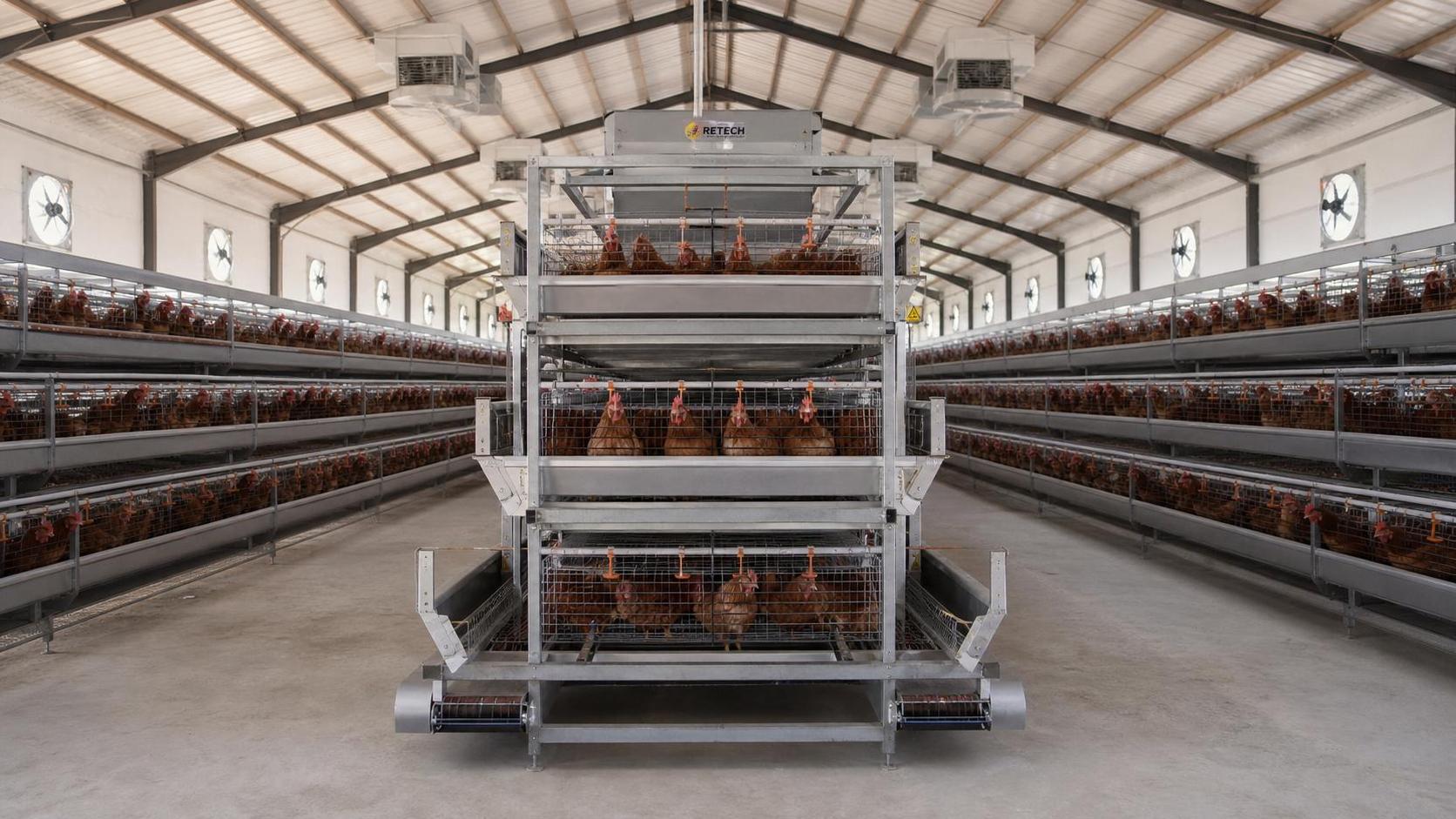
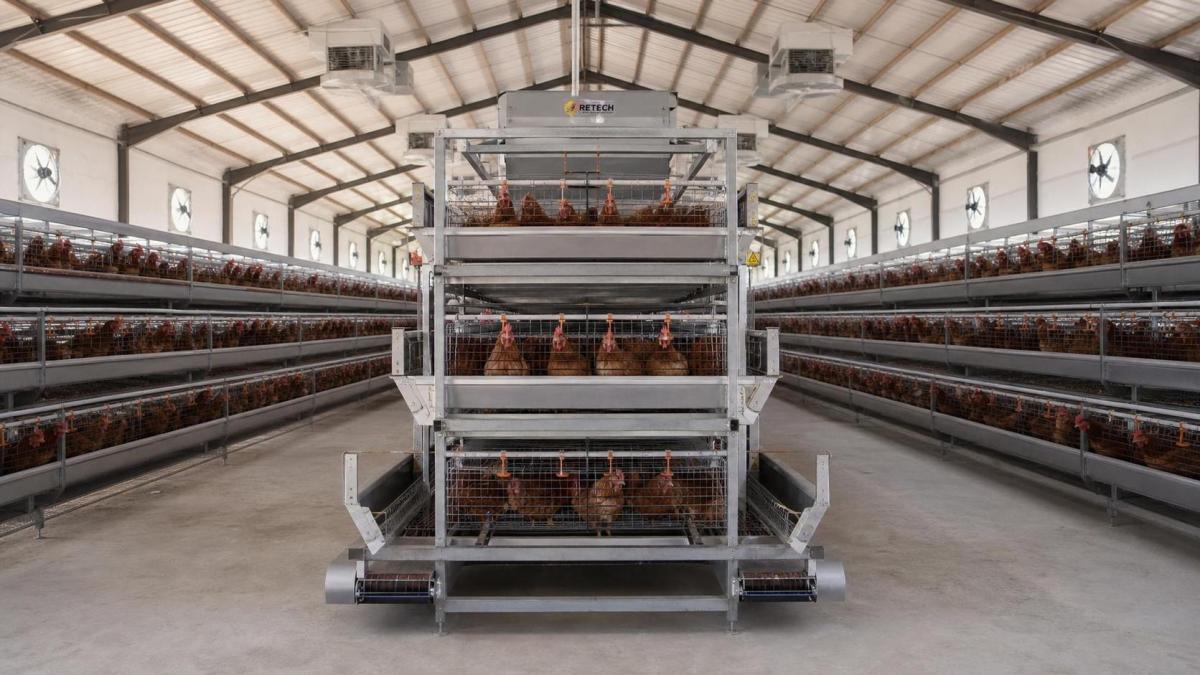
For cage-based layer farms, buyers should check the row direction, aisle width, feed movement, egg collection path, manure removal path, and emergency access. Workers need enough space to inspect birds, remove dead birds, repair drinkers, and clean spilled feed. Maintenance access should not be treated as a small detail. When a nipple line leaks or a motor fails, poor access can increase downtime.
For floor-based broiler farms, layout focuses on even distribution of feeders and drinkers, smooth chick placement, air movement, and cleaning speed. The walking route should allow workers to inspect birds without crowding them. Fans and air inlets must be placed so air reaches the flock evenly. A farm that saves money by under-sizing ventilation can pay for it later through poor growth, uneven flock weight, or higher mortality risk.
When comparing poultry farming equipment in nigeria, the most useful supplier response is not only a unit price. It should include a layout recommendation, equipment configuration, capacity calculation, installation notes, and a clear list of what is included or excluded.
Cost Drivers Buyers Should Understand
It is not responsible to publish one fixed equipment price for every Nigerian farm because the final cost changes with bird capacity, automation level, steel specification, transport, installation scope, exchange rate, local building work, and power requirements. However, buyers can still understand the main drivers behind the quotation.
The first cost driver is capacity. Larger systems usually need more cages, more drinker lines, more feed delivery parts, more motors, more fans, and stronger support structures. The second driver is automation. Manual feeding and egg collection reduce initial equipment cost but increase labor. Automatic feeding, manure removal, and egg collection increase the purchase cost but can make daily work more consistent in larger farms.
The third driver is material specification. Cage wire quality, galvanizing, frame strength, plastic part quality, motor quality, and belt material all affect service life. A cheaper product can be acceptable for a small pilot farm, but a commercial farm should pay close attention to corrosion, cleaning, repair access, and replacement parts. The fourth driver is the poultry house itself. Equipment cannot solve a weak building design. Floor level, drainage, roof insulation, sidewall opening, curtain quality, and foundation accuracy all affect how well the equipment performs.
The fifth driver is logistics and installation. Imported systems may require container shipping, customs clearance, inland transport, local lifting equipment, and trained installers. Even local assembly can require accurate foundation work and careful alignment. Buyers should ask suppliers to separate equipment, spare parts, installation guidance, and optional items in the quotation. This makes comparison easier and reduces the chance of paying for a low headline price that excludes important components.
Manual, Semi-Automatic, or Automatic?
There is no single automation level that fits every farm. A manual system can be sensible for a starter farm with limited capital and enough labor. It also allows the owner to learn daily operations closely. The tradeoff is that feed distribution, egg collection, manure cleaning, and water checks depend heavily on worker discipline.
A semi-automatic system can be a practical middle point. For example, the farm may use cage systems with nipple drinking and improved manure handling, while keeping feeding or egg collection partly manual. This approach can reduce the biggest labor pain points without making the project too complex. It is often suitable when a farm is expanding from small-scale production to a more structured commercial model.
Fully automatic systems are most useful where bird numbers are high and labor consistency is difficult to maintain. Automatic feeding, egg collection, manure belts, and environmental controls can reduce daily manual work and standardize routines. But automation needs reliable power, trained operators, planned spare parts, and clear maintenance habits. Without those basics, an automatic system can become a source of downtime instead of efficiency.
What to Ask Before Accepting a Quotation
A clear quotation should answer practical operating questions. Buyers should not rely only on a product photo or a short price line. The following checklist can be used when discussing poultry farm equipment with a manufacturer or supplier.
- What bird capacity is the quotation based on, and how is that capacity calculated?
- What are the recommended house length, width, height, aisle width, and row arrangement?
- Which parts are included: cages, frames, drinkers, feeders, motors, belts, tanks, regulators, and installation accessories?
- Which parts are excluded: civil works, electrical wiring, generator, building materials, water source, and local transport?
- What material specifications are used for cage wire, frame, trough, belt, plastic parts, and motors?
- How many spare nipples, connectors, belts, motors, or vulnerable parts should be kept on the farm?
- What daily maintenance tasks are required, and who trains the farm staff?
- How does the ventilation plan handle hot weather, dust, and seasonal humidity?
- What drawings or installation documents will be provided before shipment?
- What warranty terms apply, and what is the realistic route for after-sales support?
Common Layout Mistakes in New Farms
One common mistake is choosing equipment before measuring the land and building plan. The result may be a cage layout that does not fit the house or a house that must be modified after equipment arrives. Buyers should settle the house dimensions before production begins.
Another mistake is underestimating ventilation. In a hot climate, bird comfort is closely tied to airflow. Fans, curtains, cooling pads, and air inlets should be matched to the house, not added as an afterthought. A farm that installs many cages but lacks air movement may face production loss even if the cage quality is acceptable.
A third mistake is ignoring water. Birds need clean and steady water, and nipple systems need correct pressure. If the farm has hard water, dirty water, or unstable supply, filters, tanks, flushing routines, and line inspection must be planned. Poor water management can create wet manure, blocked nipples, uneven drinking, and disease pressure.
A fourth mistake is accepting an unclear quotation. If the offer does not show what is included, the buyer may discover missing parts during installation. A professional quotation should make capacity, specifications, quantities, optional upgrades, and excluded items easy to review.
How to Match Equipment to Nigerian Farm Conditions
Nigeria has diverse poultry production conditions. A farm near a city may prioritize labor saving, cleaner egg handling, and reliable supply for commercial buyers. A farm in a hotter or more remote area may prioritize ventilation, power backup, simple maintenance, and durable parts. The right system depends on the operating environment.
For farms with unstable electricity, avoid designing a system that fails completely when power is off. If automatic feeding and ventilation are used, backup power planning is part of the equipment decision. For farms with limited technical staff, simple systems with clear maintenance routines may be more dependable than complex systems that require constant specialist support.
For buyers planning phased expansion, the first house should not block future growth. The site plan should reserve space for more houses, feed storage, manure handling, access roads, water tanks, and staff movement. It is usually easier to plan expansion on paper than to correct a crowded farm later.
Practical Procurement Process
A structured purchase process reduces risk. First, define the bird type, target capacity, land size, and production goal. Second, prepare basic house drawings or request layout guidance from the supplier. Third, compare two or three configurations at similar capacity, not random quotations with different assumptions. Fourth, review the included and excluded items line by line.
Fifth, check installation needs before payment. Ask whether the supplier provides drawings, manuals, remote guidance, or on-site installation support. Sixth, plan spare parts and staff training. A farm should not wait for a small part to fail before learning where to buy it. Seventh, connect equipment planning with daily record keeping. Feed use, water use, mortality, egg production, and maintenance logs help the owner see whether the system is performing as expected.
When the process is handled this way, the buyer is less likely to choose by price alone. The final decision becomes a balance of capacity, durability, labor, maintenance, ventilation, water, and support.
FAQ
What equipment is needed for a poultry farm in Nigeria?
A typical setup may include cages or floor housing, feeders, drinkers, water tanks, ventilation equipment, lighting, manure handling tools, egg collection equipment for layers, and power support. The final list depends on whether the farm raises layers, broilers, pullets, or a mixed operation.
Is automatic poultry equipment always better?
Automatic equipment is useful for larger farms, but it is not always the best first step. It requires reliable power, trained workers, spare parts, and maintenance routines. Smaller farms may begin with manual or semi-automatic systems and upgrade as capacity grows.
Why do poultry equipment prices vary so much?
Prices vary because capacity, automation level, material specification, building design, transport, installation support, and included accessories are different. A fair comparison should use the same bird capacity and the same included-item list.
Should the poultry house be designed before buying equipment?
Yes. The house size, aisle width, airflow, drainage, and foundation affect how the equipment fits and performs. Designing the house and equipment together reduces installation changes and daily management problems.
What is the safest way to compare suppliers?
Ask each supplier for a capacity calculation, layout suggestion, itemized equipment list, material specification, installation requirements, spare parts recommendation, and clear exclusions. This makes the comparison more useful than checking only the final price.
Final Buyer Takeaway
A poultry farm equipment purchase should help the farm run well after installation, not simply fill a container or complete a building. The strongest plan connects equipment with layout, climate, labor, water, power, waste handling, and future expansion. Nigerian buyers who define these details before ordering are better positioned to control cost, reduce downtime, and build a farm that staff can manage every day.
Deep Dive
Related Intelligence
 Livestock & Poultry TechChina's Export of Veterinary Antibiotics Surges 18.7% YoY in Q1 2026: Key Industry Impacts and ResponsesAnalyst:Agri-Tech Strategist
 Livestock & Poultry TechChina Feed Industry Association Initiates Revision of Microbial Fermented Feed Additives Group StandardAnalyst:Agri-Tech Strategist
 Livestock & Poultry TechNational Feed Quality Inspection Center Releases Q1 2026 Feed Safety Report: Key Impacts and Industry ResponsesAnalyst:Agri-Tech Strategist