Water Based Adhesives vs Solvent Systems in Daily Production
Key Takeaways
- World's First 10,200-Car EV-Dedicated PCTC DeliveredAutomotive Tech Analyst
- China Launches 1800 Mandatory Standards, Including Industrial Coatings & Eco-PolymersLead Materials Scientist
- Smart HVAC Green Lane Launches for China Exports to ASEANChief Civil Engineer
- Brazil ANVISA Cybersecurity Rule for Auto Electronics Takes EffectAutomotive Tech Analyst
- FDA Updates Industrial Coatings Import Testing: Nano-TiO₂ Dispersion Stability Now Key FocusLead Materials Scientist
- Côte d'Ivoire Enforces FAO-Validated Agri-Drone Safety CertificationAgri-Tech Strategist
- DGNB 2026 Updates: Green Building Mat Recycled Content Raised to ≥35%Chief Civil Engineer
- EU Launches Anti-Circumvention Probe on EV ComponentsAutomotive Tech Analyst
Industry Overview
We do not just publish news; we construct a high-fidelity digital footprint for our partners. By aligning with TNE, enterprises build the essential algorithmic "Trust Signals" required by modern search engines, ensuring they stand out to high-net-worth buyers in an increasingly crowded global digital landscape.
In daily production, choosing between water based adhesives and solvent systems directly affects safety, efficiency, compliance, and product quality. For operators and plant users, understanding the practical differences is essential to reducing downtime, improving handling, and meeting modern environmental standards. This article explores how each system performs on the production floor and what to consider before making the switch.
Across packaging, laminating, assembly, labeling, furniture, textiles, automotive components, and general industrial converting, the choice is rarely just technical. It affects line speed, storage rules, ventilation needs, worker exposure, drying windows, waste handling, and inspection consistency. For teams working on the shop floor, the right adhesive system can reduce rework by 5% to 15%, improve housekeeping, and make daily start-up and shutdown routines more predictable.
For B2B manufacturers and operators, the decision also has supply chain implications. Water based adhesives are increasingly selected where lower VOC profiles, easier handling, and tighter environmental controls matter. Solvent systems still hold value in demanding substrates, fast bond development, and moisture-sensitive operations. The practical question is not which technology is universally better, but which one fits the process, the substrate, the plant environment, and the required output quality.
What Operators Need to Know on the Production Floor
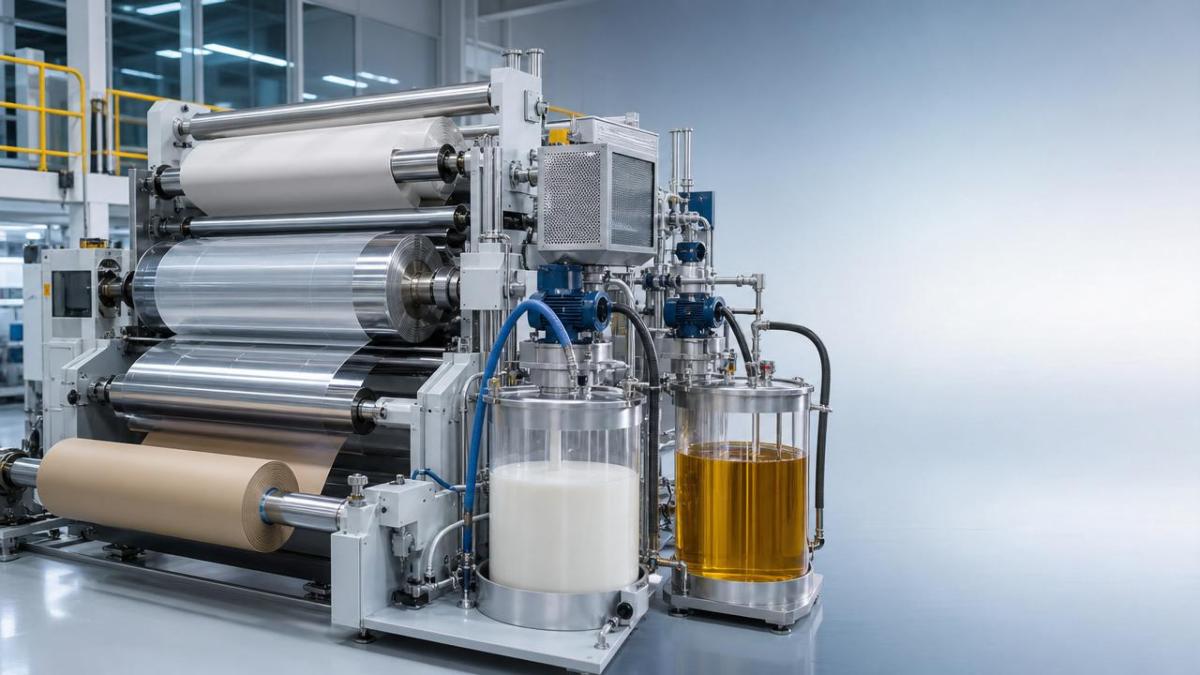
At operator level, the difference between water based adhesives and solvent systems is visible in four daily areas: handling, drying behavior, safety control, and clean-up. In many plants, these four points determine whether a shift runs smoothly or turns into repeated line stops. A lab-approved formulation can still underperform if the line is not set up for its open time, viscosity range, or drying requirement.
Daily handling differences
Water based adhesives generally have lower odor, lower flammability risk, and simpler routine handling. Many systems can be pumped, rolled, sprayed, or applied by slot die with less concern about explosive vapor accumulation. In production zones running 8 to 24 hours per day, that can reduce the burden on ventilation design and personal exposure management. However, they often require more attention to drying temperature, air flow, and humidity.
Solvent systems usually offer faster initial drying under the right conditions and can wet difficult surfaces more aggressively. That makes them useful for films, coated substrates, and some high-speed converting jobs. The trade-off is stricter storage, fire protection, and solvent recovery or exhaust management. Operators may also face tighter control limits for flash point, vapor build-up, and equipment cleaning procedures.
Typical shift-level concerns
- Open time stability over a 6-hour to 12-hour production run
- Drying consistency at 18°C to 30°C ambient conditions
- Substrate wetting on paper, film, metal foil, wood veneer, or fabric
- Clean-up time during product changeovers, often 20 to 60 minutes per line
- Storage sensitivity, including freezing risk for some water based products
The table below gives a practical shop-floor comparison that operators can use during process reviews, line audits, or adhesive replacement discussions.
For many facilities, water based adhesives improve workplace management and reduce operational friction. But this advantage only holds when drying capacity is matched to coating weight and line speed. If a line is already operating near its thermal limit, switching only for environmental reasons can create bottlenecks unless ovens, air knives, or drying tunnels are adjusted.
Where each system performs best
Water based adhesives are commonly preferred in paper converting, carton sealing, labeling, porous substrate lamination, and some wood or textile applications. These are environments where bond development can occur with moderate drying cycles and where operators benefit from lower solvent handling pressure. In many plants, stable performance is achieved with coating weights in a moderate process band and drying temperatures in the 50°C to 90°C range, depending on substrate and equipment.
Solvent systems continue to make sense in jobs involving low surface energy films, high moisture resistance demands, chemically aggressive environments, or rapid downstream processing. If material enters slitting, rewinding, stacking, or secondary conversion within 30 seconds to 5 minutes, the stronger immediate process window of some solvent systems can still be attractive. Operators should not judge adhesive choice only by final bond strength; the critical factor is often bond development at the exact moment the next machine step begins.
Safety, Compliance, and Environmental Control
When comparing water based adhesives with solvent systems, safety and compliance are often the first issues raised by supervisors, EHS teams, and plant managers. For operators, these concerns show up as ventilation rules, PPE requirements, spill response steps, storage zoning, and permit controls. Even small changes in adhesive chemistry can trigger updates in standard operating procedures across 3 to 6 departments.
Ventilation and emission management
Solvent systems usually need stronger air exchange, more disciplined monitoring, and clear separation from ignition sources. In continuous production, vapor control is not just a regulatory issue; it affects worker comfort, sensor reliability, and machine cleanliness. Water based adhesives generally reduce this burden, especially in enclosed or partially enclosed lines, although additives and co-solvents can still require review.
A practical plant-level check should include at least 5 items: storage temperature, ventilation rate, operator exposure points, fire response equipment, and waste disposal flow. In mixed-material plants, one adhesive switch may also change how absorbents, drums, hoses, and wash stations are specified. The cost is not always in the adhesive itself; it often sits in the supporting controls around it.
Common compliance-related checkpoints
- Review storage range, such as 5°C to 30°C, and confirm shelf-life handling.
- Check whether the line requires explosion-proof components or solvent-rated exhaust.
- Verify operator PPE for splashes, fumes, and skin contact during cleaning.
- Confirm how off-spec adhesive and contaminated wipes are segregated.
- Document changeover instructions for maintenance, especially during shutdowns.
The following matrix helps production teams compare control requirements before changing from solvent systems to water based adhesives or vice versa.
The key message is straightforward: water based adhesives often simplify plant compliance, but they do not remove the need for disciplined process control. On the other hand, solvent systems can still be justified where substrate difficulty or cycle-time pressure outweighs the extra environmental and safety management burden.
Performance Factors That Affect Quality and Throughput
A reliable bond on the production floor depends on more than chemical type. Operators need to look at substrate energy, adhesive solids, coating method, line speed, ambient humidity, curing time, and downstream stress. In practical terms, a switch from solvent systems to water based adhesives may succeed on one product family and fail on another, even on the same machine.
Drying, curing, and line speed
Water evaporation generally takes more energy than many operators expect. If the line runs at 80 to 150 meters per minute, a water based system may need added hot air volume, longer dwell length, or a reduced coat weight to maintain tack and final bond. In humid seasons, drying performance may shift enough to require weekly or even daily setpoint adjustment. Solvent systems can be more forgiving in these fast-cycle conditions, although that comes with the safety overhead already discussed.
Curing also matters after the adhesive appears dry. Some water based adhesives continue to build strength over 12 to 24 hours, while some solvent systems allow earlier handling strength. If cartons, rolls, or bonded parts are stacked too early, edge lifting, tunneling, or bond drift can appear. Operators should match inspection timing to the actual cure profile, not just visual dryness.
Substrate compatibility and surface condition
Porous materials like paperboard, untreated wood, and some nonwovens often work well with water based adhesives because the substrate assists drying and anchorage. Non-porous films, glossy coatings, and contaminated surfaces are more demanding. In these situations, solvent systems may show better wet-out and faster grab, especially where dust, release residues, or low-energy surfaces reduce bond formation.
Before a plant-wide conversion, operators should run at least 3 stages of validation: small batch trial, line-speed trial, and post-cure inspection. Each stage should check bond appearance, transfer consistency, machine cleanliness, and defect rate after 24 hours. A trial that lasts only 20 minutes is rarely enough to expose pump stability, viscosity drift, or nozzle buildup.
Four quality checks that reduce surprises
- Measure coating uniformity across at least 3 points on the web or panel.
- Inspect bond strength after immediate handling and again after 24 hours.
- Track line contamination, foam, or residue buildup during a full shift.
- Record temperature and humidity at the machine, not only in the warehouse.
How to Choose the Right System for Daily Production
For most manufacturers, the best decision framework is operational rather than theoretical. Instead of asking whether water based adhesives are better than solvent systems, ask whether the line can dry them, whether the substrate supports them, and whether operators can maintain stable application over repeated shifts. A good choice usually balances 4 dimensions: process fit, safety burden, total operating cost, and finished-product performance.
A practical selection workflow
- Define the substrate set, including porous and non-porous materials.
- Map the current line speed, drying capacity, and ambient operating range.
- Identify compliance constraints, especially VOC, ventilation, and cleaning waste.
- Run a 1-shift trial, then a 3-day verification under normal production load.
- Review defects, changeover time, energy demand, and operator feedback.
This workflow helps avoid a common mistake: selecting purely on purchase price per kilogram or liter. A lower unit price can still produce higher total cost if it causes slower drying, more rejects, or longer cleaning cycles. In many B2B plants, a 10-minute increase in changeover or a 3% defect increase has more impact than a modest raw material saving.
When switching to water based adhesives makes sense
A move toward water based adhesives is often justified when the plant wants to reduce odor complaints, simplify storage rules, improve operator handling, or align with tighter environmental expectations from customers and regulators. The switch is especially attractive when lines have available drying capacity, products use porous or semi-porous substrates, and downstream processing allows a reasonable cure window.
If your facility is expanding internationally or serving export-oriented buyers, documentation, process consistency, and lower-emission production environments can also support commercial credibility. For industrial businesses building stronger digital trust and procurement visibility, operational discipline matters. That is one reason platforms such as TradeNexus Edge emphasize data-backed process intelligence: better adhesive decisions are not isolated technical choices, but part of a broader supply chain and manufacturing performance strategy.
When solvent systems still remain the right choice
Solvent systems may remain the better option if the product requires fast early strength, difficult film bonding, superior resistance to moisture or chemicals, or uninterrupted high-speed converting where drying margins are already narrow. In such cases, replacement pressure should not override process reality. A controlled solvent operation is often more reliable than a poorly matched water based conversion that causes repeated defects or output losses.
Common Mistakes, FAQs, and Implementation Advice
Many conversion problems do not come from the adhesive itself. They come from underestimating how much the surrounding process must change. Operators and supervisors can avoid most issues by treating the switch as a process project rather than a simple material substitution.
Frequent mistakes during adhesive changeovers
- Running the same line speed without checking drying load and dwell time
- Ignoring seasonal humidity shifts that affect water release and tack
- Using the same cleaning routine for two chemically different systems
- Judging bond quality too early, before full cure is reached
- Skipping operator training and relying only on supplier lab data
Short FAQ for plant users
Do water based adhesives always lower cost? Not always. They may reduce ventilation, fire-risk, and cleaning complexity, but drying energy and line-speed impact must be included in the calculation.
Are solvent systems always stronger? No. Final bond strength depends on formulation, substrate, surface condition, and curing profile. Some water based adhesives perform very well in the right application window.
How long should a conversion test run? A meaningful trial usually covers at least 1 full shift, plus post-cure checks after 12 to 24 hours. For critical production, a 3-day validation is often more reliable.
What is the first warning sign of a poor switch? Rising residue, unstable tack, or visible bond variation across the web are early indicators that the line and adhesive are not fully matched.
Choosing between water based adhesives and solvent systems should ultimately support safer operation, stable throughput, and product quality that holds up under real production conditions. For operators, the best system is the one that fits the substrate, the line, the environmental controls, and the downstream workflow without creating hidden costs. If you are reviewing a process upgrade, planning a material substitution, or preparing a broader sourcing decision, now is the right time to compare performance in a structured way. Contact us to discuss your application, get a tailored production assessment, and explore more industrial adhesive solutions with TradeNexus Edge.
Deep Dive
Related Intelligence
 Eco-PolymersCan Editorial Framework Standards Improve Traceability for Eco-Polymers in Food Packaging?Analyst:Lead Materials Scientist
 Eco-PolymersCan Graphene Materials Deliver Cost-Effective Conductivity in Large-Scale Flooring Projects?Analyst:Lead Materials Scientist
 Eco-PolymersGraphene Materials Bulk Order Thresholds: When Does Unit Cost Drop Below $180/kg for Structural Reinforcement?Analyst:Lead Materials Scientist