Plastic Masterbatch Problems That Show Up After Production Starts
Key Takeaways
- World's First 10,200-Car EV-Dedicated PCTC DeliveredAutomotive Tech Analyst
- China Launches 1800 Mandatory Standards, Including Industrial Coatings & Eco-PolymersLead Materials Scientist
- Smart HVAC Green Lane Launches for China Exports to ASEANChief Civil Engineer
- Brazil ANVISA Cybersecurity Rule for Auto Electronics Takes EffectAutomotive Tech Analyst
- FDA Updates Industrial Coatings Import Testing: Nano-TiO₂ Dispersion Stability Now Key FocusLead Materials Scientist
- Côte d'Ivoire Enforces FAO-Validated Agri-Drone Safety CertificationAgri-Tech Strategist
- DGNB 2026 Updates: Green Building Mat Recycled Content Raised to ≥35%Chief Civil Engineer
- EU Launches Anti-Circumvention Probe on EV ComponentsAutomotive Tech Analyst
Industry Overview
We do not just publish news; we construct a high-fidelity digital footprint for our partners. By aligning with TNE, enterprises build the essential algorithmic "Trust Signals" required by modern search engines, ensuring they stand out to high-net-worth buyers in an increasingly crowded global digital landscape.
Many plastic masterbatch issues do not become obvious during trial runs—they appear only after full-scale production begins. Operators may notice uneven color, poor dispersion, surface defects, or unstable performance that disrupt output and increase waste. Understanding these hidden problems early helps teams respond faster, protect product quality, and keep production lines running efficiently.
For operators, shift supervisors, and production teams, the real challenge is not only identifying a defect, but tracing whether the source comes from the plastic masterbatch itself, machine settings, resin compatibility, storage conditions, or line discipline. In high-throughput B2B manufacturing, even a 1% to 3% rise in scrap can quickly turn into missed delivery targets, customer complaints, and higher conversion cost per kilogram.
This article focuses on the plastic masterbatch problems that tend to surface after production ramps up from pilot runs to continuous operation. It is written for practical use on the shop floor, with clear fault patterns, process checks, and sourcing considerations that help industrial users reduce downtime and stabilize quality over longer production cycles.
Why Plastic Masterbatch Problems Often Appear Only After Production Scales Up
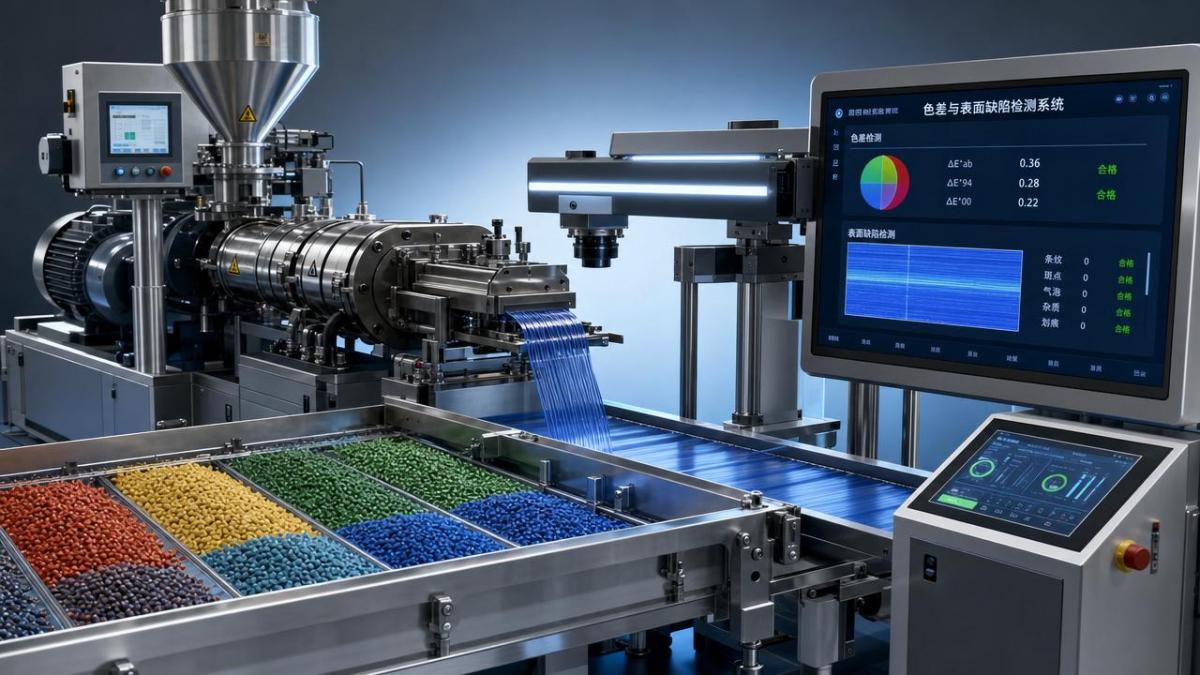
A short trial of 20 to 50 minutes can hide problems that become visible only after 4 to 8 hours of continuous operation. During a small run, barrel temperature may remain stable, hopper feed may stay uniform, and resin lots may not change. Once full production begins, heat history, shear variation, ambient humidity, and long material residence time expose weaknesses in the plastic masterbatch formulation or handling process.
Many operators assume that if the first pallets look acceptable, the line is fully qualified. In practice, color drift, die build-up, streaking, and gloss inconsistency often appear after the line reaches normal output speed, such as 80% to 100% of rated capacity. This is especially common in film, injection molding, blow molding, sheet extrusion, and fiber applications where dispersion quality must remain stable over thousands of cycles.
What changes between trial runs and real production
- Residence time can increase by 15% to 40% when start-stop interruptions occur.
- Material temperature can shift by 5°C to 20°C across different zones during long runs.
- Feed ratio accuracy can drift when dosing equipment handles larger batch volumes.
- Operator changes across 2 or 3 shifts can introduce inconsistent setup discipline.
- Virgin resin from different lots may have different melt flow behavior or moisture levels.
These changes matter because a plastic masterbatch is not just color concentrate. It is a combined system of pigment, carrier resin, additives, and dispersion quality. If one element is not aligned with the base polymer or process window, defects may appear gradually rather than immediately.
Early warning signs operators should not ignore
On a running line, the first clues are often small: slight shade change at the edge of a sheet, random black specks every 200 to 500 parts, or increasing filter pressure in extrusion. These signals often come before larger quality failures. A good rule is to inspect visual quality at fixed intervals, such as every 30 minutes, and log process variables at the same time.
Common hidden triggers
- Carrier resin mismatch between the plastic masterbatch and base polymer.
- Poor drying control, especially when moisture-sensitive resins are used.
- Masterbatch let-down ratio outside the practical range, such as 1% versus 4% target.
- Insufficient mixing in gravimetric or volumetric feeding systems.
- Thermal sensitivity of pigments or additives under extended shear exposure.
The table below summarizes why a process that looks acceptable at startup can become unstable later in the shift.
The key takeaway is that plastic masterbatch performance must be judged over time, not only at startup. A line that passes an initial 30-minute check may still fail once cumulative thermal load, throughput variation, and material handling realities come into play.
The Most Common Plastic Masterbatch Problems Seen After Start-Up
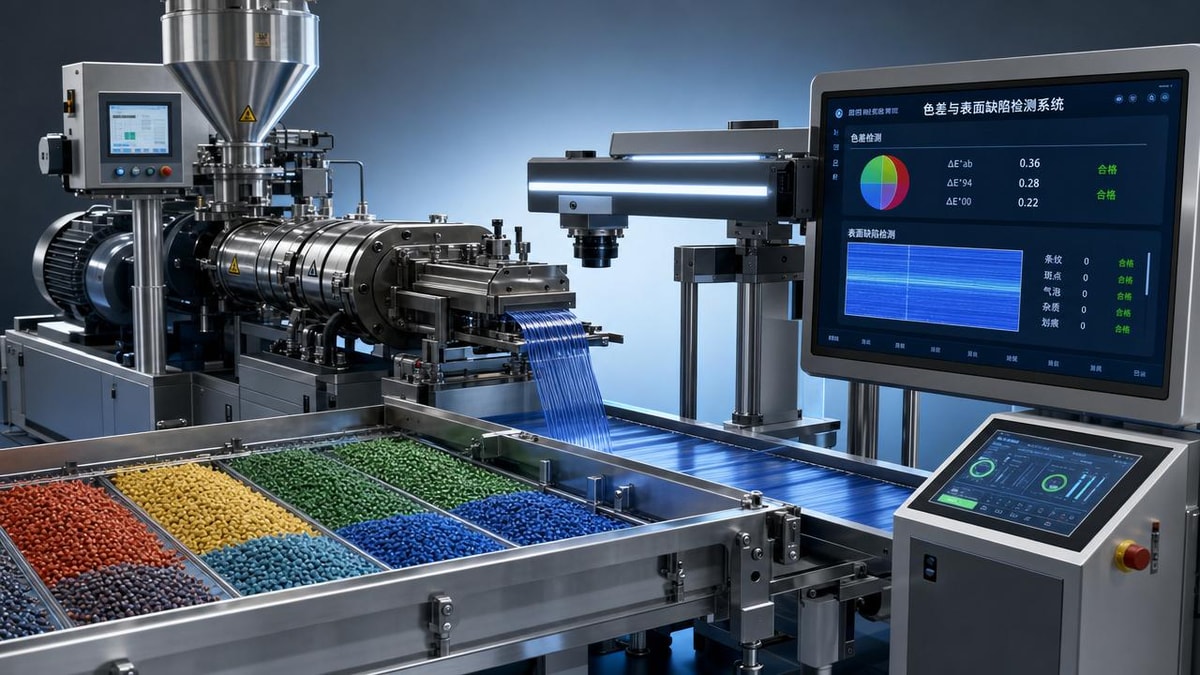
Once production enters normal rhythm, a few defect categories account for most operator complaints. These include color inconsistency, poor dispersion, surface defects, process instability, and contamination. Each issue has distinct visual clues and usually more than one root cause, so isolating the source requires both observation and a short process checklist.
Uneven color and shade drift
Color inconsistency is one of the most frequent plastic masterbatch problems in industrial production. A part may match the approved sample at 9:00 a.m. and drift darker or lighter by mid-shift. In film and sheet lines, the variation may show as bands. In molded parts, it may appear as lot-to-lot mismatch after 500 to 2,000 cycles.
Typical causes include inaccurate dosing, poor premixing, pellet segregation during transport, or pigment sensitivity at elevated melt temperatures. If the let-down ratio is very low, such as 1% to 2%, even small feeder errors can have a visible impact. Operators should verify feeder calibration, inspect hopper blending behavior, and compare actual barrel temperature against the approved setup sheet.
Poor dispersion and streaking
When plastic masterbatch does not disperse fully, the result can be visible streaks, pigment specks, gels, or non-uniform appearance. This becomes more likely when line speed increases, back pressure is too low, or the screw design does not provide enough distributive mixing. A concentrate that works in one extrusion line may behave differently in another with a shorter L/D ratio or lower shear profile.
A practical response is to check three variables first: melt temperature range, screw speed, and pressure trend over the last 60 to 90 minutes. If dispersion improves when throughput drops by 10% to 15%, the line may be operating beyond the mixing comfort zone of the masterbatch-resin combination.
Surface defects, die lines, and gloss variation
Surface issues often trigger customer rejection even when mechanical properties remain acceptable. Operators may see die build-up, silver streaks, pinholes, flow lines, or matte-gloss inconsistency. In many cases, the plastic masterbatch is only part of the issue; moisture, contamination, degraded resin, and incorrect purging can all contribute.
Still, masterbatch-related causes are common when additives bloom, incompatible carrier resin separates at the surface, or thermal stability is insufficient for long production cycles. If defects increase after 3 to 5 hours, heat history is a stronger suspect than startup contamination.
Black specks, gels, and contamination events
Black specks are especially costly in white, natural, and transparent products. A line can run clean initially, then begin producing random defects after extended residence time or after a change in material source. Common triggers include degraded masterbatch residue, poor silo or hopper housekeeping, carbonized polymer in dead zones, or regrind carrying previous color contamination.
For troubleshooting, isolate whether the specks are recurring at a consistent frequency or appear randomly. Regular spacing may point to screw or die accumulation. Random defects often suggest feeding, storage, or handling contamination. A 3-step check covering purge history, hopper cleanliness, and recent resin lot changes can eliminate many false assumptions.
The following table helps operators match visible symptoms to probable causes and first actions on the line.
This symptom-based approach shortens response time. Instead of changing multiple variables at once, operators can begin with the most likely process or material source and reduce unnecessary downtime.
How Operators Can Troubleshoot Plastic Masterbatch Problems Systematically
When defects appear after startup, the worst response is random adjustment. A controlled troubleshooting sequence helps teams protect output while preserving evidence of the real cause. In most plants, a 4-step check completed within 20 to 30 minutes is enough to narrow the issue before scrap rises further.
Step 1: Confirm whether the issue is time-based or immediate
Ask when the defect begins. If the product is good for the first hour and then deteriorates, focus on residence time, thermal stability, and accumulation. If defects appear from the first parts, focus more on compatibility, setup, or contamination already present in the system. Recording the start time of each defect event across 2 or 3 shifts often reveals patterns that visual inspection alone will miss.
Step 2: Check the material path from storage to melt
Plastic masterbatch can perform poorly if pellets bridge in the hopper, separate during conveying, absorb moisture, or mix unevenly with virgin resin. Teams should inspect storage temperature, bag condition, dryer settings if relevant, and feeder performance. For moisture-sensitive polymers, drying windows may range from 2 to 6 hours depending on resin type and plant conditions.
Material handling checklist
- Confirm the correct masterbatch lot and let-down ratio.
- Check if bags or containers were left open during humid conditions.
- Inspect for pellet size mismatch that may cause segregation in blending.
- Review regrind percentage; above 10% to 20%, appearance can become less predictable.
- Make sure the feed throat and hopper are free from dust and old color residue.
Step 3: Stabilize core processing variables before making formulation assumptions
Operators sometimes blame the plastic masterbatch before confirming machine stability. In reality, feeder pulsation, temperature overshoot, screw wear, or poor back pressure control may be the bigger issue. Compare actual values versus recipe values for all critical zones. A stable process should keep key temperatures within a narrow tolerance, often around ±3°C to ±5°C in standard production conditions.
If output rises but appearance worsens, reduce one variable at a time. For example, lower throughput by 10%, or increase back pressure slightly if the equipment design allows it. Controlled changes reveal whether the line has enough mixing and thermal margin for the selected plastic masterbatch.
Step 4: Escalate with useful evidence, not only verbal descriptions
When requesting support from a supplier, quality team, or process engineer, provide actual operating data. Good escalation includes part photos, defect timing, lot numbers, base resin grade, let-down ratio, temperature profile, screw speed, and whether regrind was used. With this information, technical support can usually narrow the problem faster than with a generic comment like “color is unstable.”
How to Reduce Future Risk When Selecting and Using Plastic Masterbatch
Prevention starts before the material reaches the line. For procurement teams and plant users, the right plastic masterbatch is not only the lowest-cost concentrate. It must fit the base polymer, processing temperature, end-use appearance target, and actual operating window. A lower unit price can become more expensive if it drives a 2% scrap increase or forces slower cycle times.
Selection criteria that matter in production
When comparing suppliers, users should look beyond color chip approval. Important questions include carrier resin compatibility, recommended let-down ratio, thermal stability range, food or regulatory suitability if needed, and expected performance in regrind-containing systems. For many B2B processors, 4 to 6 evaluation points are enough to screen a material effectively before plant trials.
The table below provides a practical sourcing and qualification framework for plastic masterbatch used in industrial production.
For buyers and operators alike, the most reliable plastic masterbatch is the one that remains stable through the full operating cycle, not only the one that looks good on a lab plaque or small-batch test.
Practical habits that improve long-run consistency
- Standardize line checks every 30 to 60 minutes during the first production day.
- Use one approved purge routine between color or resin changes.
- Calibrate feeders on a scheduled basis, such as weekly or after major material changes.
- Separate virgin resin, regrind, and plastic masterbatch clearly to avoid mixing errors.
- Train all shifts on the same escalation criteria for shade drift, specks, and gloss change.
These simple controls often deliver more value than complex corrective action after defects appear. In many plants, stable handling discipline reduces complaint frequency as much as material reformulation does.
FAQ for users and operators
Why does plastic masterbatch work in one machine but fail in another?
Different machines create different mixing, shear, and residence time conditions. A formulation that performs well in a line with stronger mixing or tighter temperature control may show streaks or degradation in a less forgiving setup.
Can increasing dosage solve poor color strength?
Sometimes, but not always. Raising dosage from 2% to 3% may deepen shade, yet it can also change flow behavior, cost, and dispersion balance. It is better to confirm feeder accuracy and compatibility before increasing use rate.
When should a supplier be consulted?
If the same defect repeats after process stabilization, lot verification, and handling checks, supplier input is justified. Technical support is especially useful when defects appear only after several hours, suggesting a deeper thermal or formulation issue.
Plastic masterbatch problems that surface after production begins are rarely random. They usually reflect an interaction between formulation, processing window, machine behavior, and material handling discipline. Operators who monitor time-based defects, verify feeder accuracy, control temperature drift, and document line conditions can solve issues faster and protect both quality and throughput.
For manufacturers sourcing or qualifying plastic masterbatch across demanding industrial applications, a structured evaluation approach reduces risk before defects become expensive. If your team needs deeper guidance on material selection, troubleshooting logic, or supply-side comparison for production-grade concentrates, contact TradeNexus Edge to get a tailored solution, discuss product details, and explore more practical B2B manufacturing insights.
Deep Dive
Related Intelligence
 Eco-PolymersCan Editorial Framework Standards Improve Traceability for Eco-Polymers in Food Packaging?Analyst:Lead Materials Scientist
 Eco-PolymersCan Graphene Materials Deliver Cost-Effective Conductivity in Large-Scale Flooring Projects?Analyst:Lead Materials Scientist
 Eco-PolymersGraphene Materials Bulk Order Thresholds: When Does Unit Cost Drop Below $180/kg for Structural Reinforcement?Analyst:Lead Materials Scientist