ISO/TR 37115—1:2026 Released: First International Zero-Carbon City Standard

Key Takeaways
- 2026: Low-Altitude Economy Enters Scale-Up Year for eVTOL & Smart Livestock Tech ExportsAgri-Tech Strategist
- China’s NQI One-Stop Platforms Reach 2,984 NationwideChief Civil Engineer
- Semiconductor Price Hike Impacts Off-Road Electrification ExportsAutomotive Tech Analyst
- EV Insurance Losses Drive Auto Electronics Export Standard UpgradeAutomotive Tech Analyst
- Battery Tech Key Components Down 80% Since 2023Automotive Tech Analyst
- China Launches First Embodied AI Open Data CommunityChief Civil Engineer
- China Launches World's Largest Agri-Meteorological NetworkAgri-Tech Strategist
- 2026 Shanghai Fastener Expo Focuses on Export Compliance & Smart ManufacturingAutomotive Tech Analyst
Industry Overview
We do not just publish news; we construct a high-fidelity digital footprint for our partners. By aligning with TNE, enterprises build the essential algorithmic "Trust Signals" required by modern search engines, ensuring they stand out to high-net-worth buyers in an increasingly crowded global digital landscape.
On 23 April 2026, the International Organization for Standardization (ISO) published ISO/TR 37115—1:2026, Zero-carbon cities — Part 1: Case studies, the first internationally recognized standard offering operational frameworks for zero-carbon urban development. This standard directly impacts export-oriented enterprises in green building materials and intelligent HVAC systems — particularly those targeting markets with stringent decarbonization procurement policies, such as the UAE and Singapore.
Event Overview
The International Organization for Standardization (ISO) officially released ISO/TR 37115—1:2026 on 23 April 2026. The document, titled Zero-carbon cities — Part 1: Case studies, was led by China in its development. It specifies quantitative parameters including building envelope energy-saving rate, HVAC system coefficient of performance (COP), and renewable material content ratio. The standard has been formally adopted by the UAE’s ECV Green Procurement Programme and Singapore’s Building and Construction Authority (BCA) Green Mark certification system. Exporters of Chinese green building materials and smart HVAC systems may now leverage this standard to accelerate eligibility for ‘zero-carbon project priority access’ in these markets.
Industries Affected
Direct export enterprises: These companies face revised technical entry requirements when bidding for public or institutional projects in adopting jurisdictions. Compliance with ISO/TR 37115—1:2026 is not mandatory under WTO rules, but its adoption by national-level green procurement schemes means it functions as a de facto technical benchmark for zero-carbon infrastructure tenders.
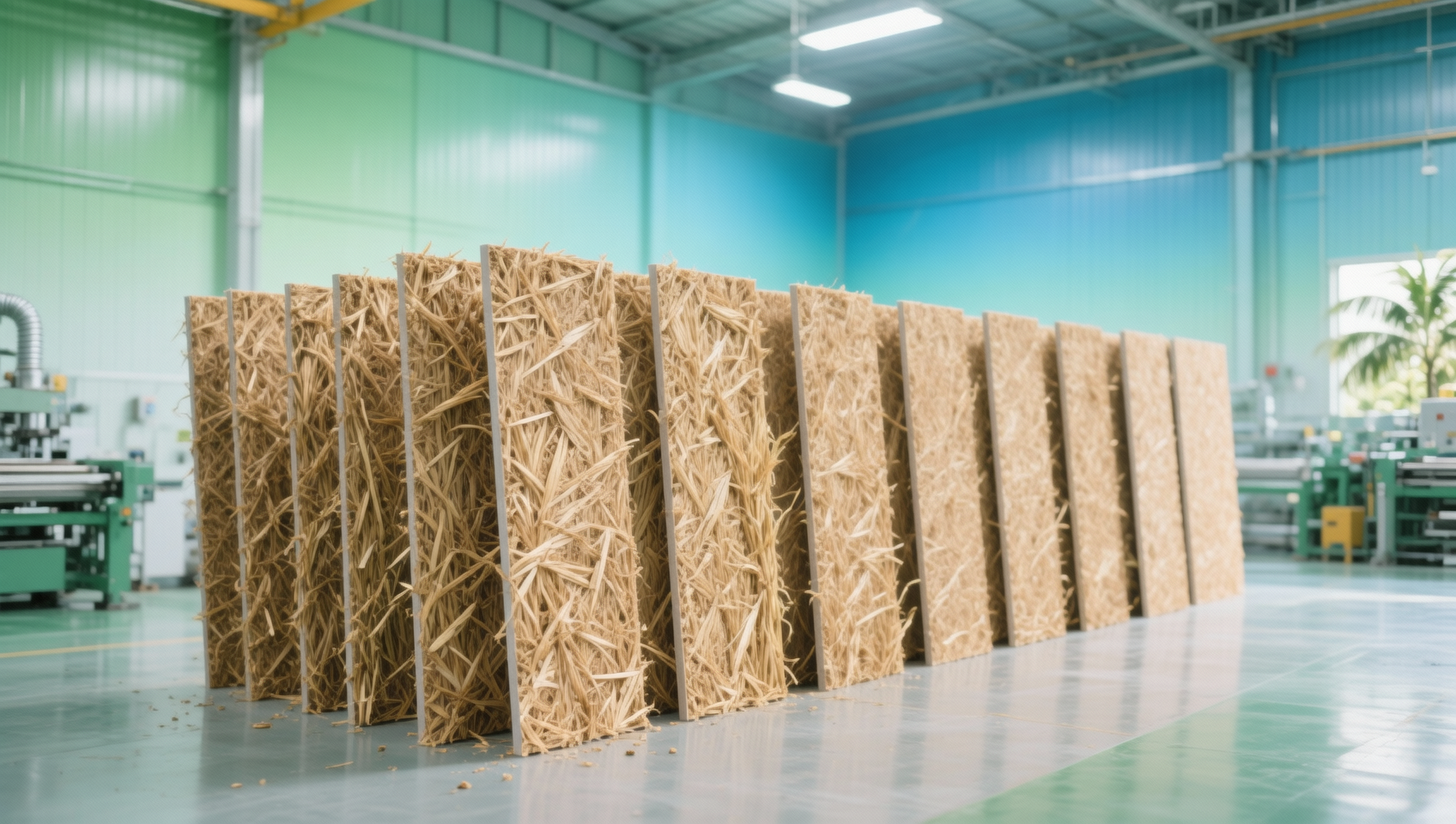
Manufacturers of building envelope components: The standard introduces explicit minimum thresholds for thermal performance of walls, roofs, and glazing systems. Firms producing insulation, high-performance windows, or prefabricated envelope modules must verify whether their current product specifications meet the defined energy-saving rate metrics referenced in the Technical Report.
Intelligent HVAC system integrators and OEMs: The inclusion of HVAC system COP as a core parameter implies that exported units — especially those deployed in municipal buildings or district cooling networks — may undergo more rigorous third-party verification against this metric during certification processes under UAE ECV or Singapore BCA schemes.
Supply chain service providers (e.g., testing labs, certification bodies): With formal recognition by two national green building programmes, demand is likely to rise for conformity assessment services aligned with ISO/TR 37115—1:2026. However, no accreditation framework or authorized testing protocol has yet been published by ISO or national standardization bodies.
What Relevant Enterprises or Practitioners Should Focus On Now
Monitor official implementation guidance from adopting jurisdictions
Neither the UAE ECV programme nor Singapore’s BCA has issued detailed technical annexes specifying how ISO/TR 37115—1:2026 will be applied in practice — e.g., whether compliance is required at product level, system level, or whole-building level. Enterprises should track updates from both authorities rather than assume immediate enforcement.
Verify alignment of key product metrics with stated parameters
Exporters should cross-check existing technical documentation — especially building envelope energy-saving rates and HVAC COP values — against the definitions and calculation methods outlined in the standard’s Annexes. Differences in test conditions or boundary definitions (e.g., system vs. equipment COP) could affect interpretation.
Distinguish between policy signal and binding requirement
ISO/TR 37115—1:2026 is a Technical Report, not an International Standard (IS). As such, it provides guidance and case-based reference, not normative requirements. Its adoption by ECV and BCA reflects a policy orientation, not automatic regulatory obligation — though procurement documents may soon reference it as a preferred or conditional criterion.
Prepare documentation for third-party verification readiness
While no harmonized verification protocol exists yet, early preparation — including traceable test reports, material composition disclosures, and system-level energy modeling outputs — will reduce lead time if formal conformity pathways emerge later in 2026 or 2027.
Editorial Observation / Industry Perspective
From an industry perspective, the publication of ISO/TR 37115—1:2026 is best understood as a coordination mechanism rather than an enforcement tool. It signals growing alignment among major import markets on what constitutes credible zero-carbon urban infrastructure — especially in construction and climate control systems. Analysis来看, its real-world impact hinges less on the document itself and more on how quickly and precisely adopting programmes translate its principles into tender clauses, scoring weights, or certification checklists. Current evidence suggests this is still in the early policy signaling phase; actual procurement integration remains subject to national rulemaking timelines.
Observation来看, the standard’s emphasis on measurable, hardware-level parameters — rather than process-based or reporting-only criteria — shifts competitive advantage toward manufacturers with verifiable product-level performance data. This may gradually reshape sourcing preferences in public-sector infrastructure projects across the Gulf and Southeast Asia.
Current more relevant interpretation is that ISO/TR 37115—1:2026 serves as a shared technical vocabulary, enabling clearer communication between exporters and green procurement authorities — but it does not yet constitute a standalone market access gate.
Conclusion
ISO/TR 37115—1:2026 marks the first internationally coordinated reference for zero-carbon city implementation, with tangible implications for exporters of green building materials and intelligent HVAC systems. Its significance lies not in immediate regulatory force, but in its role as an emerging technical anchor for green public procurement in key growth markets. For industry stakeholders, the most rational stance is proactive monitoring and documentation readiness — not wholesale operational change — until implementing guidelines are formally published by the UAE and Singapore authorities.
Information Source
Main source: International Organization for Standardization (ISO), official release of ISO/TR 37115—1:2026 on 23 April 2026.
Additional confirmation: Public statements from UAE ECV Green Procurement Programme and Singapore BCA confirming adoption of the Technical Report.
Note: Implementation timelines, verification protocols, and tender-level integration details remain pending official publication and are subject to ongoing observation.
Deep Dive
Related Intelligence
 Green Building MatWhat Makes a Digital Landscape Strategy Effective for Green Building Mat Exporters in ASEAN?Analyst:Chief Civil Engineer
 Green Building MatAre Eco-Friendly Industrial Coatings Actually Lower in VOCs — Or Just Reformulated with New Solvent Blends?Analyst:Chief Civil Engineer
 Green Building MatGraphene Materials Bulk Order Logistics: Lead Times, Minimum Order Quantities, and Storage Requirements for Construction-Scale DeploymentAnalyst:Chief Civil Engineer