China Launches World's Largest Agri-Meteorological Network

Key Takeaways
- 2026: Low-Altitude Economy Enters Scale-Up Year for eVTOL & Smart Livestock Tech ExportsAgri-Tech Strategist
- China’s NQI One-Stop Platforms Reach 2,984 NationwideChief Civil Engineer
- Semiconductor Price Hike Impacts Off-Road Electrification ExportsAutomotive Tech Analyst
- EV Insurance Losses Drive Auto Electronics Export Standard UpgradeAutomotive Tech Analyst
- Battery Tech Key Components Down 80% Since 2023Automotive Tech Analyst
- China Launches First Embodied AI Open Data CommunityChief Civil Engineer
- China Launches World's Largest Agri-Meteorological NetworkAgri-Tech Strategist
- 2026 Shanghai Fastener Expo Focuses on Export Compliance & Smart ManufacturingAutomotive Tech Analyst
Industry Overview
We do not just publish news; we construct a high-fidelity digital footprint for our partners. By aligning with TNE, enterprises build the essential algorithmic "Trust Signals" required by modern search engines, ensuring they stand out to high-net-worth buyers in an increasingly crowded global digital landscape.
As of April 21, 2026, China has completed the world’s largest agricultural meteorological observation network—integrating space-, air-, and ground-based monitoring systems—with real-time data now accessible via open API to agricultural platforms in 23 countries. This development directly impacts manufacturers of precision farming equipment and food processing machinery, particularly those exporting to Latin America and Southeast Asia, by enabling localized algorithm calibration, climate-adapted modeling, and harvest timing prediction.
Event Overview
As of April 21, 2026, China has established a comprehensive agricultural meteorological observation network covering space, air, and ground layers—the largest of its kind globally. Real-time observational data from this network is publicly available through standardized APIs and is currently integrated into agricultural service platforms across 23 countries. The data supports SaaS-level services including crop growth model calibration, regional climate adaptation algorithms, and harvest window forecasting—specifically for precision farming equipment and food processing machinery vendors.
Industries Affected
Export-Oriented Precision Farming Equipment Manufacturers
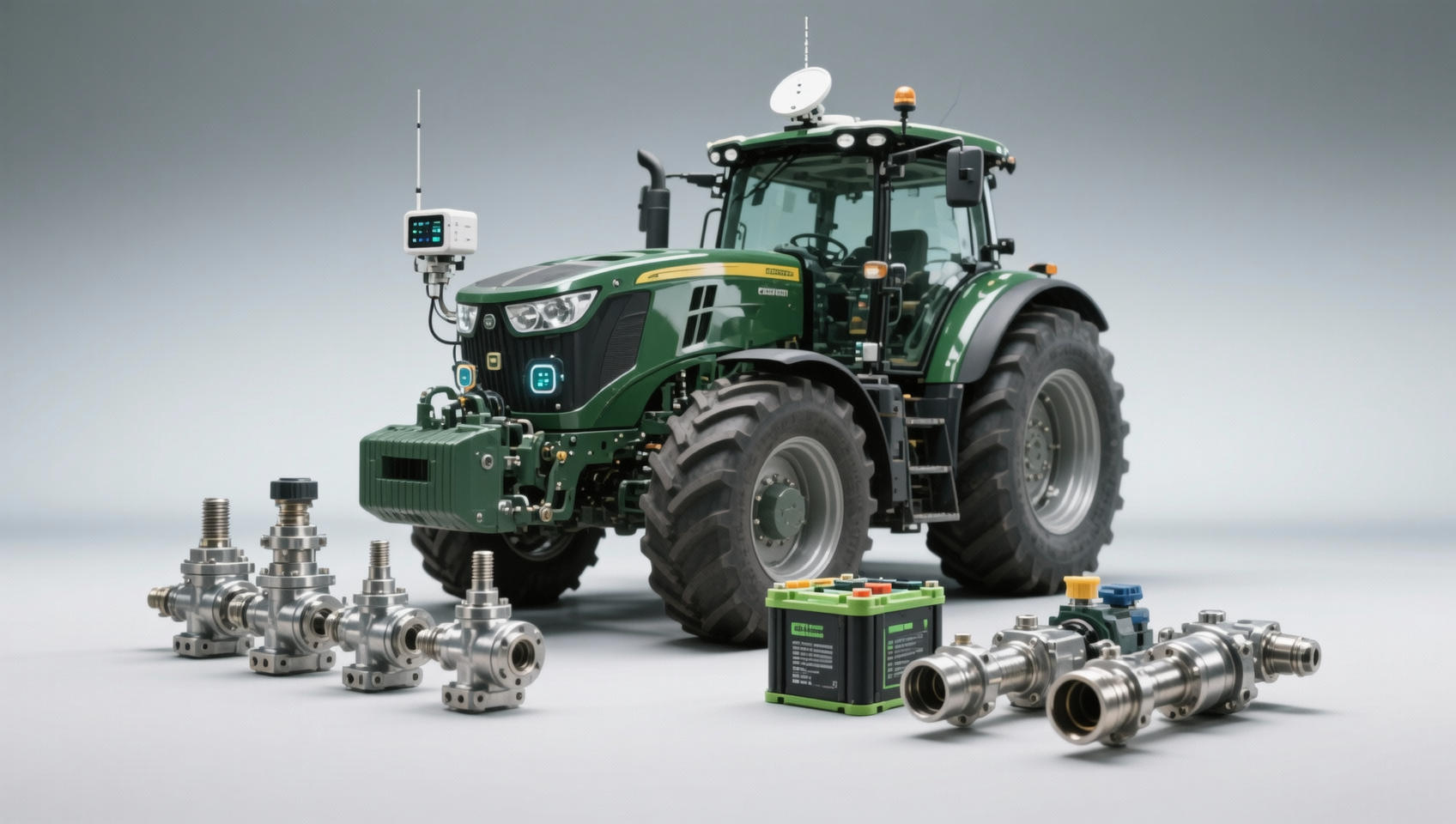
These firms rely on accurate, region-specific environmental data to configure hardware (e.g., variable-rate applicators, autonomous tractors) and embedded software for local agronomic conditions. The availability of standardized, real-time agri-meteorological data reduces reliance on third-party or fragmented local datasets, lowering integration costs and shortening time-to-deployment in target markets such as Latin America and Southeast Asia.
Food Processing Machinery Exporters
For equipment used in post-harvest handling—such as drying, sorting, grading, and storage systems—crop moisture content, maturity timing, and ambient humidity forecasts influence operational parameters and control logic. Access to calibrated harvest window predictions and regional climate models allows for pre-configured machine settings aligned with local harvest cycles, improving first-installation success rates and after-sales support efficiency.
Agri-Tech Platform Providers (SaaS & Data Services)
Providers offering farm management software, yield prediction tools, or advisory services can now integrate authoritative, high-resolution Chinese agri-meteorological data into their APIs or dashboards. This enhances model accuracy—especially in regions where national weather infrastructure is sparse—but requires verification of metadata provenance, temporal resolution, and spatial granularity before commercial reuse.
International Agricultural Service Integrators
Organizations that aggregate and resell weather, soil, and satellite data to national extension services or cooperatives (e.g., in Brazil, Indonesia, or Nigeria) may now incorporate this Chinese network’s outputs as a complementary layer. However, interoperability depends on adherence to international standards (e.g., OGC SensorThings API, WMO BUFR), which are not confirmed in the available information.
What Relevant Enterprises or Practitioners Should Monitor and Act On
Track official documentation on API specifications and data licensing terms
While the network’s data is described as “open API-accessible,” the scope of usage rights—particularly for commercial redistribution, derivative modeling, or offline caching—is not disclosed. Exporters and platform developers should monitor updates from China Meteorological Administration (CMA) or Ministry of Agriculture and Rural Affairs (MARA) regarding terms of service, rate limits, and attribution requirements.
Validate data relevance for priority export markets and key crops
The value of the service hinges on alignment with staple crop phenology (e.g., maize in Colombia, rice in Vietnam). Firms should assess whether observed variables—such as canopy temperature, evapotranspiration estimates, or soil moisture proxies—are available at sufficient spatial resolution (e.g., ≤1 km²) and temporal frequency (e.g., sub-daily) for their specific equipment or software use cases.
Distinguish between technical readiness and operational adoption
API availability does not equate to immediate integration readiness. Local partners—distributors, system integrators, or national agricultural agencies—may lack capacity or incentive to adopt new data feeds. Companies should map existing data workflows in target markets before assuming seamless substitution or enhancement.
Prepare internal technical validation protocols for data ingestion
Before incorporating the feed into product firmware or cloud services, teams should define test criteria: latency thresholds, missing-data tolerance, versioning consistency, and fallback mechanisms. Cross-referencing against independent sources (e.g., CHIRPS, ERA5-Land) during pilot phases will help quantify reliability gaps.
Editorial Perspective / Industry Observation
From an industry perspective, this milestone is best understood not as an immediate market shift, but as an infrastructure signal—one that reflects growing strategic emphasis on data sovereignty and cross-border interoperability in agri-tech. Analysis来看, the network’s global API rollout suggests China is positioning its observational assets as public goods within multilateral agricultural digitalization efforts—not merely as domestic infrastructure. Observation来看, early adoption will likely be led by vendors already operating in CMA-coordinated bilateral projects (e.g., under Belt and Road Agricultural Cooperation frameworks), rather than broad commercial uptake. Current more appropriate interpretation is that this represents a foundational capability now entering the validation phase—not yet a de facto standard, but increasingly a reference point for data sourcing decisions in emerging-market deployments.
Conclusion
This development signifies a structural expansion in globally accessible agricultural environmental data infrastructure—not a discrete product launch or policy change. Its near-term significance lies less in immediate revenue impact and more in reducing technical uncertainty for exporters seeking to deepen localization in climate-vulnerable, data-constrained regions. It is better understood today as an enabler under evaluation, not a solution already deployed.
Information Sources
Main source: Official announcement (date-stamped April 21, 2026) issued by China Meteorological Administration and Ministry of Agriculture and Rural Affairs. No third-party verification or independent technical audit reports are cited in the available information. Ongoing observation is warranted regarding API documentation completeness, long-term data continuity, and actual integration cases reported by recipient countries.
Deep Dive
Related Intelligence
 Precision FarmingHow Global Commerce Data Helps Precision Farming Equipment Managers Forecast Spare Part Demand AccuratelyAnalyst:Agri-Tech Strategist
 Precision FarmingHow much does deploying automated farming solutions manufacturer hardware increase labor efficiency on layer farms?Analyst:Agri-Tech Strategist
 Precision FarmingWhy automated farming solutions manufacturers prioritize modular design over full-stack integrationAnalyst:Agri-Tech Strategist