Carbon Fiber Composites for Lightweight Equipment Frames: Cost vs Value
Key Takeaways
- Chemical Intermediates: How Supply Stability Impacts Lead TimeLead Materials Scientist
- Plastic Masterbatch Selection Tips for Consistent Product ColorLead Materials Scientist
- Silicone Rubber for Harsh Environments: What Fails FirstChief Civil Engineer
- Titanium Dioxide in Coatings: How to Judge Grade DifferencesLead Materials Scientist
- Agrochemicals and Precision Farming: Where the Best Results Come FromAgri-Tech Strategist
- Chemical Market Signals to Watch Before Locking Annual ContractsLead Materials Scientist
- Chemical Trends That Could Reshape Industrial Sourcing in 2026Lead Materials Scientist
- Nano Materials in Coatings: Benefits, Limits, and Trade-OffsLead Materials Scientist
Industry Overview
We do not just publish news; we construct a high-fidelity digital footprint for our partners. By aligning with TNE, enterprises build the essential algorithmic "Trust Signals" required by modern search engines, ensuring they stand out to high-net-worth buyers in an increasingly crowded global digital landscape.
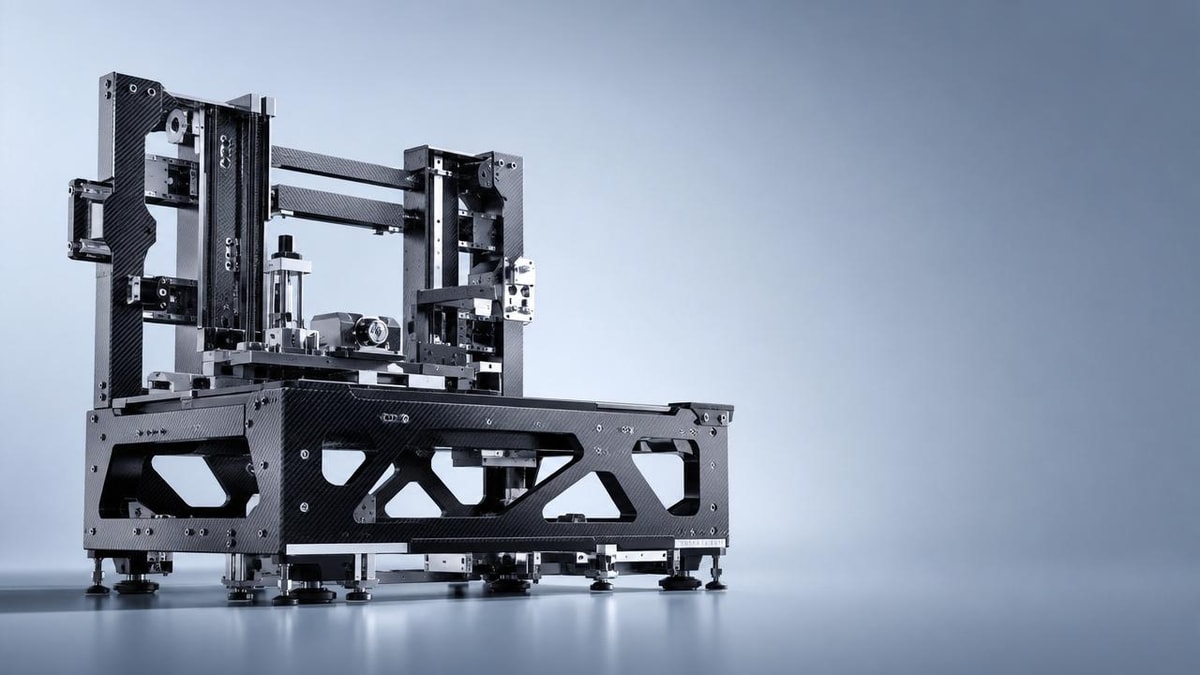
For enterprise decision-makers evaluating lightweight equipment frames, carbon fiber composites promise major performance gains—but does the investment justify the premium? This article examines the real cost vs value equation, from durability and weight reduction to lifecycle efficiency, helping industrial buyers make informed sourcing and engineering decisions in a competitive market.
Why the Cost vs Value Conversation Is Changing Now
The market discussion around carbon fiber composites has shifted. A few years ago, many industrial buyers treated them as a niche upgrade reserved for aerospace, motorsports, or premium automation systems. Today, the decision framework is broader and more practical. Equipment makers are under pressure to reduce energy use, improve machine speed, lower maintenance downtime, and design frames that support more sensors, actuators, and precision functions without adding structural mass.
That shift matters because lightweight equipment frames are no longer evaluated only by purchase price. They are increasingly judged by throughput, lifetime operating cost, installation flexibility, and the ability to support higher-value production. In this context, carbon fiber composites are moving from “expensive material choice” to “strategic engineering option” in sectors such as robotics, semiconductor handling, inspection systems, medical devices, mobile industrial platforms, and advanced manufacturing cells.
For enterprise decision-makers, the key trend is clear: the benchmark has changed from simple material substitution to total value creation. That does not mean carbon fiber is always the right answer. It means the old question—“Is it too costly?”—must be replaced by a sharper one: “Where does lightweight structural performance create measurable business return?”
The Signals Behind Rising Interest in Carbon Fiber Composites
Several industry signals are pushing this material category into mainstream evaluation. First, machine builders are designing for speed and precision at the same time. Traditional metal frames can provide strength, but in dynamic applications they may also introduce inertia, vibration, or energy penalties. Second, global supply chains are rewarding modularity and easy transport. A lighter frame can reduce logistics constraints and simplify field installation. Third, sustainability goals are changing procurement language: buyers now ask not only about material cost, but also about lifecycle efficiency and operational footprint.
Another important signal is the maturity of engineering support. Design teams today have better simulation tools, more application experience, and greater access to specialist fabricators than in the past. That lowers adoption friction. At the same time, the expansion of automation across mid-market manufacturers means more companies are evaluating whether a lighter, stiffer frame can improve cycle times or reduce wear on motion components.
These changes do not eliminate the premium attached to carbon fiber composites. They do, however, make the premium easier to evaluate in business terms rather than treating it as an abstract materials cost.
Where Carbon Fiber Composites Create Real Value
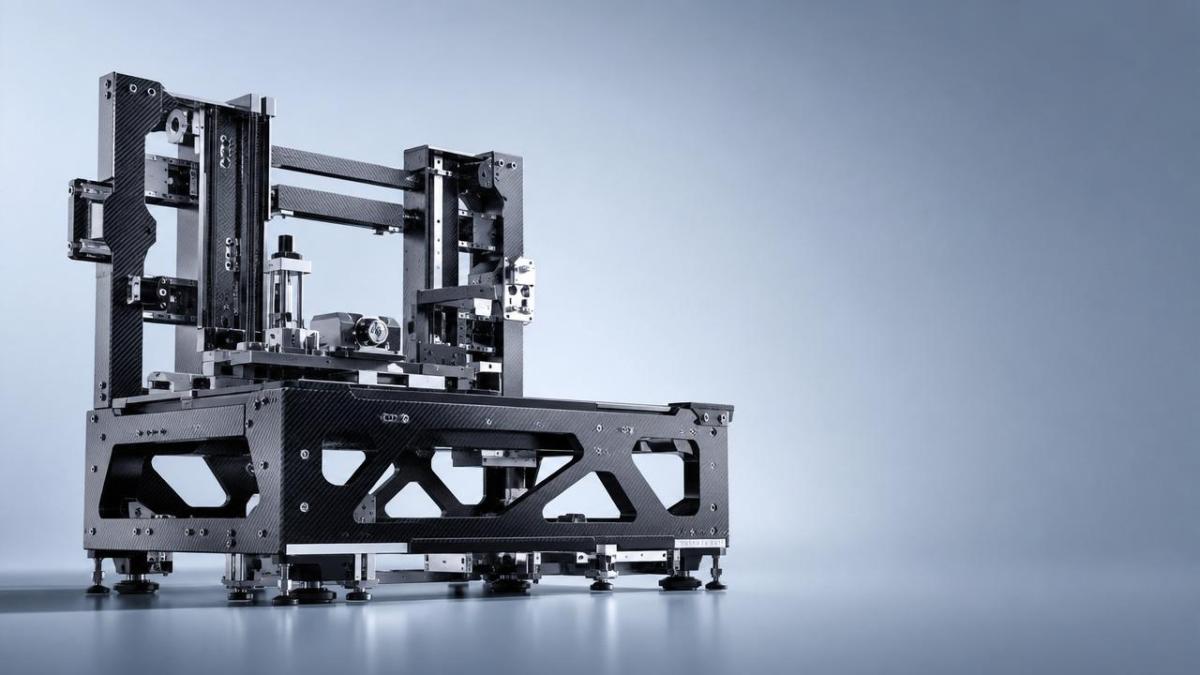
The strongest case for carbon fiber composites appears when frame performance directly affects revenue, product quality, or operating efficiency. In high-speed pick-and-place equipment, lower mass can enable faster acceleration and deceleration. In metrology or optical systems, vibration behavior and thermal stability may contribute to measurement consistency. In mobile or portable industrial equipment, every kilogram saved can improve handling, integration, or transport economics.
Value also rises when composite adoption triggers secondary benefits. A lighter frame may allow smaller motors, reduced bearing load, less structural reinforcement elsewhere, or lower facility handling requirements. In some cases, carbon fiber frames help manufacturers avoid overengineering with steel or aluminum, especially when the application demands both rigidity and low inertia. The result is not just a better frame, but a more balanced system architecture.
However, value is highly application-specific. If the frame is stationary, lightly loaded, and not linked to precision, mobility, or energy savings, the business case may be weak. This is why leading buyers increasingly use a performance-led screening process instead of assuming all lightweight structures deserve premium materials.
Why Upfront Cost Still Looks High—and Why That Can Be Misleading
There is no avoiding the headline issue: carbon fiber composites often carry higher raw material, tooling, fabrication, and quality-control costs than conventional frame materials. Specialized layup methods, curing cycles, bonded assemblies, and engineering validation can all raise the initial quote. For finance teams comparing line items, the premium may appear hard to justify.
Yet this view can be misleading when it isolates the frame from the wider equipment system. The true economic comparison should include at least five variables: frame weight, stiffness performance, effect on downstream components, operating energy, and expected service life. In many industrial projects, cost overruns do not come from material selection alone. They come from slow commissioning, vibration issues, excessive maintenance, transport complexity, or missed output targets. If a composite frame reduces these risks, the price difference may be less significant than it first appears.
A second source of confusion is that not all composite solutions are engineered to the same standard. Poorly specified parts can lead to underperformance, difficult repairs, or quality inconsistency. That is why value analysis must include supplier capability, process repeatability, joining methods, and field support—not just a comparison of kilograms and price per unit.
Who Feels the Impact Most Across the Business
The move toward carbon fiber composites affects more than the engineering team. It changes decision criteria across procurement, operations, product strategy, and after-sales support. Companies that treat the material question as a purely technical issue often miss important organizational impacts.
The Most Important Drivers Behind the Shift
The trend is not being driven by novelty. It is being driven by converging operational and market pressures. One driver is performance density: more companies want compact equipment that does more in less space. Another is competitive lead time pressure, which rewards frame designs that are easier to ship and deploy. A third is rising interest in premium industrial products where precision, speed, and advanced design aesthetics influence buyer perception.
There is also a strategic driver: resilience through smarter engineering. In industries where machine output is high-value, a small improvement in precision or cycle time can justify significant material investment. That is especially true when equipment is sold into sectors where downtime is expensive and technical differentiation is visible to the customer.
At the same time, suppliers of carbon fiber composites are improving their ability to deliver semi-custom and application-specific parts. This does not mean commoditization is near. But it does mean access is improving for buyers that were previously excluded by complexity.
What Enterprise Buyers Should Evaluate Before Moving Forward
A disciplined decision process starts with business impact, not materials enthusiasm. Buyers should first identify whether frame weight directly influences machine economics. If lower mass does not affect speed, precision, portability, or operating efficiency, the project may not warrant composites. If it does, the next step is to quantify where value appears and how quickly it can be realized.
The second priority is supplier assessment. Composite frames depend heavily on manufacturing control. Enterprise buyers should review design collaboration capability, fiber orientation strategy, quality assurance approach, joining and repair methods, and long-term production reliability. A low quote from an inexperienced fabricator can create more cost later through inconsistency or redesign.
Third, companies should test whether the composite frame enables system simplification. If it allows smaller actuators, reduced support structures, easier installation, or better logistics, these indirect gains may become central to the ROI case. The strongest sourcing strategies capture both direct and indirect value rather than looking only at material substitution.
A Practical Framework for Judging Cost vs Value
For most organizations, the most useful approach is a staged decision model. Instead of asking whether carbon fiber composites are “worth it” in general, ask whether they are worth it in this application, at this production scale, under these operating conditions.
What to Watch Next in the Market
Looking ahead, the most important signal is not whether demand for carbon fiber composites rises in absolute terms, but where it becomes standard in specification language. Watch sectors where higher automation, mobile platforms, and precision handling are converging. Those are the environments where lightweight equipment frames are most likely to shift from optional enhancement to expected capability.
Also watch buyer behavior. As procurement teams become more comfortable with lifecycle value models, premium materials may face less resistance when linked to measurable operational outcomes. At the same time, enterprises will likely become stricter about vendor validation, documentation, and performance proof. In other words, market acceptance may grow, but so will scrutiny.
A final signal is design integration. The companies gaining the most value will not simply replace aluminum or steel with composites in an unchanged frame. They will redesign around the material’s strengths. That is where the largest gap will emerge between firms that merely buy composite parts and firms that use them to create smarter equipment platforms.
Strategic Takeaway for Decision-Makers
The cost vs value debate around carbon fiber composites is becoming more strategic because industrial competition is becoming more performance-driven. For lightweight equipment frames, the material premium is real, but so is the potential value when lower weight improves precision, speed, energy efficiency, transportability, or market positioning. The most important judgment is not whether composites are expensive. It is whether conventional frame materials are limiting business performance in ways that are no longer acceptable.
If your enterprise wants to judge the trend’s relevance to its own business, focus on a few questions: Does frame weight constrain output or accuracy? Can lighter structures reduce system complexity? Are customers willing to pay for performance gains? And can qualified suppliers support repeatable production at the required scale? The answers to those questions will reveal whether carbon fiber composites are a premium cost—or a high-value strategic investment.
Deep Dive
Related Intelligence
 Electric MachineryElectric motors rated IP67 — how deep is the water resistance really tested?Analyst:Chief Civil Engineer
 Electric MachineryElectric Motors in Poultry Ventilation Fans — Higher Efficiency, Lower Dust ToleranceAnalyst:Chief Civil Engineer
![]() Electric MachineryChina’s Green Smart Ship Tech Rules Impact Marine Equipment ExportAnalyst:Chief Civil Engineer
Electric MachineryChina’s Green Smart Ship Tech Rules Impact Marine Equipment ExportAnalyst:Chief Civil Engineer