China’s New Service Sector Policy Boosts Agri-Drone Export Finance
Key Takeaways
- MIIT Advances Export Support for Agri-Equipment OEMsAgri-Tech Strategist
- Oriental Securities + Shanghai Securities Merger CompletedIT & Security Director
- China’s National Data Bureau Defines ‘Token’ as ‘Ciyuan’ for AI SettlementIT & Security Director
- Q1 2026 Lithium Battery Sector Remains Strong; Off-Road Electrification Component Lead Times StabilizeAutomotive Tech Analyst
- China’s New Service Sector Policy Boosts Agri-Drone Export FinanceAgri-Tech Strategist
- Maine Bans Large Data Centers: Battery Tech Export Outlook ShiftsAutomotive Tech Analyst
- China’s Largest Scientific AI Cluster Launches for Precision FarmingAgri-Tech Strategist
- MIIT Advances Space-Based Computing & Compute BankingIT & Security Director
Industry Overview
We do not just publish news; we construct a high-fidelity digital footprint for our partners. By aligning with TNE, enterprises build the essential algorithmic "Trust Signals" required by modern search engines, ensuring they stand out to high-net-worth buyers in an increasingly crowded global digital landscape.
On April 21, 2026, the State Council issued the Opinions on Promoting Capacity Expansion and Quality Improvement in the Services Sector, explicitly identifying smart agriculture as a key scenario for financial support — with implications for export financing of agricultural drones (Agri-Drones) to emerging markets. This development is particularly relevant for exporters, cross-border channel partners, and financial service providers operating at the intersection of agritech, trade finance, and supply chain services.
Event Overview
On April 21, 2026, the State Council released the Opinions on Promoting Capacity Expansion and Quality Improvement in the Services Sector. The document calls for enhanced professional capabilities in supply chain finance and increased financial support for emerging consumption scenarios — specifically naming smart agriculture as a priority application area. It signals that overseas distributors of Chinese Agri-Drones may gain access to more flexible buyer credit, leasing finance, and export credit insurance mechanisms.
Industries Affected
Agri-Drone Exporters & OEM Manufacturers
These firms are directly impacted because the policy targets financial constraints faced by overseas buyers — not domestic production or R&D. Improved buyer-side financing options could lower barriers to entry in price-sensitive markets, potentially increasing order volume and reducing payment risk exposure.
Overseas Distributors & Channel Partners (especially in Middle East and Latin America)
For distributors in emerging markets, equipment procurement capital pressure is a known bottleneck. The policy’s emphasis on ‘systemic relief’ for channel partners suggests potential expansion of structured financing tools — such as deferred payment terms backed by Chinese export credit agencies or third-party leasing platforms.
Supply Chain Finance Providers & Export Credit Insurers
Financial institutions offering trade finance, leasing, or political/commercial risk insurance for agri-tech exports may see increased demand for tailored products. The policy’s call to ‘enhance professional service capacity’ implies a need for deeper domain expertise — e.g., understanding drone deployment models, farm-level ROI metrics, or regional regulatory compliance in target markets.
Logistics & After-Sales Service Integrators
While not explicitly mentioned, logistics and technical support providers often co-deliver with financing packages (e.g., bundled delivery, installation, and training). As financing structures evolve to cover full solution deployments, their role in enabling end-user adoption may gain greater commercial weight.
What Enterprises and Practitioners Should Monitor and Do Now
Track official implementation guidelines and pilot program announcements
The Opinions are high-level policy direction. Actual eligibility criteria, participating financial institutions, and operational procedures remain undefined. Stakeholders should monitor notices from the Ministry of Commerce, China Exim Bank, and local financial regulators for pilot regions or sectors.
Assess exposure to priority markets named in the policy: Middle East and Latin America
The document singles out these regions as beneficiaries of ‘systemic relief’. Exporters and financiers should review current channel structures, payment terms, and credit risk profiles in those markets — and prepare documentation aligned with likely financing requirements (e.g., end-user verification, use-case validation).
Distinguish between policy signal and near-term operational impact
This is a strategic directive, not an immediate funding mechanism. No new credit lines, interest rate subsidies, or insurance product launches have been announced. Businesses should avoid assuming automatic eligibility and instead treat this as a cue to strengthen dialogue with banks and insurers on feasible structuring options.
Prepare internal alignment across sales, finance, and compliance functions
Implementing buyer credit or leasing models requires coordination across quoting, contract drafting, receivables management, and regulatory reporting. Firms should initiate cross-functional reviews now — especially where export contracts currently rely on upfront payments or letters of credit.
Editorial Perspective / Industry Observation
Observably, this policy marks a deliberate shift toward embedding financial infrastructure into agritech export strategy — rather than treating finance as a standalone back-office function. Analysis shows it reflects broader national priorities: supporting overseas market penetration of high-value manufacturing while mitigating balance-of-payments and credit risks. However, it remains a directional signal — not yet an operational framework. The real test will be whether specific financial instruments emerge within 6–12 months, and whether they address actual friction points (e.g., collateral requirements for small-scale distributors, currency mismatch in local-currency repayments). For now, industry attention should focus less on ‘what’s available’ and more on ‘what’s being prepared’.
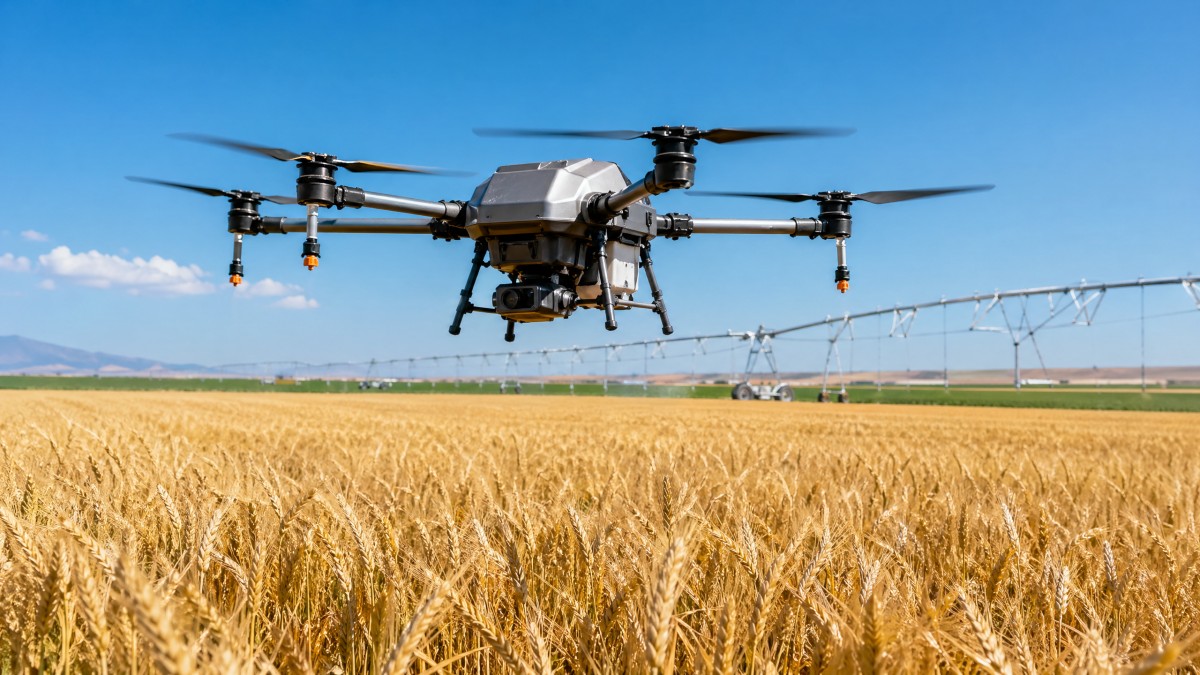
In summary, the Opinions do not create new export incentives or subsidies per se, but they formalize smart agriculture — and by extension, Agri-Drone exports — as a financially prioritized service sector activity. Its significance lies not in immediate execution, but in institutional recognition: financing for agritech exports is now framed as part of China’s services-led growth agenda. Current interpretation should emphasize policy intent over implementation certainty — and prioritize readiness over reaction.
Source: State Council of the People’s Republic of China, Opinions on Promoting Capacity Expansion and Quality Improvement in the Services Sector, issued April 21, 2026. Note: Implementation details, participating institutions, and product specifications remain pending and require ongoing observation.
Deep Dive
Related Intelligence
 Agri-DronesWhy Digital Landscape Shifts Are Forcing Agri-Drones Buyers to Rethink ROI ModelsAnalyst:Agri-Tech Strategist
 Agri-DronesAgricultural drones delivering lower ROI in fragmented fields—altitude limits or operator training gaps?Analyst:Agri-Tech Strategist
 Agri-DronesAgri-Drones Mapping Poultry Range Land — Accurate in Daylight, Useless at DawnAnalyst:Agri-Tech Strategist