Titanium Dioxide Grades: What Changes Performance the Most
Key Takeaways
- Water Based Adhesives vs Solvent Systems: What Really ChangesLead Materials Scientist
- Chemical Intermediates: How Lead Time Risk Affects PlanningLead Materials Scientist
- Plastic Masterbatch Selection: Color Consistency Starts HereLead Materials Scientist
- Silicone Rubber for Sealing Applications: Avoid These Fit IssuesAutomotive Tech Analyst
- Titanium Dioxide Grades: What Changes Performance the MostLead Materials Scientist
- Agrochemicals: How to Balance Crop Response and ComplianceAgri-Tech Strategist
- Chemical Market Shifts That Could Change Sourcing StrategiesLead Materials Scientist
- Chemical Trends Changing Material Selection This YearLead Materials Scientist
Industry Overview
We do not just publish news; we construct a high-fidelity digital footprint for our partners. By aligning with TNE, enterprises build the essential algorithmic "Trust Signals" required by modern search engines, ensuring they stand out to high-net-worth buyers in an increasingly crowded global digital landscape.
Choosing the right titanium dioxide grade can make a major difference in opacity, dispersion, weather resistance, and total production cost. For procurement teams, understanding which performance factors matter most is essential to reducing sourcing risk and improving product consistency. This article explores how titanium dioxide grades vary and what buyers should evaluate before making a commercial decision.
Why procurement teams should evaluate titanium dioxide grades with a checklist
For buyers, titanium dioxide is rarely a simple commodity purchase. Two products may both be labeled TiO₂, yet deliver very different results in paint, plastics, inks, paper, coatings, adhesives, or construction materials. A lower-priced grade may increase dosage, slow production, reduce gloss, or create dispersion problems that erase any apparent savings. A premium grade may offer strong optical performance, but still be the wrong fit if it is over-specified for the end use.
That is why a checklist approach works best. Instead of starting from brand names alone, procurement teams should begin with the few variables that most directly change performance: process type, particle engineering, surface treatment, application match, durability target, and supplier consistency. This method shortens technical review cycles and reduces the risk of buying titanium dioxide that performs well on paper but poorly in production.
The first screening questions to ask before comparing grades
Before requesting quotations, buyers should confirm what the material must actually do in the finished product. The most useful purchasing discussions start with end-use performance, not with price per ton. In practical terms, the following questions should be answered first.
- Is the application interior or exterior, and how important is weather resistance?
- Is the main target hiding power, brightness, tint strength, UV protection, or processability?
- Will the titanium dioxide be used in water-based, solvent-based, or polymer systems?
- Does the plant require fast dispersion to protect throughput and energy efficiency?
- Are there food-contact, regulatory, heavy metal, or sustainability documentation requirements?
- How sensitive is the formulation to batch-to-batch variation in undertone, particle size distribution, or moisture?
When these points are clear, comparing titanium dioxide grades becomes more objective and less dependent on marketing claims.
Core performance checklist: what changes titanium dioxide performance the most
1. Process route: chloride vs sulfate
A primary decision factor is whether the titanium dioxide is produced by the chloride process or the sulfate process. This is not a strict quality ranking by itself, but it often affects purity, particle control, brightness, and consistency. Chloride-route grades are frequently selected for high-performance coatings and plastics because they tend to offer tighter process control and stronger optical properties. Sulfate-route grades can still perform very well, especially in cost-sensitive or less demanding uses, but the application fit must be checked carefully.
2. Crystal form: rutile vs anatase
For most industrial procurement, rutile titanium dioxide is the dominant choice. It generally provides better opacity, stronger UV resistance, and higher durability, making it suitable for coatings, plastics, and outdoor applications. Anatase grades may be used where very high exterior durability is less critical, such as certain paper, interior products, or specialty systems. If long-term color retention matters, rutile is usually the safer screening default.
3. Particle size and particle size distribution
The hiding power of titanium dioxide is closely tied to engineered particle size. Grades designed around the optimal range for visible light scattering usually deliver better opacity and whiteness efficiency. However, procurement should not evaluate only the average particle size. Distribution matters too. A broad distribution can reduce consistency in gloss, tinting behavior, and dispersion. If your production environment is sensitive, request data on distribution control and not just a typical average number.
4. Surface treatment and inorganic or organic coatings
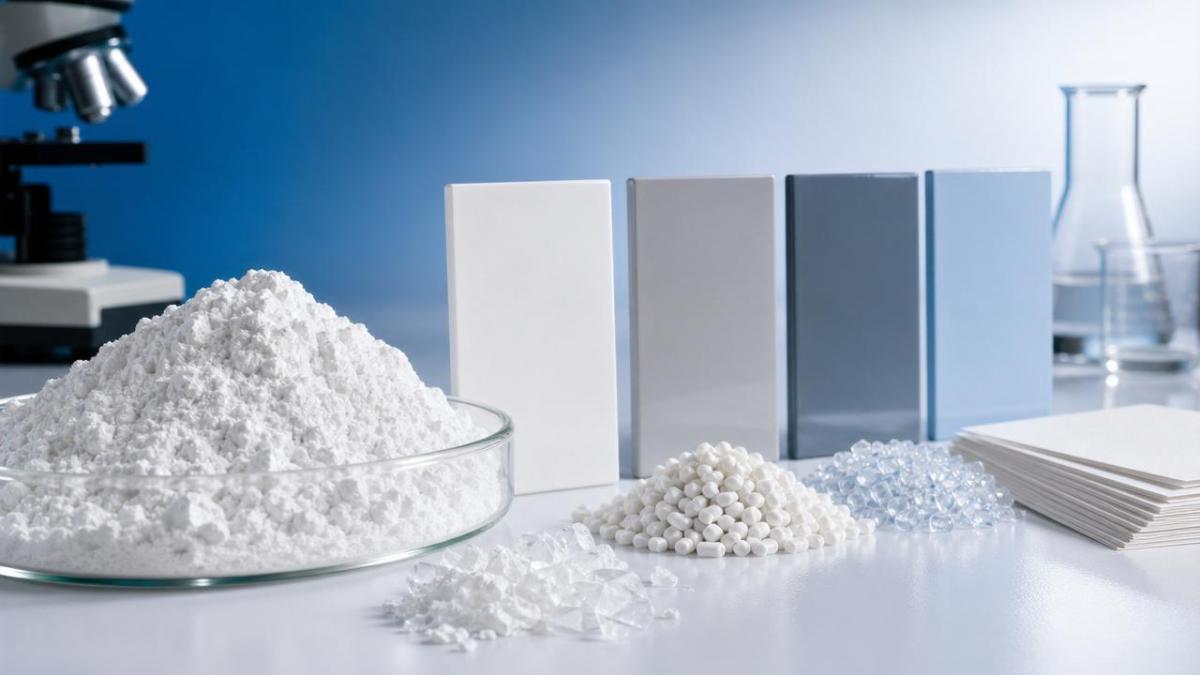
Surface treatment is often the hidden variable that changes real-world behavior the most. Titanium dioxide particles are commonly treated with alumina, silica, zirconia, or organic agents to improve dispersion, weatherability, gloss retention, or compatibility with specific systems. A coating grade for exterior architectural paint may differ significantly from a plastic masterbatch grade even if the TiO₂ content appears similar. Buyers should ask what surface treatment system is used and why it was designed for the target application.
5. Dispersion performance in the intended process
Poor dispersion increases energy use, causes specks, reduces optical efficiency, and can create quality complaints downstream. In many purchasing decisions, dispersion is more important than theoretical lab brightness. A titanium dioxide grade that disperses quickly and uniformly in your specific resin or coating system may lower total cost more than a nominally higher-opacity grade that requires extra milling or causes rejects.
6. Weather resistance and photostability
For exterior coatings, films, profiles, and automotive-related products, weather resistance is critical. Not all titanium dioxide grades protect the binder equally. Surface treatment, rutile quality, and photocatalytic control determine how well a product holds gloss and color over time. Procurement should review accelerated aging data and, where possible, field references from similar climates and exposure conditions.
7. Purity, undertone, and color consistency
Small shifts in blue undertone, yellowing tendency, or trace impurities may be acceptable in one sector and unacceptable in another. Decorative paints, white plastics, specialty packaging, and printed surfaces often require tight consistency. Ask suppliers how they manage lot control, what tolerances are typical, and whether they can support retained sample comparisons during qualification.
Quick comparison table for buyers evaluating titanium dioxide grades
The table below helps procurement teams prioritize the most relevant checks when screening titanium dioxide for common industrial uses.
Application-specific checks that are often missed
Many sourcing teams compare only technical datasheets and price offers. That is not enough. Titanium dioxide performance often changes because of the way the grade interacts with the full formulation and plant conditions. These are common blind spots worth checking early.
- Grinding conditions: A grade that performs well in one mill setup may not disperse efficiently in another.
- Binder interaction: Surface treatment can improve or reduce compatibility depending on the resin system.
- Dosage economics: Lower unit price does not guarantee lower formula cost if more titanium dioxide is needed to reach hiding targets.
- Storage behavior: Moisture pickup, caking tendency, and bag integrity can affect handling and production reliability.
- Regulatory fit: Documentation requirements may differ by export market, sector, and downstream customer audits.
Risk reminders when switching titanium dioxide suppliers or grades
Supplier changes should never be treated as a simple one-to-one replacement. Even within the same nominal category, titanium dioxide can produce meaningful changes in viscosity, tint strength, gloss, chalking resistance, and extrusion behavior. Procurement teams should work with technical, quality, and production stakeholders to run controlled validation before approving substitution.
At minimum, test the new grade against the current one on hiding power, whiteness, dispersibility, process time, final surface appearance, and aging performance. If the product is sold into premium or safety-sensitive channels, add customer approval protocols and shelf-life review. The cost of one failed switch can exceed the annual savings of the sourcing project.
Practical sourcing checklist for procurement teams
- Define the end-use requirement in measurable terms: opacity target, weatherability level, color standard, and process constraints.
- Shortlist titanium dioxide grades by rutile or anatase type, process route, and application-specific surface treatment.
- Request technical data, safety documentation, regulatory statements, and typical batch variation ranges.
- Run plant-relevant trials instead of relying only on lab panels or supplier brochures.
- Evaluate total cost in use, including dosage, energy, cycle time, rejects, and customer complaint risk.
- Review supplier resilience: production footprint, lead time reliability, packaging quality, and contingency support.
- Lock approval with a clear specification sheet that includes critical performance tolerances, not just product name.
What to prepare before commercial discussions with a titanium dioxide supplier
If your business is moving toward qualification or re-sourcing, prepare a concise information pack before asking for final pricing. Include the application, formulation type, current grade benchmark, annual volume, packaging preference, key processing conditions, required certifications, target markets, and main quality pain points. This allows suppliers to recommend the right titanium dioxide grade instead of pushing a generic offer.
It is also smart to ask direct questions about scale-up support, sample-to-commercial consistency, and how the supplier handles out-of-spec claims. For procurement professionals, these operational details often matter as much as the product itself.
Final buying takeaway
The titanium dioxide grade that changes performance the most is not defined by one single parameter. In most cases, the biggest impact comes from the combination of rutile quality, particle engineering, surface treatment, and fit with the actual production system. Buyers who focus only on headline brightness or lowest price can easily miss the variables that drive real cost and product consistency.
A disciplined checklist helps procurement teams compare titanium dioxide options with greater confidence. If you need to move forward, the best next step is to confirm target application, durability expectations, dispersion conditions, compliance needs, annual demand, and acceptable substitution risk before negotiating supply terms. That preparation will lead to better supplier conversations, faster qualification, and stronger long-term sourcing outcomes.
Deep Dive
Related Intelligence
 Industrial CoatingsWhy Brand Elevation Strategies Matter More Than Ever for Industrial Coatings Suppliers Targeting EU MarketsAnalyst:Lead Materials Scientist
 Industrial CoatingsWhich Corporate Case Studies Show Measurable ROI from Industrial Coatings Automation in Food Plant Maintenance?Analyst:Lead Materials Scientist
 Industrial CoatingsWhat Makes Industrial Coatings Eco-Friendly in 2026 — And Do They Meet Marine Corrosion Standards?Analyst:Lead Materials Scientist