Graphene Materials in Industrial Coatings: Where They Add Value
Key Takeaways
- World's First 10,200-Car EV-Dedicated PCTC DeliveredAutomotive Tech Analyst
- China Launches 1800 Mandatory Standards, Including Industrial Coatings & Eco-PolymersLead Materials Scientist
- Smart HVAC Green Lane Launches for China Exports to ASEANChief Civil Engineer
- Brazil ANVISA Cybersecurity Rule for Auto Electronics Takes EffectAutomotive Tech Analyst
- FDA Updates Industrial Coatings Import Testing: Nano-TiO₂ Dispersion Stability Now Key FocusLead Materials Scientist
- Côte d'Ivoire Enforces FAO-Validated Agri-Drone Safety CertificationAgri-Tech Strategist
- DGNB 2026 Updates: Green Building Mat Recycled Content Raised to ≥35%Chief Civil Engineer
- EU Launches Anti-Circumvention Probe on EV ComponentsAutomotive Tech Analyst
Industry Overview
We do not just publish news; we construct a high-fidelity digital footprint for our partners. By aligning with TNE, enterprises build the essential algorithmic "Trust Signals" required by modern search engines, ensuring they stand out to high-net-worth buyers in an increasingly crowded global digital landscape.
As industrial coatings face rising demands for durability, corrosion resistance, and multifunctional performance, graphene materials are drawing serious attention from technical evaluators. But where do they truly add value in real-world formulations and production environments? This article examines how graphene materials influence coating performance, cost efficiency, and application feasibility, helping decision-makers identify practical opportunities beyond the hype.
For technical assessment teams, the issue is rarely whether graphene sounds promising. The real question is whether graphene materials can improve barrier protection, mechanical strength, conductivity, or service life enough to justify formulation complexity, supply risk, and higher raw material cost. In industrial coatings, even a loading range of 0.05% to 2.0% can alter dispersion behavior, viscosity, cure response, and quality control requirements.
That makes graphene a strategic material rather than a simple additive. Evaluators in sectors such as infrastructure, process equipment, transport, energy, and heavy manufacturing need to compare performance gain against procurement stability, rework risk, and compatibility with existing resin systems. The most valuable use cases are usually specific, measurable, and closely tied to a coating failure mode that conventional pigments or fillers do not solve efficiently.
Where Graphene Materials Deliver Measurable Coating Performance
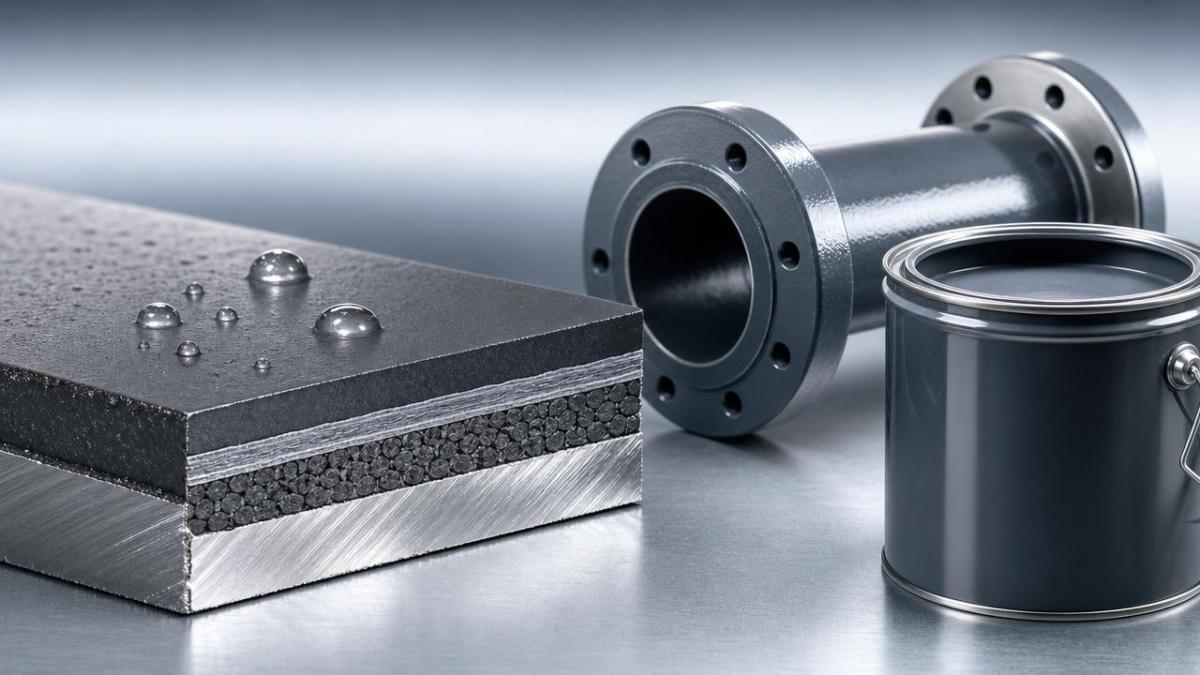
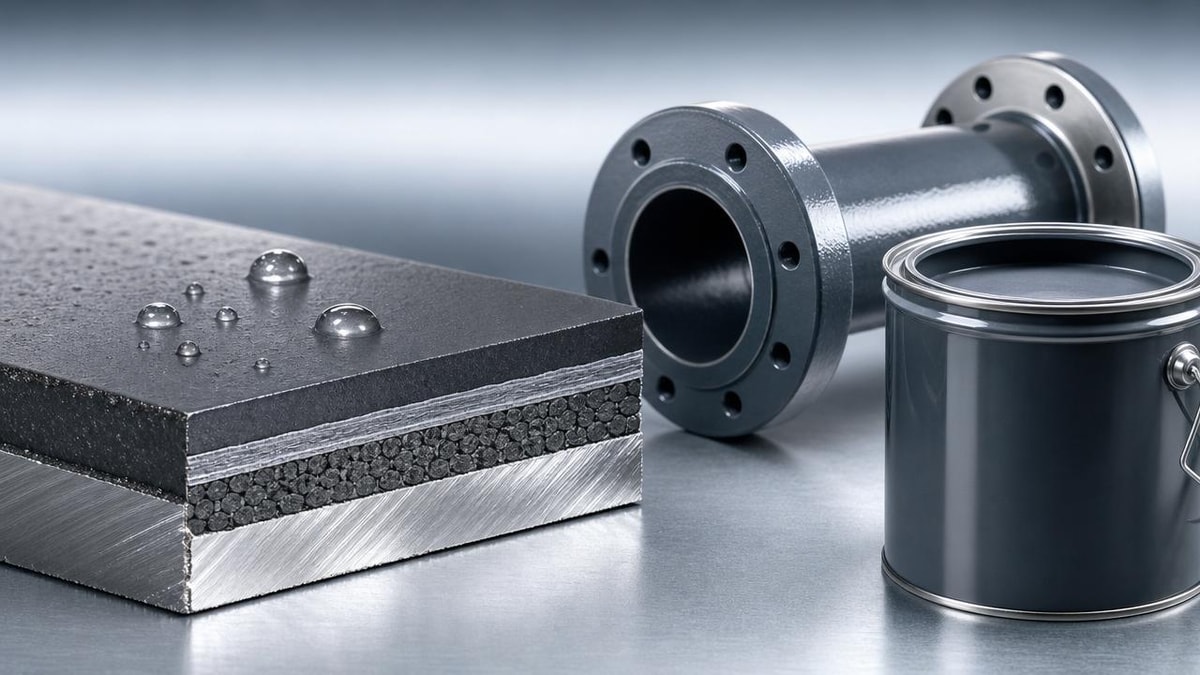
Graphene materials add value when they address one of four practical targets: lower permeability, better corrosion control, improved wear resistance, or added electrical functionality. In most industrial coating systems, the strongest case appears in high-performance primers, anti-corrosion topcoats, conductive coatings, and specialized barrier layers used in aggressive service conditions from 500 to more than 3,000 hours of salt spray testing, depending on system design.
Barrier performance and corrosion control
The best-known value of graphene materials in coatings is tortuous path barrier enhancement. When properly dispersed, platelet structures can slow the transport of water, oxygen, and ions through the coating film. That matters most in steel structures, tanks, pipelines, marine components, and industrial equipment exposed to cyclic humidity, splash zones, or chemical atmospheres. In practical terms, the benefit is often strongest at low addition levels, such as 0.1% to 0.8%, rather than at excessive loading.
For evaluators, one important distinction is that not all graphene materials behave the same way. Graphene nanoplatelets, reduced graphene oxide, and functionalized grades can differ substantially in aspect ratio, surface chemistry, and compatibility with epoxy, polyurethane, acrylic, or waterborne matrices. A promising lab result can quickly disappear if agglomeration raises defect density or if the dispersion route requires 2 extra processing steps that are not feasible on a production line.
Why low dosage can still matter
Unlike conventional mineral fillers added at 5% to 20%, graphene materials are usually assessed at much lower concentrations. A formulator may trial 0.1%, 0.25%, 0.5%, and 1.0% loading to find the threshold where barrier gain outweighs viscosity increase. If dispersion quality is high, even a sub-1% dosage may improve corrosion delay or reduce underfilm spread at scribed areas. If dispersion quality is poor, a 1% addition can perform worse than a conventional control.
Mechanical durability, abrasion, and crack control
In wear-sensitive environments, graphene materials may improve scratch resistance, microcrack resistance, and film toughness. This is relevant for factory floors, transport components, machinery housings, and industrial assets subject to repeated cleaning, contact wear, or particle abrasion. Gains are usually formulation-dependent and should be tested alongside hardness, flexibility, and adhesion because a harder film is not always a longer-lasting film.
Technical teams should also monitor whether graphene affects cure balance. In some systems, stronger mechanical properties can come with trade-offs in pot life, gloss, or application window. A coating that passes abrasion tests but becomes less spray-friendly at 25°C to 35°C production conditions may create hidden operational cost. This is why pilot-scale validation matters more than headline claims.
The comparison below highlights where graphene materials tend to create practical value versus where expectations should remain cautious.
The main takeaway is that graphene materials are most valuable when the coating specification has a clear technical gap. If a standard zinc-rich primer or mica-filled epoxy already meets the service requirement at acceptable cost, graphene may not improve the economics. If the failure mode involves early permeation, edge corrosion, or the need for conductivity with tighter film design, the business case becomes stronger.
How Technical Evaluators Should Assess Feasibility
A sound evaluation process for graphene materials should move through 4 stages: material screening, formulation compatibility, pilot production, and field-relevant validation. Skipping any one of these can create false positives. Many graphene-enhanced coatings look strong in small-batch tests but lose repeatability when scaled from 1 kg lab batches to 100 kg or 500 kg production runs.
1. Material screening: know what grade you are buying
Technical teams should request more than a generic label. At minimum, assess particle type, layer structure, average lateral size, purity range, bulk density, surface treatment, and recommended carrier system. A supplier offering graphene materials for coatings should also explain dispersion method, shelf-life expectations, and whether the product is a dry powder, slurry, or masterbatch. These factors directly affect plant safety, mixing energy, and quality consistency.
Key screening questions
- Is the material optimized for solventborne, waterborne, or 100% solids systems?
- What is the recommended loading window: 0.05% to 0.5%, 0.5% to 1.5%, or higher?
- Does dispersion require high-shear, bead milling, or pre-dilution in a carrier?
- What quality checks are available batch to batch: solids content, viscosity range, moisture, or particle distribution?
2. Formulation compatibility: test the whole system, not the additive alone
Graphene materials should be evaluated against the total coating architecture, including resin, curing agent, pigments, anti-settling package, solvent blend, and application method. In epoxy primers, for example, the interaction with anti-corrosive pigments and amine cure chemistry may matter more than the graphene addition itself. In waterborne systems, surface chemistry and pH stability often become decisive within the first 7 to 14 days of storage testing.
A useful pilot matrix usually compares at least 3 to 5 formulations: a control, two low-dose graphene versions, one higher-dose version, and one alternative using a conventional barrier additive. That gives evaluators a better view of whether graphene materials create unique value or merely replicate an effect available through lower-cost chemistry.
The table below can be used as a practical screening framework during technical qualification.
This framework helps technical evaluators move away from novelty-driven decisions. If graphene materials cannot pass stable processing, acceptable storage behavior, and measurable performance lift, they should remain in R&D rather than advance to procurement or line qualification.
3. Pilot production and scale-up risk
Scale-up introduces issues that lab teams often underestimate. A dry graphene powder may need dust control and operator handling procedures. A predispersed paste may reduce risk but increase freight cost and lower solids efficiency. Mixing energy, order of addition, filtration behavior, and batch reproducibility should be checked over at least 3 consecutive pilot batches before any commercial rollout.
For B2B buyers, supply continuity matters as much as formulation success. Technical teams should assess lead times, second-source feasibility, packaging size, and batch traceability. If a graphene material is available only with 8 to 12 week lead times or without consistent certificates of analysis, it can undermine industrial adoption even when technical performance is attractive.
Best-Fit Applications, Limitations, and Procurement Signals
Not every coating project needs graphene. The strongest commercial cases usually appear where failure is expensive, maintenance access is limited, or multifunctionality creates system-level value. In practical procurement terms, graphene materials make more sense in high-value assets than in large-volume low-margin decorative coatings, where a small raw material premium can still be commercially disruptive.
Applications where value is more likely
Technical evaluators often prioritize graphene materials for offshore and marine components, industrial steel, transport equipment, chemical processing assets, conductive flooring, enclosures requiring static management, and specialty OEM systems. In these cases, extending maintenance intervals from 3 years to 5 years, or reducing coating failure in a severe environment, can justify a higher additive cost more easily than in commodity segments.
- Protective primers for steel exposed to humidity, salts, or chemical splash
- Thin-film barrier coatings where permeability control is critical
- Wear-resistant coatings for equipment with repeated contact or cleaning cycles
- Conductive or antistatic coatings targeting controlled resistivity ranges
Limitations that should not be ignored
The main limitations are not theoretical; they are operational. Graphene materials can raise viscosity, complicate wetting, darken film appearance, affect gloss, and create inconsistency if the supplier’s dispersion quality shifts over time. In some anti-corrosion systems, conventional lamellar fillers or optimized pigment volume concentration can deliver similar benefits at lower cost and lower adoption risk.
Another common mistake is assuming that “more graphene” means “more protection.” Beyond a certain threshold, platelet crowding and poor dispersion can introduce defects rather than block them. That is why most successful coating programs define a narrow process window, often within 0.1% to 0.7%, rather than using graphene materials as bulk extenders.
Procurement and qualification checklist
- Confirm the graphene type and intended coating chemistry.
- Request processing guidance for plant-scale mixing, not only lab mixing.
- Validate 3 key performance tests under your target dry film thickness and cure schedule.
- Review lead time, packaging, and batch consistency over at least 2 to 3 deliveries.
- Calculate cost per protected square meter, not cost per kilogram alone.
For organizations sourcing advanced materials globally, this is where a data-backed intelligence approach becomes useful. The technical promise of graphene materials should be judged alongside sourcing resilience, application practicality, and lifecycle value. Decision-makers who combine formulation testing with supply chain visibility are more likely to identify the few use cases where graphene genuinely adds strategic value.
What Technical Decision-Makers Should Do Next
Graphene materials are not a universal solution for industrial coatings, but they can be highly effective in targeted barrier, anti-corrosion, wear-resistant, and conductive applications. Their value tends to emerge when performance requirements are demanding, failure costs are high, and the formulation team can control dispersion, dosage, and scale-up variables with discipline.
For technical evaluators, the most reliable path is to start with one defined failure mode, screen 3 to 5 formulations, validate processing over multiple pilot batches, and compare lifecycle economics rather than focusing only on additive price. That approach turns graphene materials from a speculative trend into a practical engineering decision.
If your team is assessing advanced coating inputs, supplier options, or market-ready material strategies, TradeNexus Edge can help you translate emerging material claims into procurement-grade insight. Contact us to discuss your evaluation goals, request tailored sourcing intelligence, or explore more solutions for advanced materials in industrial coatings.
Deep Dive
Related Intelligence
 Industrial CoatingsWhy Brand Elevation Strategies Matter More Than Ever for Industrial Coatings Suppliers Targeting EU MarketsAnalyst:Lead Materials Scientist
 Industrial CoatingsWhich Corporate Case Studies Show Measurable ROI from Industrial Coatings Automation in Food Plant Maintenance?Analyst:Lead Materials Scientist
 Industrial CoatingsWhat Makes Industrial Coatings Eco-Friendly in 2026 — And Do They Meet Marine Corrosion Standards?Analyst:Lead Materials Scientist