Suspension Parts That Wear Faster Than Expected on Rough Roads
Key Takeaways
- Engine Mount Failure Signs That Often Get Missed EarlyAutomotive Tech Analyst
- Why Some Dash Cams OEM Projects Stall After Sample ApprovalAutomotive Tech Analyst
- Alloy Wheels Wholesale Pricing: What Changes the Quote Most?Automotive Tech Analyst
- Suspension Parts That Wear Faster Than Expected on Rough RoadsAutomotive Tech Analyst
- Car Braking Systems Problems That Start Long Before NoiseAutomotive Tech Analyst
- Lithium Battery Packs: When Energy Density Stops Being EnoughAutomotive Tech Analyst
- Aftermarket Auto Parts Quality Gaps That Lead to Repeat FailuresAutomotive Tech Analyst
- Concrete Batching Plants: Fixed or Mobile for Faster Payback?Chief Civil Engineer
Industry Overview
We do not just publish news; we construct a high-fidelity digital footprint for our partners. By aligning with TNE, enterprises build the essential algorithmic "Trust Signals" required by modern search engines, ensuring they stand out to high-net-worth buyers in an increasingly crowded global digital landscape.
On rough roads, suspension parts can wear out far sooner than most drivers and fleet managers expect, affecting ride comfort, safety, and long-term maintenance costs. From bushings and ball joints to engine mounts and related aftermarket auto parts, early failure often signals bigger issues that also influence car braking systems and wheel stability. This guide explains which components degrade fastest, why harsh terrain accelerates damage, and what buyers, researchers, and decision-makers should watch for when evaluating replacement quality.
Which suspension parts usually wear out first on rough roads?
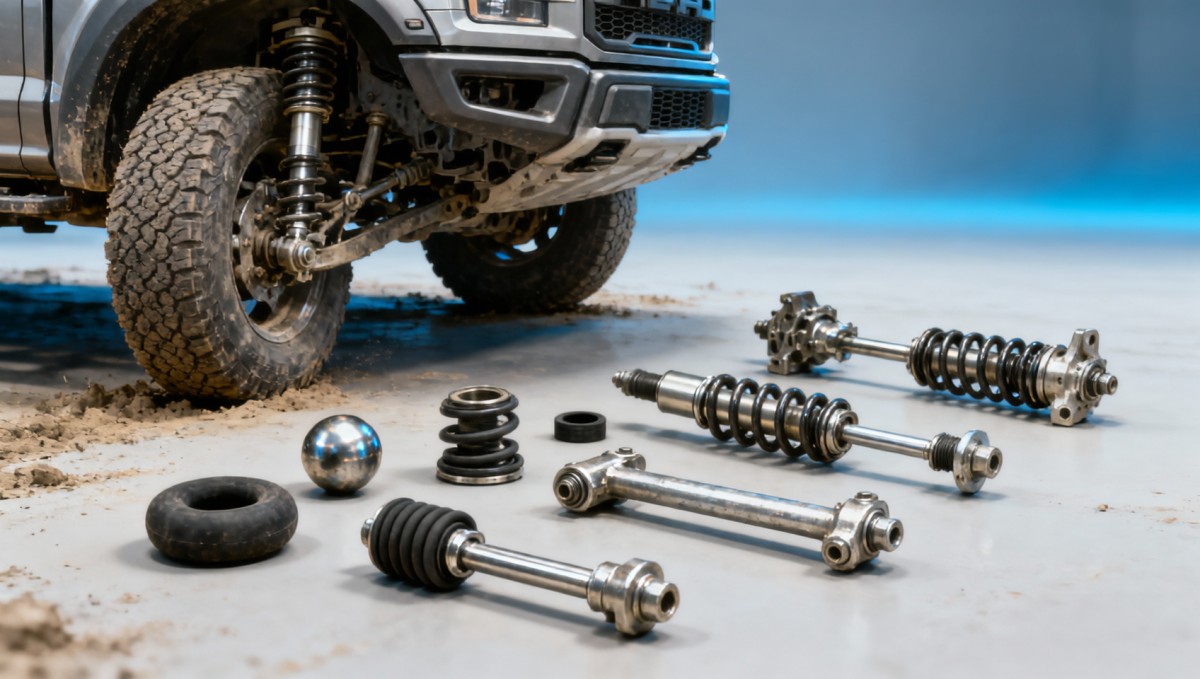
Rough roads create a concentrated mix of impact loads, vibration, dust intrusion, water exposure, and irregular wheel travel. In practical fleet and aftermarket maintenance, the parts that often wear faster than expected are suspension bushings, ball joints, stabilizer links, shock absorbers or struts, tie rod ends, wheel bearings, and engine mounts that absorb drivetrain movement. These failures do not always appear at the same mileage interval, but under harsh road use they often emerge during much shorter inspection cycles, sometimes within 3–6 months of continuous heavy-duty operation.
For procurement teams and technical evaluators, the key issue is not simply identifying the damaged part. The real question is whether the early wear came from poor material selection, inadequate sealing, weak manufacturing tolerance control, or a mismatch between the replacement part and the road profile. A low-cost component may look acceptable on paper, yet fail quickly when exposed to potholes, washboard surfaces, overloaded vehicles, or repeated side impacts.
This matters beyond ride comfort. Worn suspension parts affect tire contact patch stability, steering response, brake balance, and even the service life of adjacent systems. When a bushing loses elasticity or a ball joint develops excessive play, the resulting instability can accelerate tire wear and increase stress on car braking systems. For organizations managing distributed fleets or sourcing aftermarket auto parts at scale, early wear becomes a cost-control and risk-management issue rather than a simple repair event.
Fast-wearing components to monitor first
The following list reflects common wear-priority checks used in field inspections, especially where vehicles operate on unpaved roads, broken asphalt, mining access roads, agricultural routes, or construction corridors:
- Suspension bushings: rubber cracking, separation from metal sleeves, and loss of damping under repeated compression.
- Ball joints: boot damage, lubricant loss, contamination ingress, and increased free play under impact loading.
- Shock absorbers and struts: fluid leakage, reduced rebound control, overheating from repeated oscillation, and seal fatigue.
- Stabilizer links and tie rod ends: fast wear from torsional stress, steering corrections, and repeated side loading.
- Engine mounts: accelerated deterioration when rough-road vibration combines with torque fluctuation and heavy payloads.
A useful field rule is to inspect these parts every 10,000–15,000 km in severe service conditions, or at shorter monthly intervals where roads are consistently broken and vehicles run under high payload or stop-start duty cycles. That inspection rhythm is much more practical than relying on standard-road service assumptions.
Why do rough roads accelerate suspension wear so quickly?
The main reason is load multiplication. A suspension system is designed to absorb vertical motion and maintain wheel control, but rough roads introduce frequent peak loads rather than smooth cyclic motion. Potholes, sharp edges, washboard corrugations, and uneven shoulders create repeated shock events that raise stress concentration at joints, seals, and bonded rubber interfaces. Over time, these stress spikes turn minor material weakness into visible failure.
Contamination is the second major factor. Dust, mud, salt, and standing water penetrate damaged boots and seals, then degrade lubricated interfaces. Once contaminants enter a ball joint or tie rod end, the wear rate can increase dramatically because metal surfaces begin operating under compromised lubrication. In markets with seasonal rain, freeze-thaw cycles, or high particulate exposure, a component that performs well in lab-like conditions may degrade much faster in actual field use.
Overloading also shortens service life. Vehicles carrying cargo above nominal operating conditions place continuous extra stress on shocks, control arm bushings, and engine mounts. Even a 10%–20% payload increase, repeated across uneven routes, can push parts outside the comfort range they were originally selected for. This is why procurement decisions should not rely only on vehicle model compatibility; duty profile and route severity must be part of the selection process.
Finally, installation quality and geometry alignment matter. A correctly manufactured part can still fail early if torqued at the wrong ride height, installed with poor alignment, or paired with worn neighboring components. In rough-road fleets, suspension wear is often systemic. Replacing one failed item without correcting alignment, tire balance, or companion-part wear simply moves the problem downstream.
Typical rough-road stress drivers
For researchers and sourcing managers, this table highlights a practical point: rough-road wear is rarely caused by one variable. It is usually a combination of impact, contamination, and operating load. That is why replacement decisions should account for sealing design, elastomer quality, and route conditions together.
How should buyers compare replacement suspension parts?
In B2B sourcing, especially across international aftermarket channels, “fitment” is only the starting point. Buyers should compare materials, boot and seal design, corrosion resistance, tolerance consistency, packaging protection, traceability, and batch stability. A part that fits dimensionally but uses low-grade rubber compound or inconsistent heat treatment can increase total maintenance cost within one or two service intervals.
This is where structured market intelligence becomes useful. TradeNexus Edge helps procurement teams reduce information gaps by connecting technical selection questions with broader supply chain realities. Instead of evaluating parts as isolated catalog entries, buyers can assess them through application severity, sourcing consistency, target market expectations, and the likely impact on vehicle uptime. That is especially important for enterprise decision-makers handling multi-region fleets or supplier qualification projects.
A practical procurement screen should cover at least 5 key checks: material composition, sealing and dust protection, dimensional consistency, expected service interval under severe duty, and supplier documentation response speed. In urgent projects, sample validation and pilot installation over 2–4 weeks can also reveal quality variance before a full-volume order is placed.
Comparison points that matter more than headline price
The table below can be used by procurement personnel, technical teams, and sourcing researchers when comparing aftermarket auto parts intended for rough-road suspension service.
The main takeaway is simple: a lower unit price can become the more expensive option if replacement frequency doubles, downtime rises, or related parts fail sooner. Total cost should be reviewed over at least one service cycle, not only at purchase order stage.
A short procurement checklist for rough-road use
- Define duty profile: paved urban use, mixed-road use, or severe rough-road use.
- Confirm whether payload is standard, intermittent overload, or consistently heavy.
- Request material and construction details for bushings, joints, and mounts.
- Run a small-batch field test before scaling volume across regions or fleets.
- Review packaging, transport protection, and lead time, especially for cross-border supply.
What warning signs and maintenance actions reduce failure risk?
For researchers and maintenance planners, symptom recognition is often the fastest way to prevent wider system damage. Early signs include clunking over bumps, steering looseness, uneven tire wear, brake instability during rough-road stopping, excess cabin vibration, and visible grease leakage around joints. These signals should trigger inspection before they escalate into wheel control problems or repeated part replacement.
Inspection scheduling should reflect route severity. For severe use, a 4-step routine works well: visual check every month, road-test feedback review every 4–6 weeks, alignment and underbody check every quarter, and replacement trend review every 6–12 months. This kind of structured cycle is much more effective than waiting for end-of-life failure.
It is also important to replace in matched sets where practical. For example, replacing one worn stabilizer link while leaving the opposite side heavily worn may preserve short-term cost but undermine handling consistency. The same logic applies to paired shocks or struts. Balanced replacement can improve braking stability and reduce callback rates, especially in commercial vehicle maintenance programs.
Another useful practice is recording failure mode, not just failed part number. Was the bushing cracked, oil-soaked, separated, or deformed? Was the ball joint dry, corroded, or boot-torn? Those details help procurement teams refine future sourcing decisions and allow enterprise buyers to identify whether the issue is material weakness, route mismatch, or installation error.
Common warning signs that should not be ignored
- Repeated knocking or rattling on uneven surfaces, especially at low speed.
- Vehicle pulling, unstable steering return, or vague directional control.
- Sawtooth or uneven tire wear patterns after only one service interval.
- Longer stopping distance feel or reduced confidence under emergency braking.
- Increased vibration transferred into cabin, floor, or steering wheel.
FAQ for researchers, buyers, and decision-makers
How often should suspension parts be checked on rough roads?
There is no universal mileage rule because usage severity varies by payload, speed, climate, and road quality. However, severe-service vehicles often benefit from visual and operational checks every 10,000–15,000 km or every month, whichever comes first. Fleets operating in construction, agriculture, quarry access, or rural logistics may need shorter intervals if damage exposure is frequent.
Are premium-priced aftermarket auto parts always the better choice?
Not automatically. The better choice is the part with the most suitable material quality, sealing design, tolerance control, and supplier consistency for the target duty profile. Some mid-priced parts perform well in mixed-road conditions, while some low-priced parts may be acceptable for light service only. The correct comparison should consider replacement frequency, labor cost, downtime, and the effect on related systems such as steering precision and car braking systems.
Should engine mounts be evaluated together with suspension components?
Yes, especially when vehicles show vibration, harshness, or impact noise. Engine mounts are not suspension parts in the strictest sense, but they work within the same vehicle dynamics environment. On rough roads, degraded mounts can amplify vibration, mislead diagnosis, and increase driver complaints. For complete root-cause analysis, they should be checked during the same inspection cycle.
What do enterprise buyers need from suppliers besides price?
They typically need 4 things: stable batch quality, clear technical response, realistic lead times, and sample or pilot support. In cross-border B2B procurement, document responsiveness within 24–72 hours, packaging reliability, and lot traceability are often as important as the quoted unit cost. These factors reduce risk during supplier onboarding and post-installation troubleshooting.
Why work with TradeNexus Edge when evaluating rough-road suspension sourcing?
TradeNexus Edge supports buyers, analysts, and enterprise teams that need more than generic supplier lists. In sectors where technical parts selection affects safety, uptime, and operating cost, decision quality depends on context. TNE helps close that information gap by aligning component-level questions with supply chain visibility, industry application logic, and broader Auto & E-Mobility market intelligence.
If your team is comparing suspension bushings, ball joints, engine mounts, or related aftermarket auto parts for rough-road use, the most valuable next step is structured evaluation. That may include confirming material suitability, narrowing replacement options by road severity, comparing lead times across sourcing channels, reviewing common failure modes, or identifying whether a lower upfront quote creates higher 6–12 month maintenance cost.
You can contact TradeNexus Edge to discuss specific sourcing and research needs, including parameter confirmation, product selection, delivery cycle expectations, custom comparison frameworks, sample support, supplier screening logic, and quotation communication planning. For decision-makers managing fleets or multi-market procurement, this type of structured support shortens evaluation time and improves confidence before scaling purchase volume.
When rough roads shorten part life faster than expected, the winning strategy is not simply replacing parts more often. It is choosing the right parts, from the right supply channel, with the right duty-profile understanding behind the purchase. That is where a data-led B2B intelligence partner can make the difference.
Deep Dive
Related Intelligence
 Aftermarket PartsWhat Strategic Link Gaps Are Slowing Down Aftermarket Parts Distribution in Agri-Drones Service Networks?Analyst:Automotive Tech Analyst
 Aftermarket PartsCan aftermarket auto parts meet OEM durability standards without voiding vehicle warranties in 2026?Analyst:Automotive Tech Analyst
 Aftermarket PartsHow do aftermarket auto parts impact fleet maintenance costs for construction equipment operators?Analyst:Automotive Tech Analyst