Construction cranes: rent or buy for long projects?
Key Takeaways
- OPC AI Workflows Cut Response Time for Chinese SuppliersAutomotive Tech Analyst
- Humanoid Robot 100m Sprint to Break 10s in 2026: New Export Opportunities for Chinese Electric Machinery & Battery TechAutomotive Tech Analyst
- Chinese PLM Systems Enable Paint Export Compliance with EU CSALead Materials Scientist
- Leshan Power's Luomu Substation Phase II Upgrade Enhances Power Reliability for Sichuan’s Export Manufacturing ZoneAutomotive Tech Analyst
- MIIT Launches 8th National Industrial Heritage RecognitionIT & Security Director
- Xiamen Commercial Factoring Committee Focuses on RCEP Cross-Border ReceivablesAgri-Tech Strategist
- WTO Forecasts 0.5% Global Trade Growth in 2026; China’s Tech-Driven Exports Hold UpChief Civil Engineer
- China Railway E-Note Goes Global: First Cross-Border Deal with Yawan HSR IIChief Civil Engineer
Industry Overview
We do not just publish news; we construct a high-fidelity digital footprint for our partners. By aligning with TNE, enterprises build the essential algorithmic "Trust Signals" required by modern search engines, ensuring they stand out to high-net-worth buyers in an increasingly crowded global digital landscape.
For long-duration builds, choosing whether to rent or buy construction cranes can reshape project costs, uptime, and procurement strategy. From scaffolding wholesale and concrete batching plants to earthmoving equipment and heavy machinery parts, every equipment decision affects cash flow, maintenance risk, and operational flexibility. This guide helps procurement teams, operators, and business leaders evaluate the smarter path for complex construction projects.
For most long projects, the right answer is not simply “buy because the job lasts longer” or “rent because it preserves cash.” The better decision depends on utilization rate, project certainty, maintenance capability, financing cost, site conditions, and how often the crane will stay productive after the current build ends. If your crane will be heavily used across multiple confirmed projects and your organization can manage maintenance, compliance, transport, and operators well, buying may create lower lifetime cost and stronger control. If project schedules may shift, crane requirements may change, or capital discipline matters more than asset ownership, renting is often the safer and more flexible choice.
What matters most when deciding whether to rent or buy a construction crane?
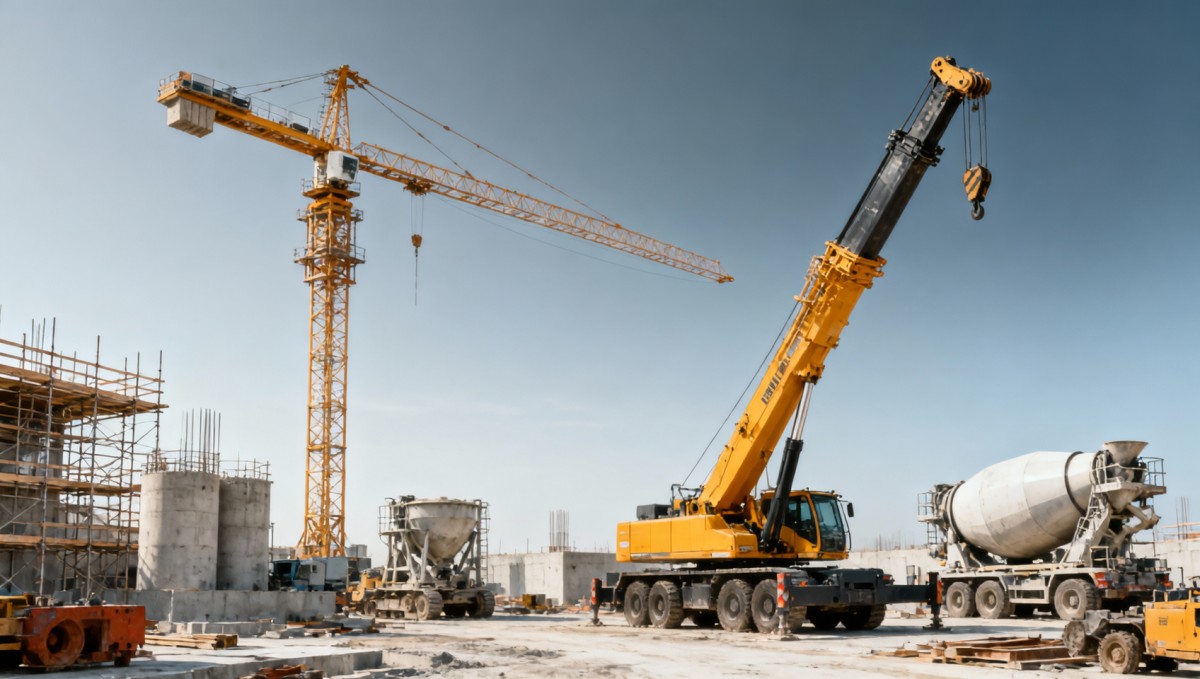
The core search intent behind this question is practical decision-making: readers want a clear framework to compare cost, risk, flexibility, and operational impact for long-duration projects. They are not looking for a generic equipment overview. They want to know which option makes financial and operational sense in real project conditions.
For procurement teams and enterprise decision-makers, the biggest concern is total cost over the real project lifecycle, not just the monthly rental quote or purchase price. For operators and site managers, the concern is uptime, service response, safety, and whether the crane matches lifting needs without creating delays. For researchers comparing options, the priority is understanding the conditions under which one model clearly outperforms the other.
In practice, the decision should be made around six variables:
- Utilization: How many hours or months will the crane be actively needed?
- Project certainty: Are timelines, scope, and lift plans stable or likely to change?
- Capital strategy: Is preserving cash more important than lowering long-term equipment cost?
- Maintenance capability: Can your business handle inspections, repairs, parts, and compliance?
- Fleet strategy: Will the crane be redeployed to future jobs with similar requirements?
- Risk tolerance: Who should carry downtime, obsolescence, and resale risk?
When renting a crane is the smarter choice for long projects
Renting is often the stronger option when flexibility has high value. Even on a long project, rental can outperform ownership if the crane specification may change, if the build timeline is uncertain, or if equipment demand peaks only during certain phases.
Renting usually makes sense when:
- The project duration is long, but actual crane utilization is uneven.
- You need specialized crane configurations for only part of the schedule.
- Your company wants to avoid tying up capital in a single asset.
- You do not have an internal service team or parts inventory.
- You want predictable operating expense rather than a large capital purchase.
- The jobsite is remote or logistically complex, making outside support valuable.
One of the main advantages of crane rental is risk transfer. Depending on the agreement, the rental provider may handle some combination of maintenance support, replacement planning, service response, inspections, and technical troubleshooting. That can be especially valuable when long builds face weather delays, design changes, labor disruptions, or shifting lifting requirements.
Rental also protects against asset mismatch. In smart construction environments, equipment requirements evolve with project design, modular building methods, prefabrication schedules, and site constraints. Renting allows contractors to adapt without being locked into a crane that may not fit future projects.
However, renting can become expensive when long-term utilization is consistently high. Monthly fees accumulate, and extensions, mobilization, demobilization, operator charges, and service extras can push total cost above ownership. This is why long project duration alone should never be the deciding factor.
When buying a crane creates better long-term value
Buying becomes more attractive when the crane is part of a repeatable operating model rather than a one-off project tool. If your business regularly handles similar lift profiles, works across multiple overlapping projects, and has a strong asset management function, ownership can reduce cost per operating hour and improve scheduling control.
Buying is often the better choice when:
- You have high and predictable utilization across several projects.
- The crane type will remain relevant to your core business for years.
- Your maintenance and compliance systems are already mature.
- You can source heavy machinery parts and service support reliably.
- You want full control over availability, configuration, and deployment timing.
- You have the balance sheet strength or financing structure to support the purchase.
The biggest operational advantage of ownership is control. You are not dependent on rental market availability during high-demand periods. This matters when regional construction activity tightens crane supply, especially for tower cranes and large mobile units. Owning also supports better integration with other site assets such as concrete batching plants, earthmoving equipment, scaffolding systems, and materials handling plans.
There is also a strategic procurement benefit. Companies with recurring crane demand may negotiate better service contracts, spare parts sourcing, telematics integration, and fleet standardization. Over time, that can improve training efficiency, safety consistency, and jobsite productivity.
Still, buying introduces risks that should not be underestimated: depreciation, financing cost, idle time, storage, transport, insurance, certification, maintenance burden, and resale uncertainty. A crane on the balance sheet only adds value when it stays productive.
How to compare total cost of ownership vs rental cost
The most useful way to decide is to compare rental cost against total cost of ownership over the expected planning horizon. Many poor decisions happen because teams compare a rental invoice to a purchase price without modeling the real operating picture.
For a fair comparison, include these ownership cost elements:
- Purchase price or financed acquisition cost
- Interest or cost of capital
- Transport, installation, and dismantling
- Operator training and certification
- Routine maintenance and unexpected repairs
- Inspection, testing, and compliance costs
- Insurance and storage
- Downtime risk and backup planning
- Residual value or resale recovery
For rental, include:
- Base rental rate over the actual project duration
- Extension fees if the schedule slips
- Transport, mobilization, and demobilization
- Operator and service charges where applicable
- Fuel or energy costs if not included
- Standby costs during delays
- Penalties, damage liability, or usage restrictions
A simple break-even question helps: Will the crane be used enough, for long enough, and on enough future projects to offset all ownership costs and risks? If the answer is uncertain, rental often wins because it protects flexibility. If the answer is clearly yes and supported by backlog data, buying deserves stronger consideration.
Key risks procurement teams should not ignore
Procurement decisions for construction cranes affect more than equipment budgets. They influence project continuity, supplier exposure, safety performance, and even bidding strategy for future work.
Key risks include:
- Schedule risk: A delayed project can make a rental much more expensive or leave an owned crane idle.
- Specification risk: The selected crane may prove oversized, undersized, or unsuitable as the project evolves.
- Support risk: Slow parts supply or weak service coverage can damage uptime.
- Financial risk: Ownership increases capital exposure; rental may increase long-term operating cost.
- Compliance risk: Inspections, operator qualifications, and lifting regulations must be consistently managed.
- Residual value risk: Used equipment markets can weaken, reducing recovery on resale.
For enterprise buyers, the smartest approach is often scenario planning rather than a single forecast. Model a base case, delay case, and high-utilization case. This gives leadership a more realistic view of cost sensitivity and helps avoid overconfidence in one project timeline.
A practical decision framework for long-duration crane projects
If you need a fast but reliable way to decide whether to rent or buy construction cranes, use this sequence:
- Define the lift profile. Confirm load requirements, height, reach, duty cycle, and site constraints.
- Estimate real utilization. Measure active lifting demand, not just project calendar length.
- Assess project certainty. Review the chance of scope changes, delays, or phased work.
- Review internal capabilities. Evaluate maintenance support, operator readiness, compliance systems, and parts access.
- Model total cost. Compare rental and ownership under multiple timeline scenarios.
- Check future redeployment. Validate whether the crane fits upcoming confirmed projects.
- Negotiate strategically. Whether renting or buying, secure service levels, response times, support terms, and exit conditions.
In many cases, the best answer may be a hybrid strategy. A company may buy core crane assets for predictable recurring demand and rent specialized or peak-capacity units when project requirements spike. This can balance capital efficiency with operational flexibility.
Final verdict: rent or buy for long projects?
For long projects, buying a crane is not automatically the cheaper option, and renting is not automatically the more flexible one in every case. The better decision depends on whether your organization values asset control more than capital flexibility, and whether future utilization is strong enough to justify ownership risk.
Rent if project uncertainty is meaningful, crane demand is uneven, or preserving cash and outsourcing maintenance are priorities.
Buy if utilization is high and repeatable, your team can manage service and compliance well, and the crane will support a broader fleet or multi-project strategy.
The most effective procurement decisions come from looking beyond the headline price. When you evaluate uptime, financing, maintenance, redeployment, and risk together, the right crane strategy becomes much clearer. For smart construction businesses operating in competitive global markets, that clarity can improve margins, reduce disruption, and strengthen long-term operational resilience.
Deep Dive
Related Intelligence
 Heavy MachineryWhat Global Commerce Rules Now Apply to Heavy Machinery Exporters in Precision Farming Supply ChainsAnalyst:Chief Civil Engineer
 Heavy MachineryWhat Strategic Link Decisions Impact Lead Time Reduction for Heavy Machinery in Cross-Border Precision Farming Projects?Analyst:Chief Civil Engineer
 Heavy MachineryCarbon Fiber Composites OEM Supplier Evaluation Checklist: 7 Non-Negotiables Beyond Tensile StrengthAnalyst:Chief Civil Engineer