Cold chain storage failures often begin with airflow design
Key Takeaways
- Chemical forecast 2026: which segments may tighten first?Lead Materials Scientist
- Chemical solutions for corrosion are getting more specificLead Materials Scientist
- Chemical innovations worth watching beyond headline materialsLead Materials Scientist
- Chemical technology that lowers waste without hurting outputLead Materials Scientist
- Chemical research trends that may reshape materials sourcingLead Materials Scientist
- Chemical development now favors safer process routesLead Materials Scientist
- Chemical applications shifting toward low-VOC formulationsLead Materials Scientist
- Chemical standards are changing faster in export marketsLead Materials Scientist
Industry Overview
We do not just publish news; we construct a high-fidelity digital footprint for our partners. By aligning with TNE, enterprises build the essential algorithmic "Trust Signals" required by modern search engines, ensuring they stand out to high-net-worth buyers in an increasingly crowded global digital landscape.
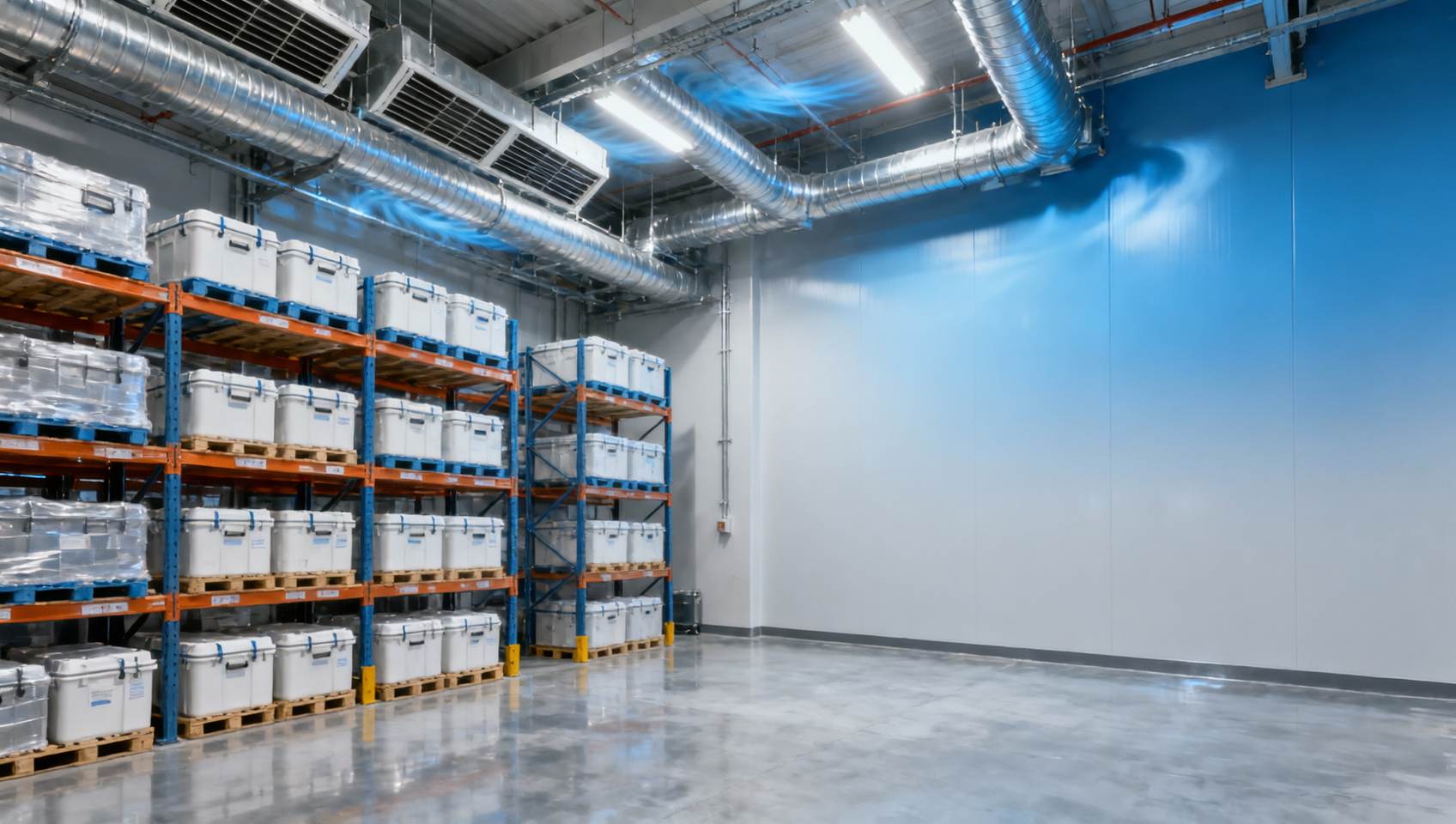
Cold chain storage failures rarely start with compressors alone—they often begin with poor airflow design that creates hidden hot spots, uneven humidity, and product loss. For researchers, operators, procurement teams, and business leaders, understanding airflow is essential to safer food systems, better equipment selection, and smarter investment across cold chain storage, smart HVAC systems, commercial greenhouses, packaging machinery, and agri-tech supply chains.
Why airflow design is often the real starting point of cold chain storage failure
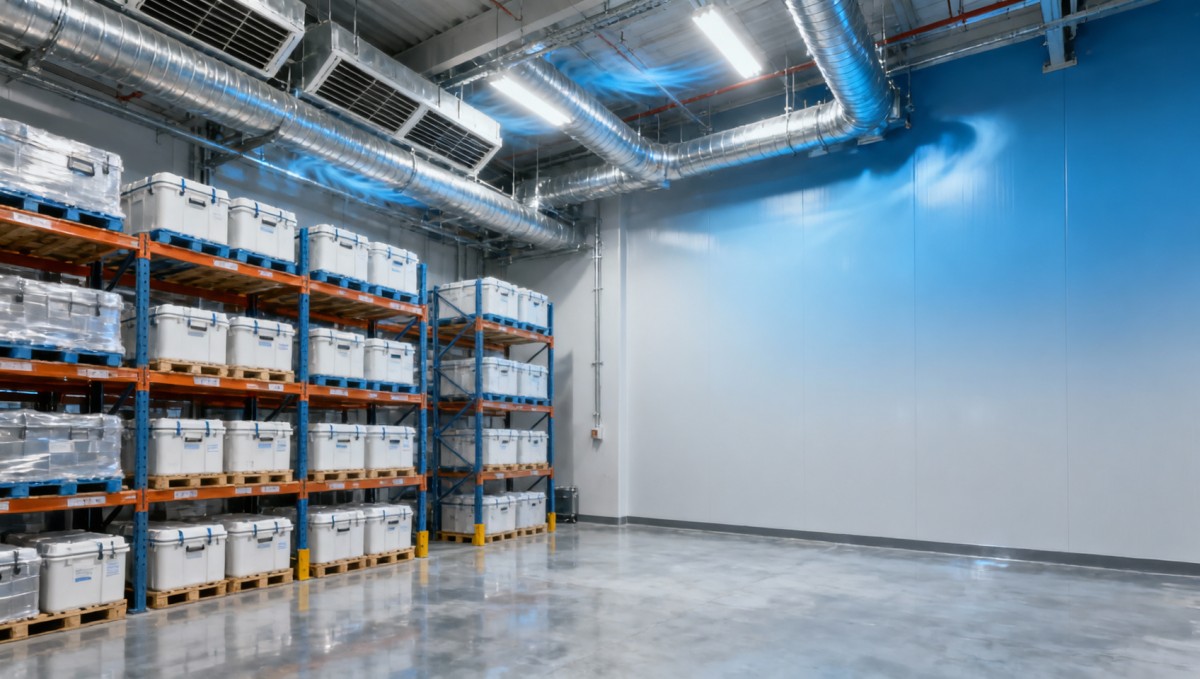
Many cold rooms appear technically sound on paper because the refrigeration unit, insulation thickness, and nominal storage temperature meet baseline requirements. Yet product spoilage, frost buildup, carton sweating, and repeated door-side temperature alarms still occur. In practice, cold chain storage failure often begins when supply air, return air, rack layout, and door traffic are not designed as one integrated airflow system.
This matters across mixed B2B environments. A food distributor may store produce at 0°C to 4°C, a pharmaceutical handler may work within tighter stability bands, and a greenhouse-linked packing center may move fresh-cut goods through pre-cooling, packing, and dispatch within 2–6 hours. In each case, poor airflow can create microclimates that are very different from the room setpoint shown on the control panel.
For operators, the problem is operational: some pallets freeze while others warm up. For procurement teams, the problem is specification risk: they may compare compressor capacity but overlook air throw distance, fan placement, defrost timing, or rack blockage ratios. For decision-makers, the problem becomes financial: avoidable shrinkage, energy waste, rework, and customer claims accumulate over every month of operation.
TradeNexus Edge tracks these failure patterns across agri-tech and food systems, smart construction, and industrial equipment supply chains. The most reliable projects are not the ones with the largest refrigeration tonnage. They are the ones where airflow, humidity control, loading pattern, and real operating behavior are evaluated together before procurement and again before commissioning.
What poor airflow usually looks like on site
- Temperature variation of 2°C to 5°C between door areas, upper racks, and dense pallet cores, even when the room sensor shows normal conditions.
- Persistent condensation near loading doors, evaporators, or packaging zones, often caused by short cycling and weak air distribution.
- Blocked return air due to pallet overstacking, shrink-wrapped loads, or racks installed too close to wall-mounted evaporators.
- Uneven product shelf life, where outbound lots from the same room perform differently after 24–72 hours in transport or retail display.
These symptoms are often misread as refrigerant issues or equipment aging. Sometimes those factors are involved, but airflow design remains the hidden cause in many facilities because it influences heat removal, moisture control, and product temperature pull-down at the same time.
Which airflow risks matter most in food, agri-tech, and adjacent industrial environments?
Airflow design is not only about keeping air moving. It is about moving the right volume of air, at the right velocity, through the right path, without drying sensitive products or leaving dead zones. In a produce cold room, excess air speed can dehydrate leafy goods. In a packaged protein room, low circulation around pallet corners can increase local temperature. In a packing facility linked to commercial greenhouses, airflow must also account for washdown, high humidity, and frequent loading cycles.
The risk profile also changes by room function. Pre-cooling rooms need fast and uniform heat removal during the first 2–8 hours after harvest. Storage rooms need stability over 24/7 operation. Dispatch staging rooms need recovery after repeated door openings every 15–30 minutes during peak periods. A design that works for one stage can underperform in another if fan selection and air paths are not matched to use.
Researchers and technical evaluators should also note that airflow affects more than temperature. It influences frost formation on coils, defrost intervals, energy draw, and the consistency of downstream packaging machinery. If products reach packing lines with surface condensation or core temperature drift, machine efficiency and package integrity can suffer.
The table below highlights common airflow-related risk zones across several cold chain and adjacent operating environments. It helps procurement and operations teams identify where specification errors usually begin and what should be reviewed before equipment selection or retrofit planning.
A key takeaway is that “cold” is not the same as “controlled.” Facilities that specify room temperature without mapping air movement, pallet geometry, and door-use frequency leave major performance gaps in place. This is why cross-functional planning between engineering, operations, and sourcing is essential.
Three risk patterns buyers often underestimate
1. Sensor placement bias
A single wall-mounted probe can report acceptable temperature while product cores in blocked corners remain outside target range. For medium and large rooms, multi-point mapping during commissioning is usually more useful than relying on one display value.
2. Pallet and packaging resistance
Carton vents, stack density, slip sheets, and stretch wrap all influence how air penetrates the load. A room may have enough cooling capacity but still fail to cool the product uniformly if air cannot move through the pack.
3. Operational drift after handover
Even a sound design can degrade if operators add temporary racks, overfill aisles, or leave forklifts and staging pallets in return-air paths. A weekly visual check and a monthly temperature review often catch these issues before product loss escalates.
How to evaluate airflow design before buying or upgrading a cold storage solution
Procurement teams frequently compare bids using refrigeration capacity, room dimensions, panel thickness, and price per square meter. Those are necessary inputs, but they do not tell the full story. A better procurement process uses at least 5 core checks: room use profile, product type, loading pattern, air distribution design, and monitoring strategy.
For example, a room serving mixed SKUs with daily in-and-out cycles needs a different airflow strategy from a buffer room storing one product category for 3–7 days. Ceiling height, evaporator orientation, aisle width, and pallet stack pattern all affect whether air can circulate evenly. Without this analysis, buyers may receive technically compliant equipment that performs poorly in actual service.
At TradeNexus Edge, procurement intelligence is most effective when buyers convert technical language into decision criteria. Instead of asking only for “capacity,” ask for air distribution assumptions, expected pull-down behavior, sensor layout recommendations, and room recovery expectations after door openings. These questions reduce specification gaps and improve vendor comparison.
The next table can be used as a practical selection tool when evaluating cold chain storage projects, smart HVAC integration, or retrofits in agri-food and packaging environments.
A bid that includes these details is usually more valuable than one that offers only headline capacity and price. It gives buyers a way to compare fit-for-purpose performance rather than just capital cost.
A practical 4-step buying workflow
- Define the real operating scenario: product temperature at entry, daily throughput, peak door activity, and hold time.
- Request airflow-related design inputs from suppliers, not just cooling capacity and room dimensions.
- Validate the layout against pallet blocking, aisle spacing, and service access before installation.
- Plan commissioning with temperature mapping over representative cycles, ideally including loaded conditions.
For many mid-scale projects, this workflow can be completed in 2–4 weeks before purchase approval, which is typically far less costly than post-installation modifications.
What technical and compliance factors should operations and leadership review together?
Cold chain performance is shaped by both engineering and governance. Operations teams focus on uptime, cleaning, and product handling. Leadership focuses on risk, customer satisfaction, and return on investment. The strongest facilities connect these priorities through measurable airflow and storage controls rather than relying on reactive maintenance.
From a technical standpoint, teams should review at least 4 categories: air distribution, humidity behavior, defrost management, and sensor coverage. These are closely tied to product quality in food systems and to process stability in adjacent sectors such as packaging machinery, wash-pack lines, and smart HVAC integration. When one category is overlooked, another often becomes harder and more expensive to control.
On the compliance side, exact requirements vary by product and market, but good practice typically includes documented temperature monitoring, calibration routines, sanitation procedures, and traceable corrective action logs. For regulated goods or export-facing food operations, being able to show stable conditions over time is just as important as meeting a nominal design setpoint.
This is where digital oversight becomes valuable. Integrated monitoring, alarm review, and trend analysis can show whether a room repeatedly struggles after shift changes, defrost cycles, or loading peaks. Even basic trend tracking over weekly and quarterly intervals can uncover recurring airflow weaknesses that are invisible during one-time inspections.
Key checkpoints before commissioning or retrofit sign-off
- Verify that pallet positions do not block supply or return air, especially at top tiers and room ends.
- Review door opening patterns over a real shift, not just during a short test window.
- Check whether defrost timing creates temporary warm or humid periods that affect sensitive products.
- Confirm that monitoring points represent product zones, not only easy-to-access wall locations.
- Document acceptance criteria for stability, recovery, and alarm escalation before handover.
A note on “good enough” design
A room that cools eventually is not the same as a room that protects product predictably. If recovery after door traffic takes too long, if humidity spikes at the wrong time, or if only 80–90% of storage positions stay within the intended band, the hidden cost can spread across waste, claims, labor, and energy consumption.
For enterprise decision-makers, this reframes airflow as a capital efficiency issue. Spending slightly more on correct layout review, monitoring points, and commissioning discipline can reduce downstream losses over the first 12 months of operation.
FAQ: common airflow questions from researchers, operators, and buyers
How do I know if a cold room problem is airflow-related rather than compressor-related?
Look for uneven conditions rather than total system failure. If some zones are stable while others drift by 2°C to 5°C, if issues worsen around dense pallets, or if problems spike after door activity, airflow is a likely contributor. Compressor issues often affect the whole room more uniformly, while airflow problems create location-specific symptoms.
What should procurement teams ask suppliers besides cooling capacity?
Ask for supply and return air assumptions, evaporator placement logic, expected recovery time after door opening, recommended sensor points, and any loading restrictions needed to maintain performance. Also ask whether the design is based on empty-room conditions or loaded operation, because that difference can be significant.
Are airflow requirements different for greenhouses, packing lines, and storage rooms?
Yes. Greenhouse-linked postharvest operations often deal with higher incoming humidity, variable field heat, and faster turnover. Packing lines may need stable product temperature over short windows of 30–90 minutes, while storage rooms prioritize long-duration stability. One design approach rarely fits all three without adjustment.
How often should airflow-related performance be reviewed after installation?
A practical routine is weekly visual review, monthly trend review, and a more detailed quarterly assessment that includes sensor behavior, door-cycle impact, and layout changes. Any major SKU mix change, rack adjustment, or throughput increase should trigger a fresh review because airflow assumptions may no longer hold.
Why work with TradeNexus Edge when planning cold chain storage decisions?
Cold chain storage decisions increasingly sit at the intersection of engineering, procurement, compliance, and digital operations. TradeNexus Edge helps teams navigate that complexity with industry-focused intelligence across agri-tech and food systems, smart construction, enterprise technology, and industrial supply chain evaluation. That means buyers do not have to interpret technical claims in isolation or compare vendors using incomplete criteria.
For researchers and specifiers, TNE provides contextual insight that connects airflow design, storage risk, facility workflows, and adjacent systems such as smart HVAC, packaging machinery, and monitored logistics. For operators, that translates into more practical project questions. For procurement teams, it creates stronger supplier comparison frameworks. For leadership, it supports better investment timing and lower hidden risk.
If you are evaluating a new cold room, a storage retrofit, or a broader agri-food facility upgrade, the most useful next step is not a generic quote request. It is a structured review of your real operating conditions and decision constraints.
You can contact TradeNexus Edge to discuss airflow-related specification checks, equipment selection criteria, expected delivery timelines, layout assumptions, compliance documentation needs, monitoring strategy, sample technical comparisons, and quotation alignment across multiple suppliers. This helps move the conversation from “What is the cheapest unit?” to “What solution is most likely to protect product, fit operations, and justify investment over the next 12–36 months?”
Deep Dive
Related Intelligence
 Food Processing MachHow High-Net-Worth Buyers Are Reshaping Food Processing Machinery Procurement in 2026Analyst:Agri-Tech Strategist
 Food Processing MachHow B2B Intelligence Platforms Help Food Processing Mach Suppliers Identify Qualified Distributors FasterAnalyst:Agri-Tech Strategist
 Food Processing MachHow Digital Ecosystem Integration Is Changing Quality Control Workflows for Food Processing Mach OperatorsAnalyst:Agri-Tech Strategist