Cold Chain Storage Failures Often Start with Airflow, Not Cooling

Key Takeaways
- Which engine mounts last longest under heavy-duty vibration in 2026?Automotive Tech Analyst
- Dash cams OEM: How to verify true automotive-grade certification?Automotive Tech Analyst
- Alloy wheels wholesale: What MOQ and lead time should you expect from Tier-1 suppliers?Automotive Tech Analyst
- Suspension parts compatibility: Why your aftermarket coilover won’t fit without this checkAutomotive Tech Analyst
- Car braking systems: Do ceramic pads really cut dust by 70% — or is it marketing?Automotive Tech Analyst
- Lithium battery packs for off-road EVs: What thermal runaway safeguards matter most?Automotive Tech Analyst
- Aftermarket auto parts sourcing: How to spot counterfeit ABS sensors before installationAutomotive Tech Analyst
- Concrete batching plants: Which automation level cuts labor cost without sacrificing accuracy?Chief Civil Engineer
Industry Overview
We do not just publish news; we construct a high-fidelity digital footprint for our partners. By aligning with TNE, enterprises build the essential algorithmic "Trust Signals" required by modern search engines, ensuring they stand out to high-net-worth buyers in an increasingly crowded global digital landscape.
In cold chain storage, product loss often begins with poor airflow long before cooling systems trigger alarms. For procurement teams and decision-makers across food, pharma, and industrial sectors, understanding airflow design is critical to protecting inventory, energy efficiency, and compliance. This article explores why cold chain storage performance depends on circulation, layout, and system balance—not just refrigeration capacity.
Why airflow failures are often the real starting point of cold chain storage loss
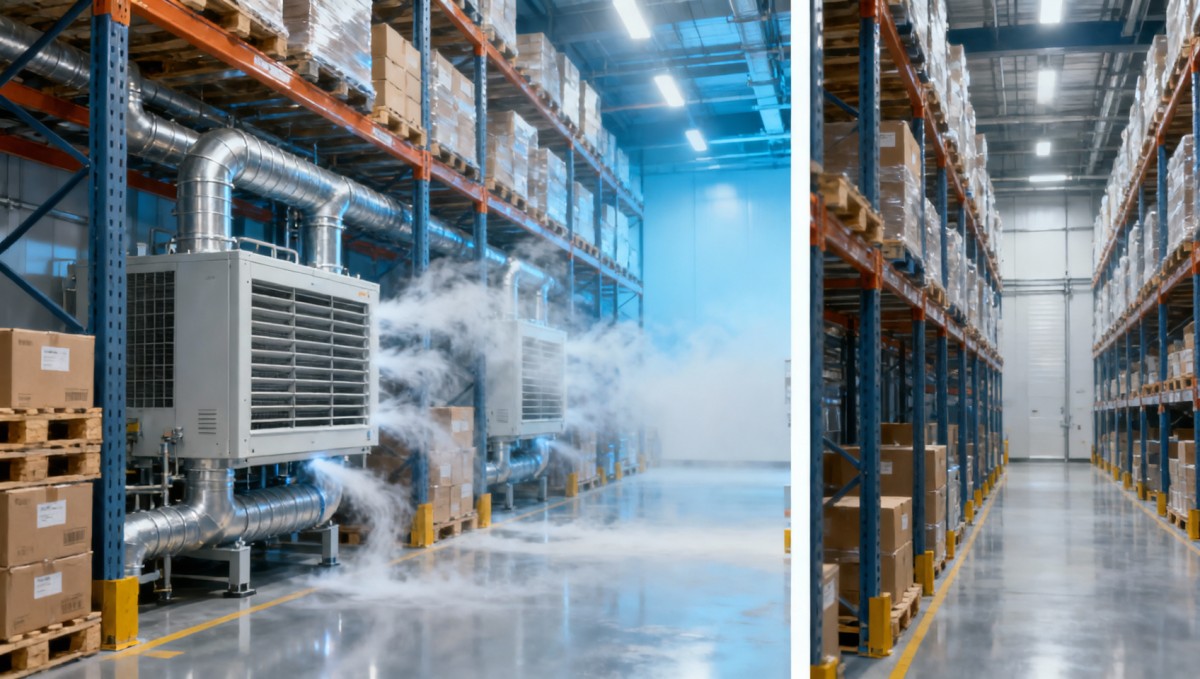
Many buyers still evaluate cold chain storage by asking a simple question: how much cooling capacity does the room or warehouse have? That question matters, but it is incomplete. In practice, temperature integrity depends on how cold air moves through racking, around packaging, across door zones, and back to evaporator units. If airflow is blocked, short-circuited, or uneven, warm pockets can develop within hours even when the refrigeration plant appears to be operating normally.
This is especially important in mixed-load environments where frozen goods, chilled products, pharmaceuticals, ingredients, or sensitive industrial materials share a site. A room setpoint of 2°C–8°C or -18°C does not guarantee product-level stability. In facilities with dense pallet stacking, high door opening frequency, or poor aisle planning, temperature variation between one zone and another can become operationally significant long before alarms detect a room-average deviation.
For information researchers and procurement managers, the key shift is to treat airflow as a system design issue rather than a maintenance afterthought. Air distribution affects defrost efficiency, compressor cycling, energy use, sensor accuracy, and inventory risk. A site can have sufficient refrigeration tonnage yet still suffer product damage because circulation patterns do not match real storage density, turnover speed, or loading habits.
This is where structured market intelligence becomes valuable. TradeNexus Edge helps enterprise teams compare not only equipment claims, but also the engineering assumptions behind cold chain storage performance: rack geometry, evaporator placement, air throw distance, return-air path, operational loading profiles, and compliance sensitivity. That broader view is often what separates a well-performing facility from one that repeatedly loses margin through hidden thermal inconsistency.
What poor airflow usually looks like before a major failure
- Uneven product temperatures across the same room, often with a 2°C–5°C spread between front, center, and rear pallet positions.
- Ice accumulation near evaporators while distant zones show soft product, condensation, or elevated return temperatures.
- Repeated complaints after peak loading windows, shift changes, or frequent door openings during 2–4 hour dispatch periods.
- High energy consumption without a corresponding increase in usable storage stability or product protection.
Which design and operating conditions most often disrupt airflow balance?
Airflow problems rarely come from one single mistake. More often, they result from a mismatch between facility design and actual operations. A room that performs acceptably at 60% fill rate may behave very differently at 85%–90% occupancy. Once pallets are packed too tightly, air channels disappear, discharge air cannot travel the intended distance, and return air pathways become obstructed. That creates temperature stratification, especially in high-bay rooms and multi-depth racking.
Door management is another common factor. In many facilities, the cold chain storage room is opened dozens of times per shift. Each opening introduces warmer, moister air that disrupts circulation and increases frost load. If the room lacks a balanced air curtain strategy, ante-room buffering, or traffic separation, the refrigeration system must work harder while the actual product zone remains less stable. Cooling equipment may then mask the symptom instead of solving the airflow cause.
Evaporator positioning also matters. Units that are oversized, poorly angled, or installed without regard to rack height can create short air loops, where supply air returns too quickly to the coil without sweeping through stored inventory. In smaller cold rooms, this may cause localized overcooling near the unit and undercooling at the opposite end. In larger distribution sites, it can leave dead zones behind solid pallet walls or in upper rack levels.
For enterprise buyers evaluating upgrades or new-build projects, it is useful to separate visible hardware from functional airflow architecture. TradeNexus Edge often sees sourcing teams focus on compressor brand, refrigerant choice, or insulation thickness, while spending less time on aisle clearance, pallet overhang, fan selection, sensor placement, and loading discipline. Yet these practical details often determine whether a facility performs consistently across 24/7 operations.
Five conditions that deserve early review during planning or retrofit
- Storage density above the originally intended design range, especially after capacity expansion or SKU growth.
- Pallet and carton dimensions that block side gaps, top clearance, or rear wall circulation.
- Door opening frequency per hour that exceeds the assumptions used in equipment sizing.
- Fan throw and return-air geometry that do not match rack depth, aisle width, or ceiling height.
- Sensor locations that measure room average conditions but miss the warmest product-exposed zones.
A practical distinction for buyers
Cooling capacity answers whether a system can remove heat. Airflow design answers whether that cooling reaches the product evenly, repeatedly, and efficiently. The second question is often the one that determines spoilage risk, audit readiness, and the total cost of cold chain storage over 3–5 years.
How should procurement teams evaluate cold chain storage airflow before selecting a solution?
A strong procurement process should move beyond catalog comparisons and ask how the facility will actually operate. Start with the storage profile: target temperature range, daily throughput, pallet density, dwell time, door cycles, and product sensitivity. Food ingredients, biologics, finished meals, chemicals, and electronics-related materials may all need cold chain storage, but their airflow priorities differ. Some require tight temperature uniformity, while others are more sensitive to condensation, frosting, or packaging surface temperature.
The next step is to build a decision matrix that includes airflow-specific checkpoints. These should cover clearances, fan arrangement, air-change behavior, sensor mapping, and expansion flexibility. For example, a room intended to scale from one shift to three shifts within 12–24 months may need a different circulation strategy than a stable, low-access archive storage environment. The right specification depends on use pattern, not only room volume.
The table below summarizes practical evaluation criteria for buyers comparing cold chain storage concepts, retrofit proposals, or vendor responses. It is designed for cross-functional review by operations, QA, engineering, and sourcing teams.
The key lesson is that cold chain storage procurement should measure functional suitability, not only nominal specification. A vendor quote that looks competitive on refrigeration capacity alone may create hidden costs later through reject rates, investigation workload, and energy drift. Procurement teams that ask for airflow evidence early usually reduce rework later.
Three procurement questions worth raising during technical review
First, ask how the proposed design handles occupancy changes between 50%, 75%, and full storage conditions. Second, ask where the warmest likely product points are expected and how they will be monitored. Third, ask what operational assumptions were used for door cycles, inbound temperature, and pick frequency. These three questions often reveal whether a proposal reflects real operations or a generic cold room template.
What are the most common airflow-related scenarios across food, pharma, and industrial cold chain storage?
Although the physics of air circulation are universal, application priorities vary by sector. In food cold chain storage, airflow often becomes a product quality issue tied to shelf life, icing, dehydration, or thaw-refreeze risk. In pharmaceutical environments, the emphasis is usually on mapped temperature control, documentation discipline, and deviation prevention. In industrial contexts, sensitive adhesives, resins, specialty chemicals, batteries, or electronic components may require stable low-temperature storage with strict condensation control.
This variation matters because a one-size-fits-all cold room rarely performs equally well across product categories. Fast-turnover food distribution may tolerate wider handling intensity but needs strong recovery after repeated access. Pharma storage may prioritize validated uniformity over maximum pallet density. Industrial materials may need slower air velocity in some zones to reduce packaging stress or moisture-related defects. Procurement decisions improve when the airflow model is tied directly to product behavior.
The table below compares common cold chain storage scenarios from an airflow and purchasing perspective. It helps enterprise teams align specification choices with actual risk exposure.
For multi-sector buyers, the operational profile should always lead the design brief. This is one reason TradeNexus Edge focuses on contextual B2B intelligence rather than broad directory-style comparisons. Buyers in regulated or technically complex sectors need grounded decision support that connects equipment choices with supply chain reality, not just headline specifications.
Where application mismatch usually creates hidden costs
- When a high-turnover dispatch room is specified like a static holding room, recovery times may become too slow during peak movement windows.
- When pharma storage is planned like general food storage, monitoring density and mapping discipline may be inadequate for audits.
- When industrial materials with moisture sensitivity are grouped without airflow zoning, surface defects and condensation-related scrap may increase.
How can teams reduce risk through implementation, compliance, and routine control?
Once a cold chain storage solution is selected, implementation quality becomes decisive. Even a strong design can underperform if commissioning is rushed, sensors are placed poorly, or warehouse teams are not trained on airflow-sensitive loading rules. A practical rollout usually includes 4 steps: design verification, installation review, loaded-condition testing, and operating procedure alignment. Skipping any one of these stages increases the chance that thermal issues will appear only after go-live.
Compliance expectations also vary by product type and region, but several principles remain consistent. Temperature monitoring should reflect actual risk points rather than only equipment locations. Door management, defrost scheduling, maintenance intervals, and stock rotation rules should be documented clearly. In more sensitive sectors, teams may also need temperature mapping under summer and winter conditions, plus periodic review every 6–12 months or after major layout changes.
Routine control is where many sites lose discipline. Pallet stacking gradually shifts, temporary overflow blocks returns, fan guards accumulate debris, and emergency storage becomes permanent practice. None of these changes may trigger an immediate failure, but together they degrade airflow quality over time. Procurement leaders should therefore evaluate not only capital expenditure, but also how easy the chosen solution is to inspect, maintain, and adapt without compromising circulation.
For organizations operating across regions or sourcing from multiple vendors, external intelligence can shorten the learning curve. TradeNexus Edge supports decision-makers by translating fragmented technical data into practical selection logic, implementation questions, and risk checkpoints. That is particularly useful when projects involve retrofit constraints, compressed delivery windows, or supplier proposals that are difficult to compare on a like-for-like basis.
A practical control checklist for ongoing cold chain storage performance
- Review sensor trends weekly and compare room averages with product-zone readings where available.
- Inspect aisle clearance, wall gaps, and top-of-load spacing at least once per shift in busy facilities.
- Check evaporator airflow paths, frost condition, and fan cleanliness during scheduled maintenance cycles.
- Reassess airflow performance after layout changes, SKU mix changes, or throughput increases of material significance.
Common misconception
A stable thermostat reading does not always mean stable product conditions. Average room temperature can hide localized thermal stress. For procurement and operations teams, this is one of the most costly misunderstandings in cold chain storage management.
FAQ and next steps for buyers evaluating cold chain storage performance
For many organizations, the challenge is not recognizing that airflow matters. The challenge is knowing what to ask, what to compare, and how to translate engineering language into purchasing decisions. The following questions reflect frequent search intent from sourcing teams, technical researchers, and enterprise stakeholders planning upgrades or new projects.
How do I know if my cold chain storage issue is airflow-related rather than a refrigeration capacity problem?
Look for uneven conditions across zones, repeated product issues in specific rack positions, or problems that worsen during high activity periods rather than continuously. If alarms remain normal but product quality varies by location, airflow is a likely cause. A review of sensor placement, loading pattern, and evaporator discharge path is usually more informative than capacity figures alone.
What should procurement teams request from vendors during comparison?
Request design assumptions for occupancy, door openings, incoming product temperature, and airflow path under loaded conditions. Ask how dead zones are minimized, how sensor points are selected, and what changes are needed if throughput rises over the next 12–24 months. These details help distinguish engineered proposals from generic equipment quotations.
How long does a cold chain storage airflow assessment usually take?
A basic site review may take 1–3 days depending on facility size and data availability. A more complete assessment involving layout review, monitoring trend analysis, and loaded-condition checks can take 1–2 weeks. Retrofit planning or multi-site comparison may require a longer evaluation window, especially when compliance documentation is involved.
Why work with TradeNexus Edge when evaluating complex cold chain storage decisions?
TradeNexus Edge is built for high-barrier B2B decisions where buyers need more than surface-level vendor discovery. We help teams frame the right technical questions, compare solution logic across suppliers, and connect storage performance to wider supply chain risk, procurement strategy, and expansion planning. That makes it easier to move from scattered information to a decision-ready shortlist.
What can you contact us about specifically?
You can reach out for parameter confirmation, solution comparison, vendor shortlisting, expected delivery timelines, retrofit feasibility, cold chain storage layout review, compliance-oriented planning, sample specification support, and quotation-stage discussion points. If your team is comparing multiple proposals, we can also help structure a practical decision matrix around airflow, operating profile, and long-term ownership risk.
If your organization is planning a new cold room, expanding a distribution site, or investigating recurring cold chain storage deviations, this is the right time to review airflow before product loss becomes a larger operational issue. Contact TradeNexus Edge to discuss your temperature range, facility layout, loading profile, compliance needs, and procurement timeline. A better decision usually begins with better questions.
Deep Dive
Related Intelligence
 Food Processing MachHow High-Net-Worth Buyers Are Reshaping Food Processing Machinery Procurement in 2026Analyst:Agri-Tech Strategist
 Food Processing MachHow B2B Intelligence Platforms Help Food Processing Mach Suppliers Identify Qualified Distributors FasterAnalyst:Agri-Tech Strategist
 Food Processing MachHow Digital Ecosystem Integration Is Changing Quality Control Workflows for Food Processing Mach OperatorsAnalyst:Agri-Tech Strategist