Agricultural drones and the limits of spray accuracy
Key Takeaways
- Chemical forecast 2026: which segments may tighten first?Lead Materials Scientist
- Chemical solutions for corrosion are getting more specificLead Materials Scientist
- Chemical innovations worth watching beyond headline materialsLead Materials Scientist
- Chemical technology that lowers waste without hurting outputLead Materials Scientist
- Chemical research trends that may reshape materials sourcingLead Materials Scientist
- Chemical development now favors safer process routesLead Materials Scientist
- Chemical applications shifting toward low-VOC formulationsLead Materials Scientist
- Chemical standards are changing faster in export marketsLead Materials Scientist
Industry Overview
We do not just publish news; we construct a high-fidelity digital footprint for our partners. By aligning with TNE, enterprises build the essential algorithmic "Trust Signals" required by modern search engines, ensuring they stand out to high-net-worth buyers in an increasingly crowded global digital landscape.
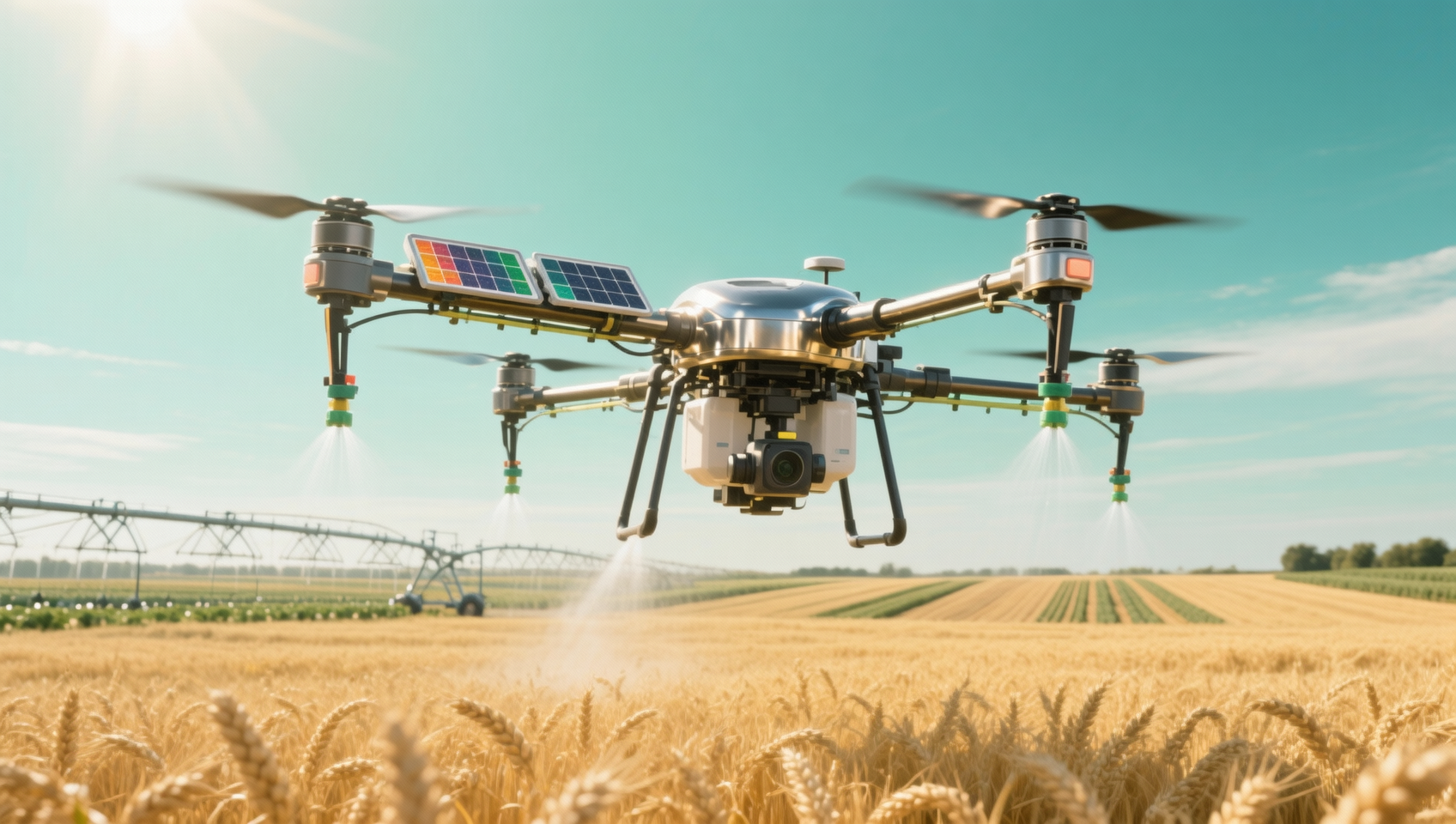
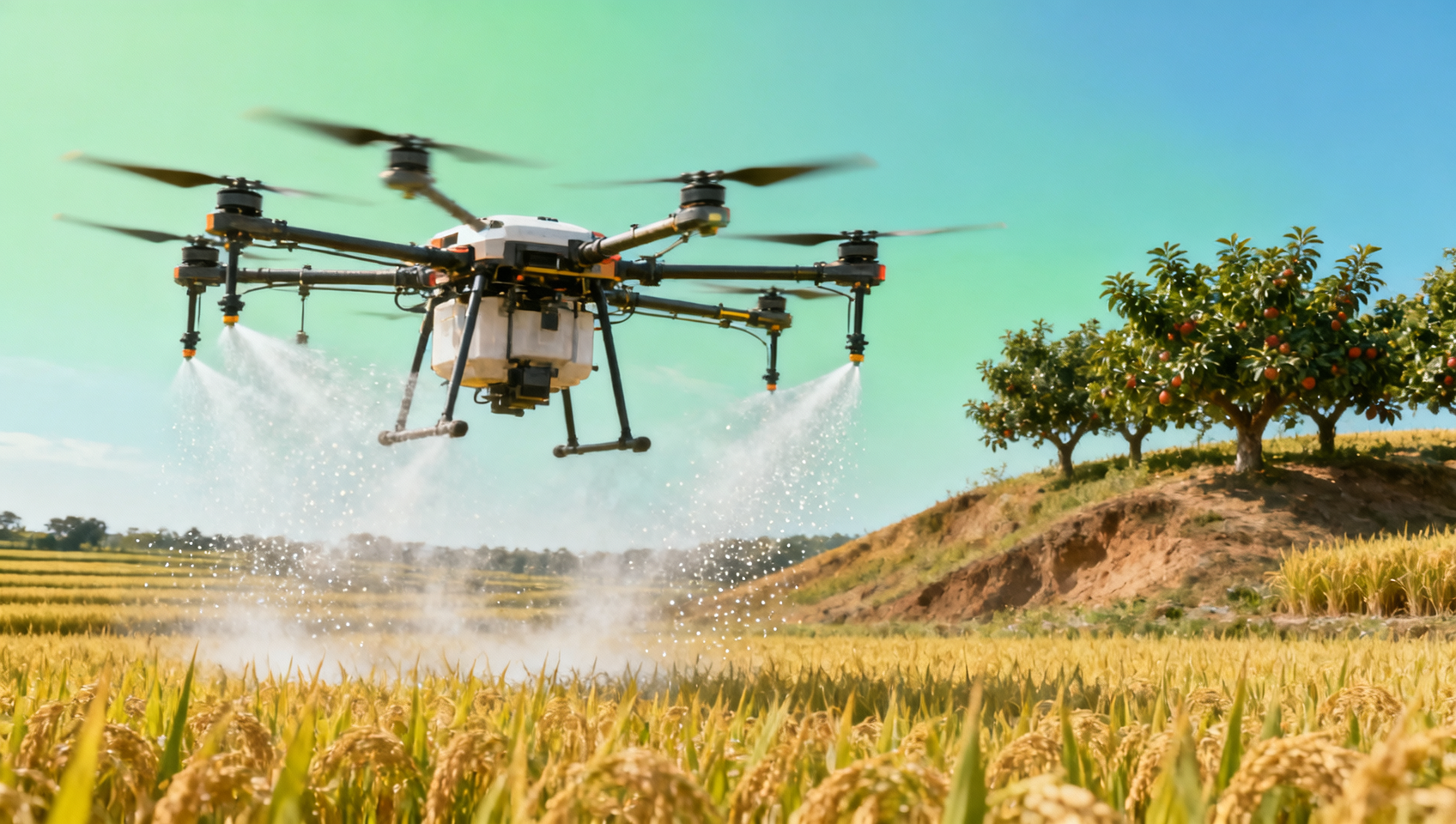
Agricultural drones are reshaping precision farming tech, yet spray accuracy still faces hard limits from wind drift, nozzle design, droplet size, canopy density, and terrain variability. For buyers, operators, and decision-makers evaluating agricultural drones alongside agri sensors and smart irrigation, understanding these constraints is essential to improving field performance, chemical efficiency, and ROI. This article explores where drone spraying excels, where it falls short, and how to make more informed procurement and application decisions.
For B2B buyers and agri-tech teams, the key question is not whether drone spraying works, but under what conditions it performs reliably enough to justify capital cost, training effort, and recurring operating expense. In many field operations, a difference of 10–20 microns in droplet size or a crosswind above 3–5 m/s can materially change deposition, drift, and reapplication rates.
That is why spray accuracy should be treated as a systems issue rather than a single equipment feature. Aircraft design, payload weight, flight speed, nozzle type, canopy structure, field slope, and weather windows all interact. A practical evaluation framework helps researchers, operators, procurement teams, and enterprise decision-makers compare agricultural drones on measurable performance instead of marketing claims.
Where agricultural drones deliver strong value in crop protection
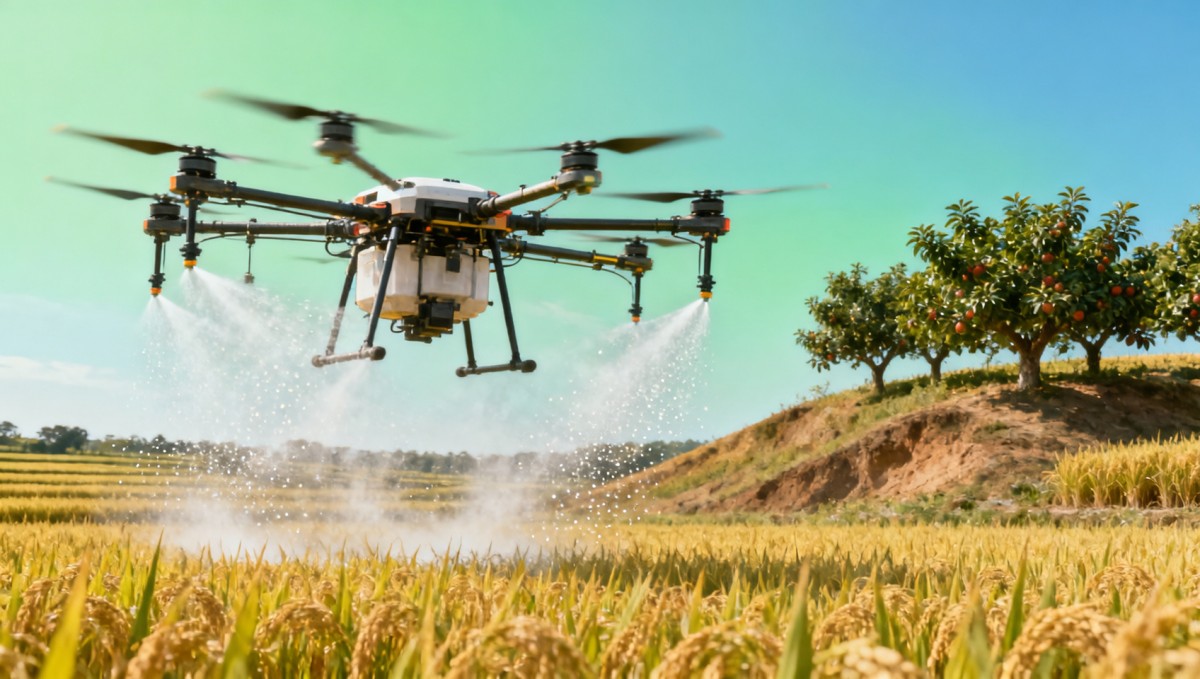
Agricultural drones are most effective where access, timeliness, and localized treatment matter more than absolute uniformity across very large acreage. They can reduce soil compaction, enter wet fields that ground rigs cannot, and complete targeted interventions within short treatment windows of 2–6 hours after pest or disease detection.
In orchards, rice paddies, vegetable plots, seed production blocks, and fragmented farmland, drone spraying often outperforms manual backpack application in consistency and labor efficiency. It can also complement agri sensors and satellite or scouting data by treating only affected zones, which may lower chemical use by 15–30% in variable-pressure situations when prescription logic is sound.
However, these advantages do not automatically translate into precision at leaf level. A drone can reach the field quickly but still deliver uneven deposition if flight height rises from 2 meters to 4 meters, or if rotor wash disrupts droplets above dense canopy. Precision farming value comes from matching the platform to the crop architecture and the application task.
Operational strengths that matter in real field programs
For enterprise farm groups and service contractors, drone spraying creates value in at least four operational areas: faster response, reduced labor exposure, better accessibility, and integration with digital agronomy workflows. The biggest gains tend to appear in fields below 50 hectares per block, hilly terrain, and crops where timely intervention matters more than maximum hourly area coverage.
- Rapid deployment for spot spraying within 30–90 minutes of diagnosis or weather clearance.
- Improved access in muddy, flooded, terraced, or steep terrain where tractors or self-propelled sprayers are limited.
- Reduced operator contact with concentrated chemicals compared with manual application methods.
- Better compatibility with zone maps from scouting, multispectral imaging, and connected agri sensors.
These advantages are commercially meaningful, but procurement teams should separate operational convenience from agronomic efficacy. A drone that covers 12–20 hectares per hour in open conditions may still underperform in canopy penetration, drift control, or refill efficiency if the mission profile is not carefully designed.
Typical scenarios where drones outperform conventional methods
The table below shows where agricultural drones commonly create measurable value and where users should remain cautious about spray accuracy assumptions.
The main takeaway is that drones are often strongest where logistics and timing are the bottleneck. They are less inherently superior when the job requires deep canopy coverage, high-volume application, or highly stable deposition across broad-acre crops under variable wind conditions.
Why spray accuracy has hard physical and operational limits
Spray accuracy is constrained by physics before it is improved by software. Droplets small enough to improve surface coverage can drift more easily; droplets large enough to resist drift may reduce coverage density or bounce from waxy leaves. In practice, many field teams work within a droplet band of roughly 100–300 microns, but the best point in that range depends on crop, chemistry, and weather.
Wind is the most visible limiter, but not the only one. Rotor downwash, nozzle spacing, spray pressure, travel speed, and boom or arm layout all influence how droplets move after leaving the nozzle. Even with GPS guidance and route automation, deposition variability increases when terrain causes frequent height correction or when canopy height changes every 10–20 meters.
Another common misconception is that autonomous flight equals precise application. Path repeatability can be excellent, often within sub-meter navigation tolerance depending on system configuration, yet chemical placement can still be inconsistent. Spray quality is shaped by fluid dynamics and biology, not only navigation accuracy.
The five major constraints buyers should evaluate
A realistic procurement review should assess at least five variables that repeatedly limit drone spray performance in commercial operations.
- Wind drift: Crosswinds above 3–5 m/s can increase off-target movement and edge losses significantly.
- Nozzle and pressure setup: The wrong nozzle type can create overly fine droplets or poor pattern uniformity.
- Droplet size selection: Fine droplets improve coverage but elevate drift risk; coarse droplets reduce coverage density.
- Canopy density: Dense crops can block lower-leaf deposition, especially in orchards and late-stage growth.
- Terrain variability: Slopes, terraces, and irregular field topography alter flight height and overlap consistency.
These constraints interact with tank volume and payload turnover. A heavier tank changes flight behavior and battery draw, while repeated refills can reduce daily efficiency. The issue is not simply whether a drone can spray 15 liters or 40 liters, but whether it can maintain stable droplet behavior from the first pass to the final pass of a mission block.
Canopy penetration is often the hidden limitation
For fungicides, insecticides, and some foliar nutrients, deposition inside the canopy can matter more than top-leaf coverage. In high-leaf-area crops, upper canopy interception may look visually acceptable while lower-target deposition remains inadequate. This is why some aerial applications require multiple passes, altered approach angles, or chemistry reformulation to improve efficacy.
In procurement terms, teams should ask vendors for performance data by crop type and canopy stage, not just open-field coverage numbers. A machine that performs well in low-height cereals may behave differently in fruit trees, vines, or broadleaf crops at late vegetative or reproductive stages.
How to evaluate agricultural drones for procurement and field deployment
For procurement teams, spray drone selection should combine hardware review, workflow analysis, operator capability, and agronomic fit. The best system for a 500-hectare rice operation may not be the best for a contract service provider handling 20 crop types across fragmented client fields. Matching use case to platform is more important than selecting the highest payload specification on paper.
A sound shortlist should compare at least 8 decision points: payload range, effective spray width, refill cycle time, battery swap logistics, nozzle options, terrain-following capability, software integration, and after-sales support. In many operations, refill and battery management account for 20–35% of real working time, so nominal flight metrics alone can mislead buyers.
Decision-makers should also define acceptable accuracy outcomes before procurement. For example, is the priority drift reduction, disease suppression in dense canopy, lower labor exposure, or faster emergency response? Without a ranked objective set, the buying process often overweights visible features and underweights agronomic performance.
Key procurement criteria in a B2B evaluation
The following table provides a practical decision framework for buyers comparing agricultural drones for commercial spraying programs.
This comparison shows that effective procurement is less about headline aircraft capacity and more about system fit. Buyers should request demonstration protocols that include at least one real crop, one moderate-wind operating day, and one irregular field geometry test to reveal how the platform behaves outside ideal conditions.
Questions purchasing teams should ask suppliers
- What droplet size range is achievable with each nozzle option under normal field pressure settings?
- How does the system maintain spray height over slopes or variable canopy from 0.5 to 3 meters?
- What is the practical refill-plus-battery cycle time in commercial use, not in demo conditions?
- Which crops and canopy stages has the platform been validated for in low-volume application?
- What operator training is recommended before crews can manage drift, overlap, and calibration reliably?
These questions help filter out vague claims and move the discussion toward reproducible field performance. For larger enterprises, pilot procurement with 1–2 drones and a 4–8 week validation period is often safer than immediate full-scale rollout.
Improving spray performance through calibration, workflow, and integrated agri-tech
Because spray accuracy has limits, the practical goal is optimization rather than perfection. Well-managed drone programs improve outcomes by combining calibrated hardware, defined weather rules, disciplined pilot workflow, and supporting technologies such as field sensors, mapping tools, and irrigation intelligence. Better decisions often come from system coordination, not just better aircraft.
A common operational improvement is to narrow application windows. Instead of flying across a full day, teams may define acceptable conditions such as wind below 4 m/s, temperature below 30°C, and relative humidity above a chosen threshold to reduce evaporation and drift. Even this basic protocol can lower off-target loss and improve deposition consistency.
Calibration discipline is equally important. Nozzle wear, pressure variance, and residue buildup can shift output enough to create visible under- or over-application. A short pre-shift check of flow rate, spray pattern, tank agitation, and GPS path settings can prevent small errors from repeating across 100 or more hectares in a week.
Practical performance controls for operators
Operators and farm managers can improve field outcomes by standardizing the following controls across each mission block.
- Set crop-specific flight height and maintain it consistently, especially over uneven terrain.
- Select nozzle and pressure based on target chemistry, desired droplet class, and drift tolerance.
- Adjust speed to preserve overlap and deposition instead of maximizing hourly coverage at all costs.
- Define stop-go weather thresholds before dispatch, including wind, humidity, and temperature limits.
- Record application parameters and results so teams can compare efficacy across fields and seasons.
Integrated agri sensors can strengthen this workflow by identifying disease hotspots, crop stress zones, and soil moisture variation. That matters because smart irrigation and drone spraying influence each other. Overly wet foliage, irrigation timing, and canopy humidity can affect retention, disease pressure, and the ideal timing of aerial treatment.
Why integration beats standalone equipment
When agricultural drones operate inside a connected precision farming stack, field decisions become more selective and economically defensible. A drone informed by sensor data and scouting can spray 12 hectares that need intervention instead of 40 hectares by routine schedule. That can reduce chemical waste, preserve labor, and improve treatment timing, even if per-hectare spray uniformity still has physical limits.
For enterprise buyers, this means platform interoperability is not a secondary feature. Data import, job traceability, operator logs, and treatment records can directly influence compliance, quality assurance, and seasonal performance review.
Common mistakes, risk controls, and field-level decision guidance
The biggest operational mistake is assuming all pesticides and foliar products behave similarly in drone application. Some formulations are more tolerant of low-volume aerial delivery than others. Others depend heavily on coverage density, retention aids, or specific environmental conditions. Product-label review and local agronomic validation remain essential.
Another frequent error is prioritizing area per hour over treatment quality. Teams under time pressure may raise speed, altitude, or weather tolerance to finish jobs faster. This can create hidden costs through reduced efficacy, respraying, crop stress, and customer dissatisfaction. A lower nominal throughput can produce better commercial results if first-pass performance improves.
Risk control should also include people and process. Agricultural drones require trained operators, consistent maintenance, battery handling discipline, and documented calibration routines. For service providers, a weak process can damage margins faster than hardware limitations, especially during peak-season workloads when downtime and rework multiply.
Field-level risk checklist
Before each spraying task, teams should verify the following points to limit preventable accuracy loss.
- Weather conditions are within predefined operating thresholds, especially wind speed and direction.
- Nozzle setup matches the target crop, formulation, and desired droplet behavior.
- Flight path and overlap settings are appropriate for field shape, canopy height, and obstacle density.
- Tank mix quality, agitation, and filtration are stable enough to avoid uneven flow or clogging.
- Operator logs and post-application observations are captured for follow-up analysis.
FAQ for buyers and operators
Below are several recurring questions that appear in procurement reviews and field deployment planning.
How accurate are agricultural drones compared with ground sprayers?
They can be highly effective for targeted, low-volume applications, but they do not automatically match the deposition consistency of a well-calibrated ground sprayer in every crop. In open or accessible fields, ground equipment may still provide more uniform coverage, especially when high-volume penetration is required.
What wind speed is usually too high for reliable spraying?
Exact thresholds depend on formulation, nozzle, and local rules, but many operators become cautious once winds exceed about 3–5 m/s. Beyond that range, drift risk and uneven deposition rise quickly, particularly with finer droplets and lighter application volumes.
Are drones suitable for dense orchards or late-stage crops?
They can be useful, but canopy penetration is often the limiting factor. In dense orchards or mature broadleaf crops, buyers should demand crop-specific validation and consider whether multiple passes, alternate nozzle settings, or complementary ground application will be necessary.
How long does commercial deployment usually take?
A basic deployment can start within 2–6 weeks depending on regulation, training, and supply readiness. A mature enterprise program with pilot validation, operator certification, workflow integration, and data linkage may take 1–3 months to stabilize.
Agricultural drones are valuable tools, but spray accuracy remains bounded by weather, droplet physics, canopy structure, and operational discipline. The most successful buyers and operators treat drone spraying as part of a wider precision farming system that includes calibration, data integration, realistic performance thresholds, and crop-specific decision rules.
For TradeNexus Edge readers evaluating agricultural drones, agri sensors, and smart irrigation solutions, the right next step is a structured comparison based on field conditions, treatment objectives, support capability, and measurable ROI drivers. If you are planning procurement, pilot deployment, or supplier benchmarking, contact us to explore tailored B2B insights, compare solution pathways, and get a more informed shortlist for your next agricultural technology investment.
Deep Dive
Related Intelligence
 Agri-DronesWhy Digital Landscape Shifts Are Forcing Agri-Drones Buyers to Rethink ROI ModelsAnalyst:Agri-Tech Strategist
 Agri-DronesAgricultural drones delivering lower ROI in fragmented fields—altitude limits or operator training gaps?Analyst:Agri-Tech Strategist
 Agri-DronesAgri-Drones Mapping Poultry Range Land — Accurate in Daylight, Useless at DawnAnalyst:Agri-Tech Strategist